War Horse exhibition opens at Parsonage Farm, Devon

Image

A First World War exhibition has opened at the farm in Devon that provided the inspiration for Michael Morpurgo’s book War Horse.

Parsonage Farm and the surrounding area of Iddesleigh are the setting for the opening scenes of the book. It is here that farm worker Albert forms a close bond with Joey the horse prior to both being shipped off to the frontline of the First World War.

War Horse reality

Owners Graham and Rose Ward have brought together a collection of photographs, documents and memorabilia that tell the tale of this area of Devon during the First World War and explain the reality behind War Horse.

The exhibition is being hosted in the farm’s 500-year-old barn and includes artefacts donated by local residents.

To find out more about Parsonage Farm, click here.


Posted in Events | Tagged , , , , , , , , , , , , | Leave a comment

London Scottish RFC stages First World War Centenary rugby match

Image

Soldiers of the London Scottish Battalion in 1914

Rugby clubs London Scottish and Blackheath will contest a First World War Commemoration Match at Richmond Athletic Ground on Saturday 3 May.

London Scottish, with its connection to the London Scottish Regiment (1/14th County of London Battalion), and Blackheath, through its proximity to Woolwich barracks, both had numerous members and players with military connections.

Rugby internationals killed

Eighty-seven international players from the British Isles lost their lives during the First World War. Of these, 31 were Scots and some 25 of the 87 are on London Scottish’s or on Blackheath’s Roll of Honour. Four of them are on both.

In all, London Scottish lost at least 100 members, half of them current players, while Blackheath had 60 killed.

The 3 May match will comprise three thirds, involving academy players, seniors and veterans. It will be followed by events to commemorate the Centenary of the First World War, guest speakers and a lunch.

Western Front

The day begins at 11:30am with pipes and a wreath-laying followed by the rugby. Ground entry will be free, with donations going to the Poppy Factory Charity in Richmond and the youth teams from both clubs which are going to the Western Front in September.

The local authorities in Laon, France are organising a weekend of events including commemorative matches on the 100th anniversary of the death of the first international player to be killed – Lieutenant RF Simson, a Scot who played for both London Scottish and Blackheath.

Posted in News, Soldiers of the Great War | Tagged , , , , , , , , , , , | Leave a comment

The enemy aliens of 30th Battalion Middlesex Regiment

Image

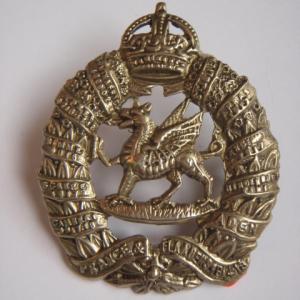
In 1916 Britain’s Army Council authorised the Middlesex Regiment to form two battalions (the 30th and 31st) formed from recruits who were naturalised British citizens but of enemy alien parentage.

Most of the men were of German ancestry and of low medical grade and the most members of the battalions stayed in England for the duration of the war. Rather unkindly, the units were generally known as ‘The Kaiser’s Own’.

An extract from Hansard for 15 March 1917 reads: ‘Mr King asked the Under-Secretary of State for War whether he is aware that the 30th Battalion Middlesex Regiment is composed of men the sons of alien enemies; that many fathers of these men are interned as alien enemies and their brothers and relatives are in some cases lighting in the enemy armies; that these men have German names, converse in German, and sing German songs, and that when enlisted they were assured that they would not be asked to bear arms against their kith and kin.

‘Seeing that these men were willing to fight to defend on British soil this land from invasion or to do non-combatant work at home, why has a double company of 500 men been sent to France; whether these men have protested against the breaking of a pledge made to them; why a non-commissioned officer has been deprived of his stripes for protesting; whether those men now at Folkestone awaiting transport to France will be retained in England; and what action he proposes to take?’

One of the 30th Battalion’s soldiers, G/93219 private V (John according to his medal index card) Wieder, is commemorated in Hampstead Cemetery, London NW6. His gravestone, sadly, is now rather overgrown.

Posted in Events | Tagged , , , , , , , , , | Leave a comment

WW1 firing range discovered in Wales

Image

A First World War rifle range has been discovered by a recently formed Welsh history society.

Ian Fewing, secretary of the Aberystruth Archaeology and History Society was out walking in Cwmcelyn, Blaenau Gwent, Wales when he came across a collapsed wall.

He contacted First World War researcher Peter Tamlyn and local archaeologist Frank Olding, who discovered the site is marked on a 1919 map as a firing range.

Fewing said: ‘From what we could find it was used by the 3rd Battalion of the Monmouthshire Regiment, which was from Blaenau. And it would have been used to prepare for the First World War. The Territorial Army would most definitely have used it for training.’

Huge losses

The 3rd battalion, Monmouths was recruited largely from Blaenau Gwent and suffered around 80 per cent losses at the Second Battle of Ypres in May 1915.

As many as 800 men were killed during three days of brutal fighting during the Battle of Frezenberg Ridge.

The British front line was virtually destroyed and there were few survivors from two of the four companies (A and D) that formed the 3rd Battalion. Those that were hit by machine gun fire trying to evacuate the front line trenches. Of the 500 men in A and D Companies only 29 were left unscathed.

Posted in News | Tagged , , , , , , , , , , | Leave a comment

Australian PM highlights importance of WW1 in shaping nation

Australian troops in France, 1916

Australian troops in France, 1916

Australian prime minister Tony Abbott has said Gallipoli was one of a ‘tide of events’ that shaped the Australian nation.

In his Anzac Day address at the Australian War Memorial, Abbott also called for Australians to remember the Western Front because it was ‘Australia’s moment on the stage of history’.

‘When all is said and done, Gallipoli was a defeat; but the Western Front a victory,’ he said. ‘Victories, even terrible ones, should be no less iconic than heroic defeats.’

Importance of Centenary

He added that the next four years would be special for Australia because they will mark the Centenary of the ‘Great War’.

‘This September is the anniversary of Australia’s first military action: the capture of German New Guinea,’ said the prime minister. ‘In November, we will remember the sailing of the first Anzac convoy guarded by a Japanese cruiser, as well as HMAS Sydney, and ships of the Royal Navy.

‘We will remember the charge at Beersheeba and the capture of Jerusalem and Damascus, spearheaded by the Australian Light Horse.

‘[But] above all else, we should remember the Western Front, not just for its carnage, but also for Australia’s moment on the stage of history.’

Abbott described such episodes as Australia’s ‘foundation stories’. ‘They should be as important to us as the ride of Paul Revere, or the last stand of King Harold at Hastings, or the incarceration of Nelson Mandela might be to others,’ he said.

Posted in News | Tagged , , , , , , , , | Leave a comment

Wildlife at Gallipoli, December 1915

Image

‘Bird and insect life is most interesting here… Larks can always be seen, and their presence seems to lessen in some degree the sordidness of war. One feels thankful that, no matter how many guns may be thundering, the noise is never sufficiently loud to drive away the birds.

‘They fly about heedless of the messengers of death, which ever and anon speed through the air. There are plenty of thrushes and crows and wagtails, while hawks, magpies, wild duck, quails, sand martins and many other kinds of birds may also be seen. Vultures too are fairly numerous and may be observed hovering high overhead. One of these vultures attacked two French soldiers the other day. It was captured and is to be seen chained up in the French lines. This vulture is a repulsive-looking bird, a fine specimen of its species. 

‘The Turks appear to keep dogs in their trenches and these can sometimes be heard barking at night. Wild cats are also about and one of our men shot a big one the other day. Frogs are also to be seen in great numbers in the swamps in the gully, and snakes, lizards, tortoises and centipedes are also to be met with. But so far I have not seen a Turk, dead or alive. The living ones keep well out of sight.’

Diary entry from Gallipoli, 6 December, 1915.

Lieutenant W Sorley Brown, 4th Battalion, King’s Own Scottish Borderers.

Posted in Events | Tagged , , , , , , , , , | Leave a comment

First WW1 British casualty may have been victim of friendly fire

IMG_2620

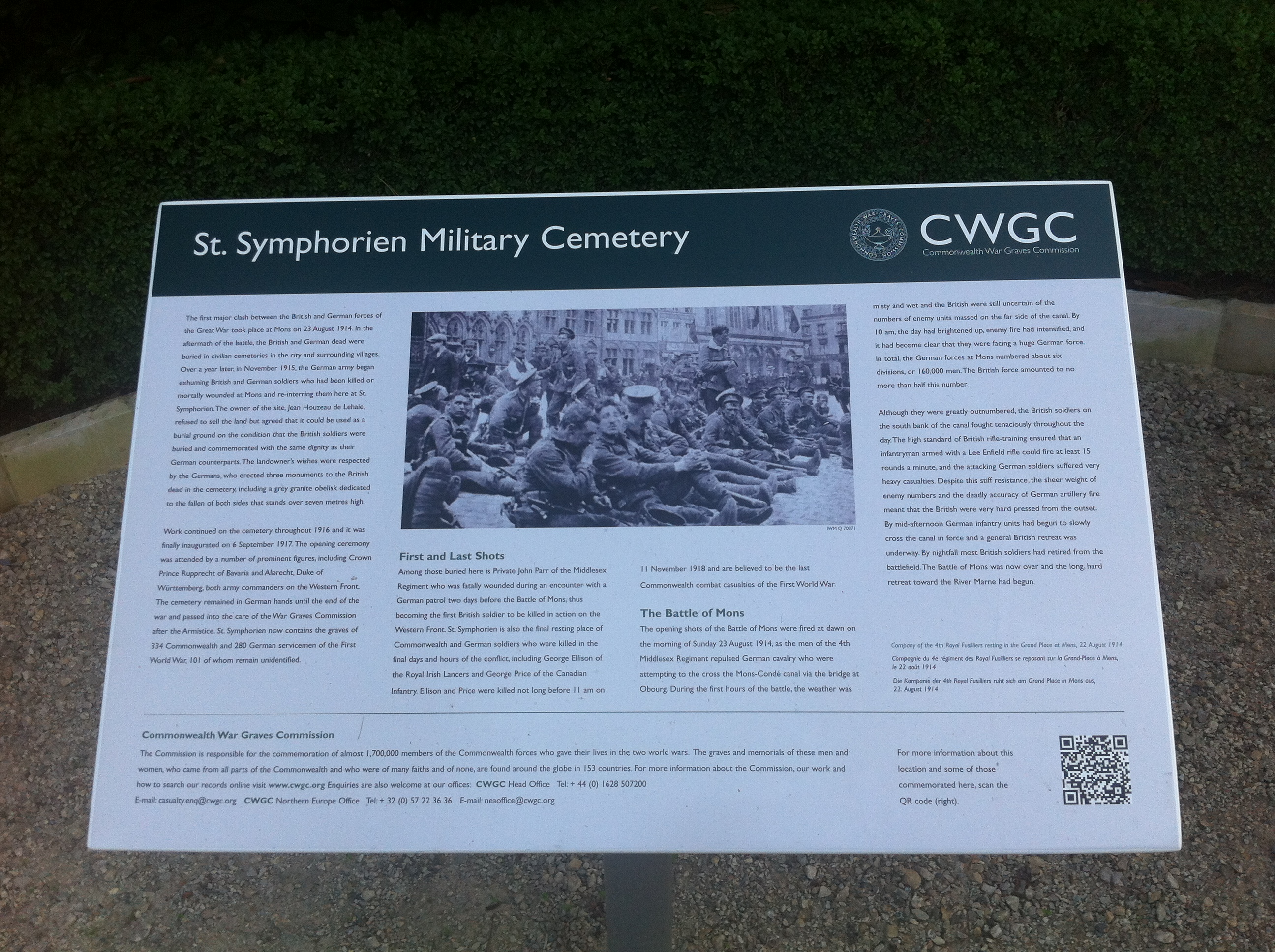
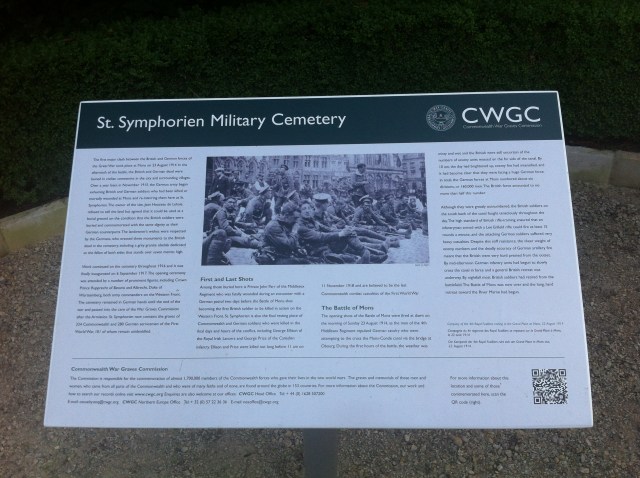
Private John Parr of the Middlesex Regiment, the first British soldier to be killed in the First World War, may have been a victim of ‘friendly fire’.

Speaking to The Sunday Times historian Jon Cooksey said: ‘There was no German soldier around to shoot at him. Private Parr must have died either as a result of friendly fire or an accident.’

Private Parr was last seen on 21 August 1914, when he and a colleague were scouting ahead of the main British force in search of German advance units.

Coming under fire, Parr stayed to engage the ‘enemy’ while his companion returned to report back.

Cooksey, who has studied the dispositions of German troops at the time, added: ‘No contact with the British Expeditionary Force near Mons has been reported that day.’

This, he adds, may mean Parr was shot by French or Belgian troops by mistake.

Parr, a former golf caddy from Finchley, north London, is believed to have lied about his age to enlist, telling recruiters he was 17 when he was in fact 14.

His grave, at St Symphorien military cemetery near Mons in Belgium, will provide a focal point on 4 August this year during a service to mark 100 years since war was declared.

Cooksey has also raised questions about other accepted truths of the early encounters of the First World War.

For example, captain Charles Hornby of the Royal Irish Dragoon Guards was credited with becoming the first British soldier to kill an enemy, ‘running his man through’ with a sword during a cavalry action on 22 August 1914.

The historian suggests German accounts reveal none of their soldiers were seriously injured that day.

Image

Posted in News, Soldiers of the Great War | Tagged , , , , , , , , , , | 1 Comment

Old soldiers of St Pancras cemetery, London

The CWGC section of the St Pancras cemetery in north London includes the headstones of a number of soldiers who were well into their forties and fifties when they died either in the final months of the First World War or the years immediately afterwards. Their age is perhaps an indication of how many men had been lost by 1918 and how older men were having to fill the gaps.

Image

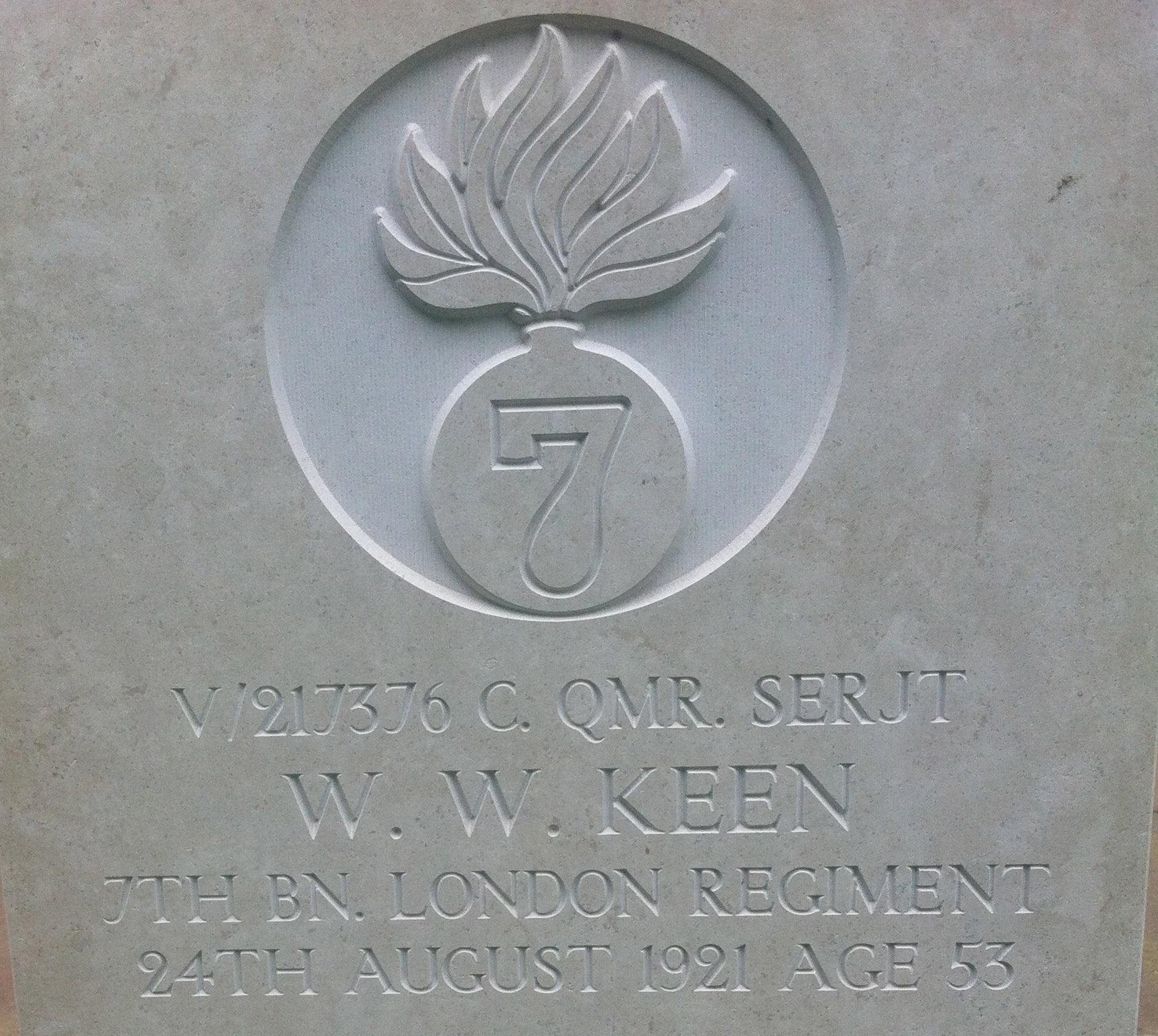
Company quartermaster sergeant WW Keen, of 7th Battalion the London Regiment (53). CWGC states he was the husband of A Keen, of West View, Henlow, Bedfordshire.

Image

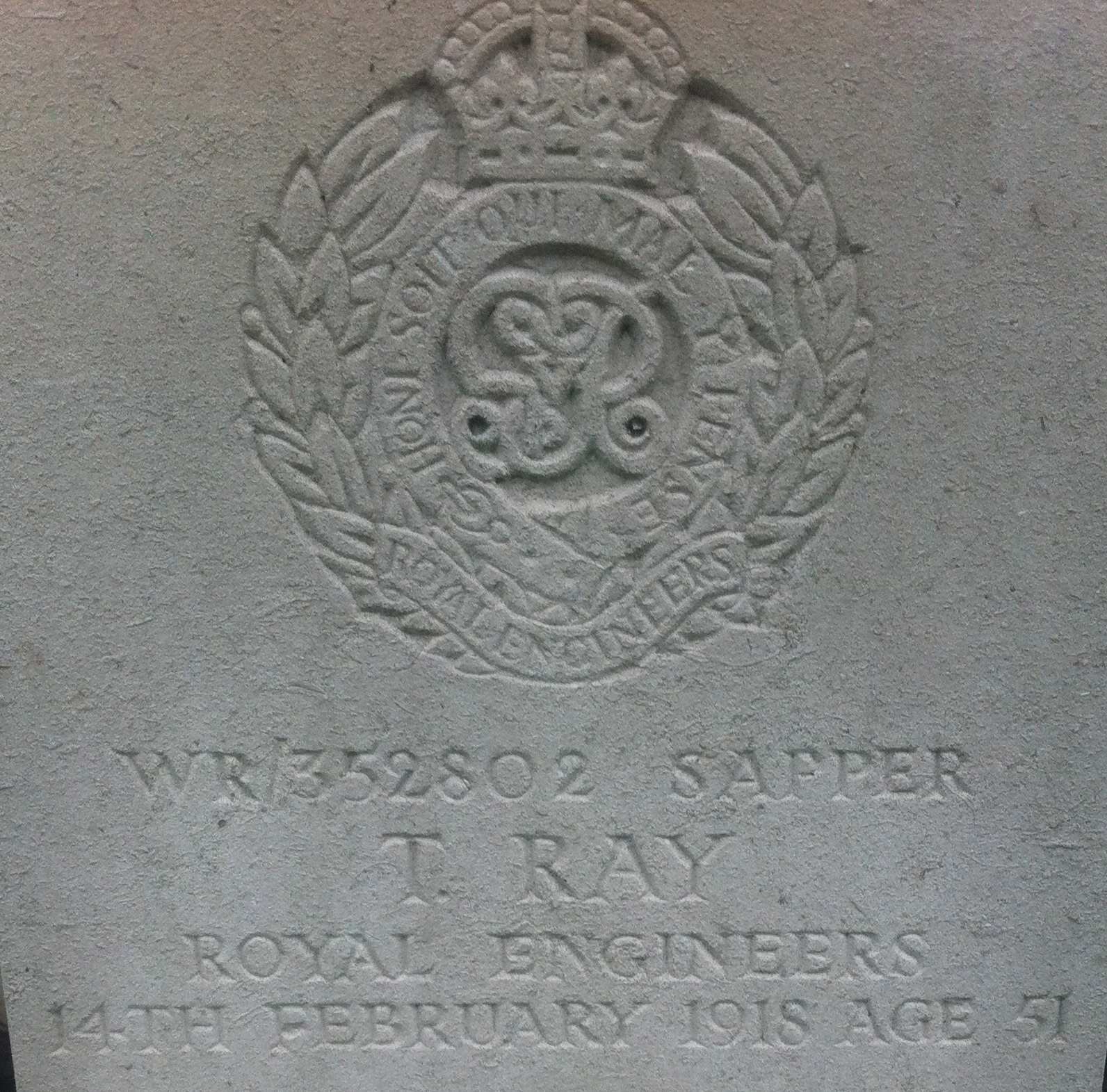
Sapper T Ray of the Royal Engineers (51), son of Elizabeth Ray, of Birmingham, and the late Thomas Cornelius Ray. The WR prefix to his service number indicates ‘Waterways and Railways’.

Image

Private Edwin Henry Willson of the Royal Army Service Corps (54), who died on Christmas Day 1919. He was the husband of EJ Willson of 32 Warden Rd, Kentish Town, London. The SS prefix to his service number indicates a job in the supply function.

Image

Private W Dyer of the Royal Army Service Corps (58). He was the husband of Elizabeth Dyer of 33 Highgate Rd, Highgate, London.

Image

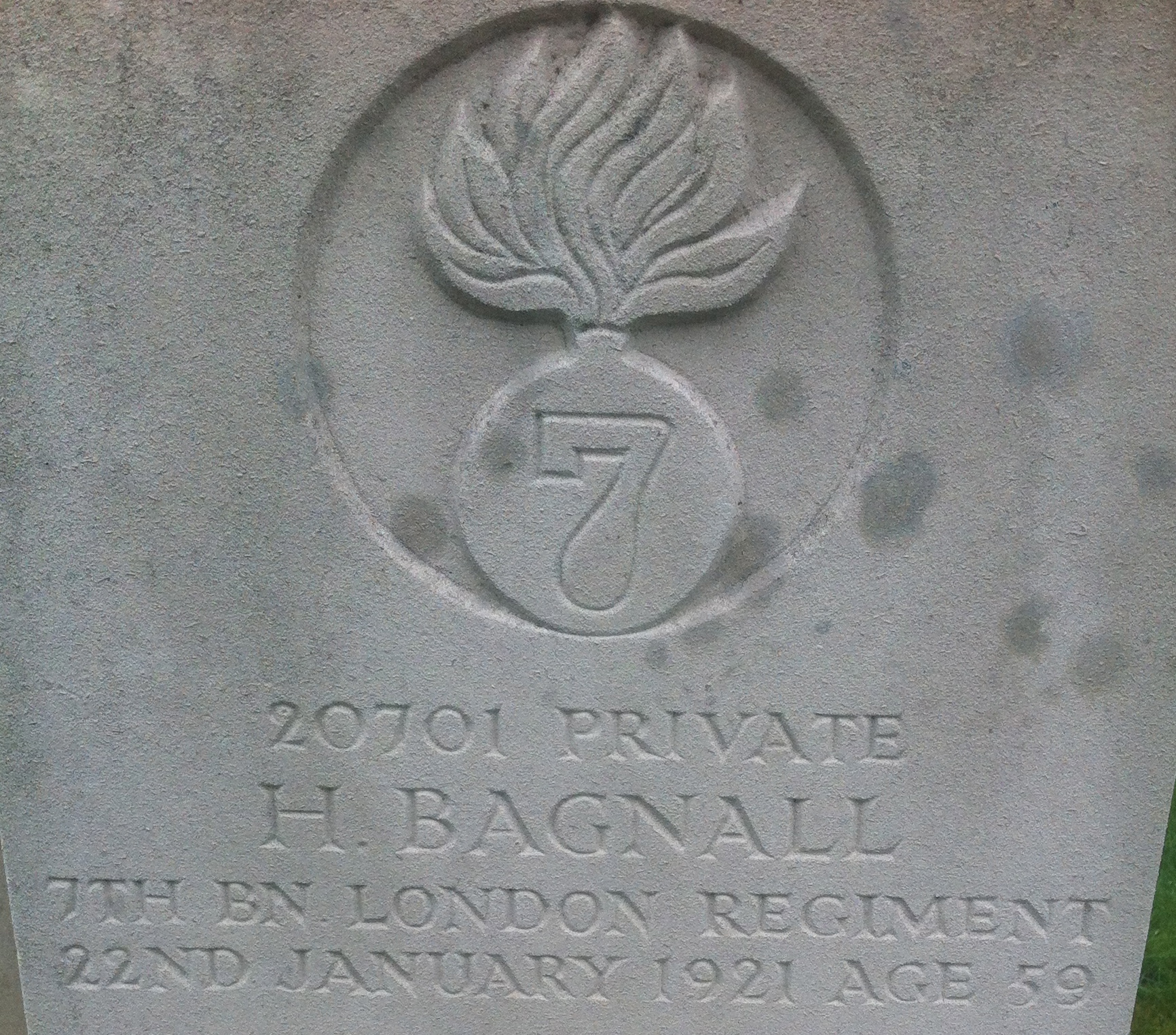
Private H Bagnall, of 7th Battalion the London Regiment (59). CWGC states he was the husband of Elizabeth Caroline Bagnall, of 39 Willington St, Camden Town, London. This should perhaps read ‘Wellington St’, the former name of Inverness St.


Posted in Events | Tagged , , , , , , | Leave a comment

Private Percy Hamlen of the Artists’ Rifles

Image

Hidden away in a partially overgrown area of St Pancras Cemetery, North London, is the grave of Private Percy Hamlen of the Artists’ Rifles, who died in March 1915.


Posted in Soldiers of the Great War | Tagged , , , , , | Leave a comment

Paddington War Memorial, London

Image

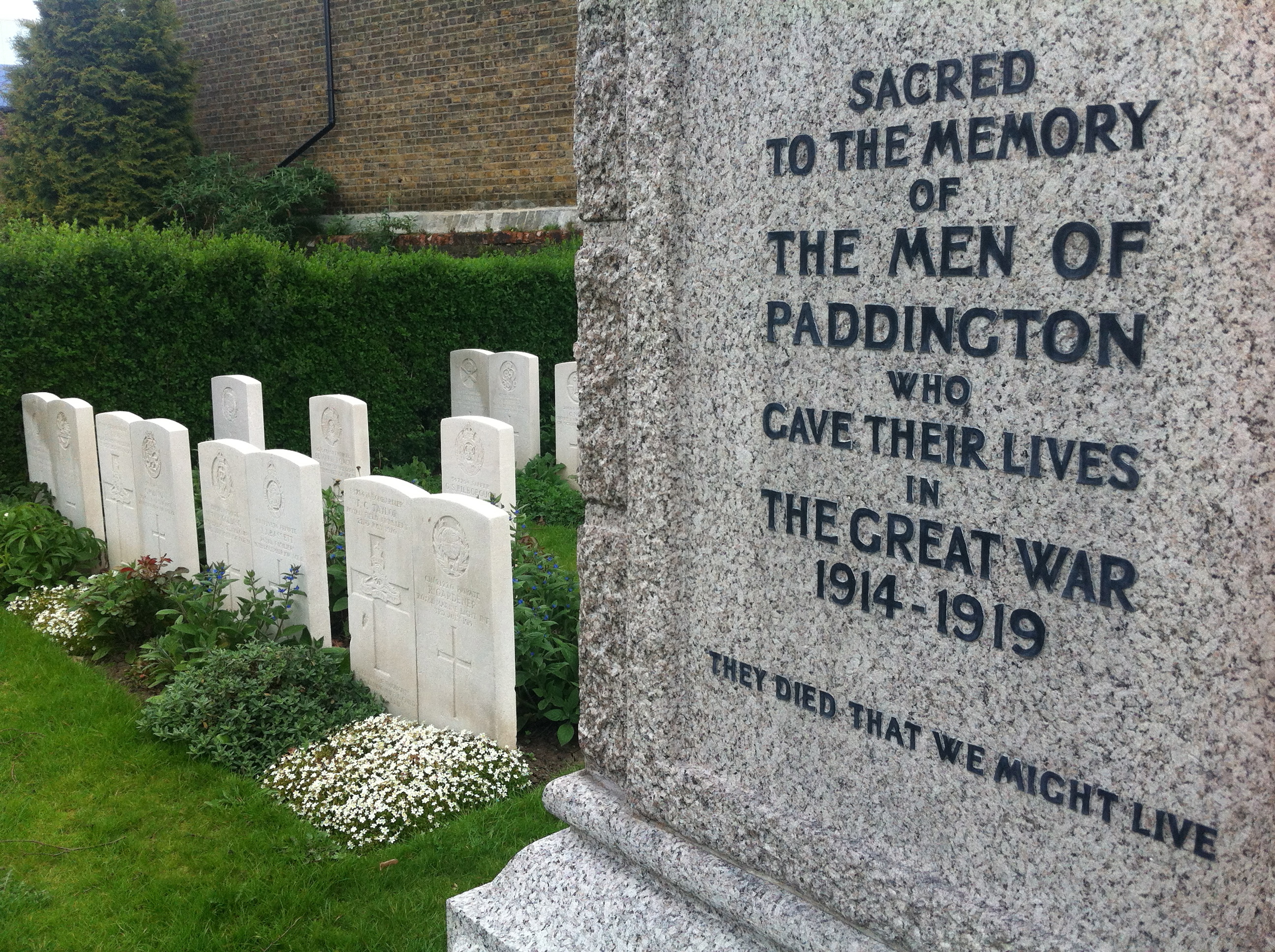
The First World War memorial in Paddington Old Cemetery, Kilburn, London.

Rather unusual in that it’s not the conventional Cross of Sacrifice that one tends to see in most city cemeteries where there is a CWGC section.

Posted in Events | Tagged , , , , , , | Leave a comment