Royal Navy sailor recognised with CWGC headstone after 106 years

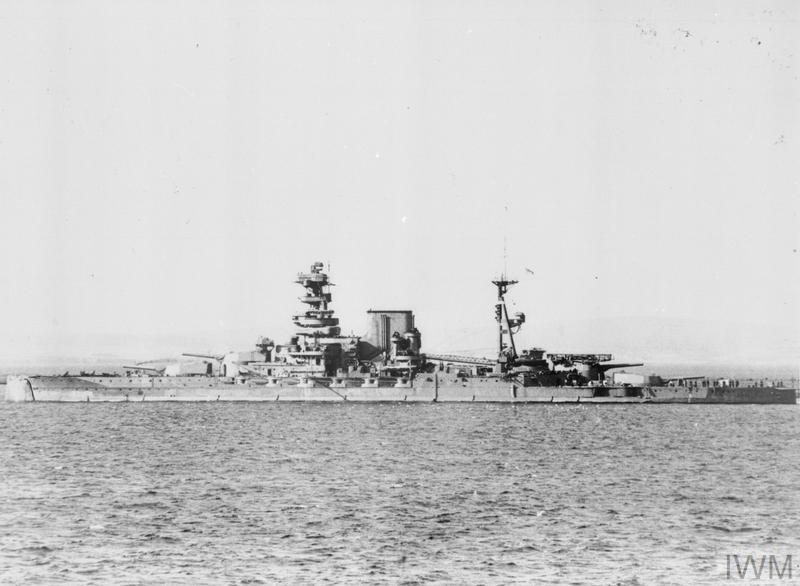
HMS Barham at sea (IWM)

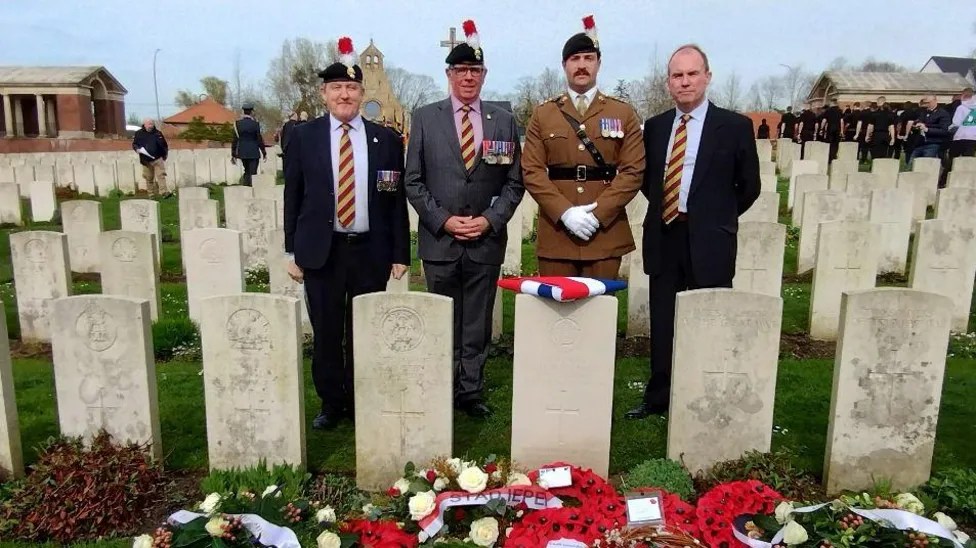
The grave of a Royal Navy sailor who served at the Battle of Jutland has been identified in an Isle of Wight Cemetery.

Able Seaman William George Tucker was born in 1882 in Bermondsey, south London, but moved to East Cowes with his family when he was a child.

He joined the Royal Navy aged 16 in 1898 and served in the Boer War and the Boxer Rebellion. He would later train both as a naval gunner and a torpedo specialist.

In 1915, Able Seaman Tucker was posted to the battleship HMS Barham and was severely wounded during the Battle of Jutland, off the coast of Denmark, in 1916.

At the time, HMS Barham was one of the most modern ships in the Royal Navy. She would go on to serve in the Second World War and was involved in numerous actions in the Mediterranean before being torpedoed and sunk in November 1941 with the loss of 862 lives.

HMS Barham was heavily involved in the battle of Jutland, firing 362 shells and receiving six hits from the German guns. One of these destroyed the ship’s sickbay, killing all the patients and medical staff who were there, including eight ship’s boys. In all, 26 of her crew were killed and 46 wounded.
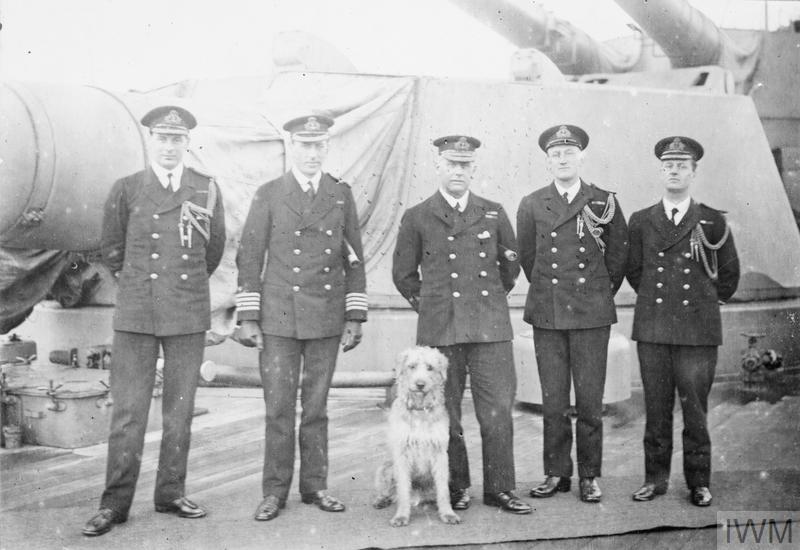
Officers aboard HMS Barham in 1916. The dog, Jack, would be wounded during the Battle of Jutland (IWM)

One of the ship’s officers, Lieutenant Commander Stephen Tillard, would later recall: “I saw all four rounds of the salvo which hit Barham in mid-air as they came. One hit penetrated the deck six feet from where I stood.

“It went on to explode below without doing much harm. Another hit below the water line and blew a hole in the opposite side of the ship, causing jagged edges which may have slowed us up. It wiped out a torpedo detachment.”

This may well have been where Able Seaman’s Tucker, a qualified torpedo man, was wounded. His injuries included a compound fracture of the right ankle, a wound to the left foot and a ruptured urethra. He was medically discharged from the Navy and would die of influenza (presumably Spanish flu) on 25 November 1918 in East Cowes.

He would lie in an unmarked grave in East Cowes cemetery for more than 100 years before researchers revealed his location and contacted the Commonwealth War Graves Commission (CWGC), which has now erected an official headstone at the site.

His brother, Private Oliver Edwin Tucker, died of dysentery in April 1916 while serving in Iraq with the 2nd Battalion, Dorsetshire Regiment. He is buried in the Basra CWGC cemetery.
Posted in News, Soldiers of the Great War | Tagged , , , , , , , , , | 1 Comment

Oxford College to add names of soldiers who served with non-Allied forces to war memorial

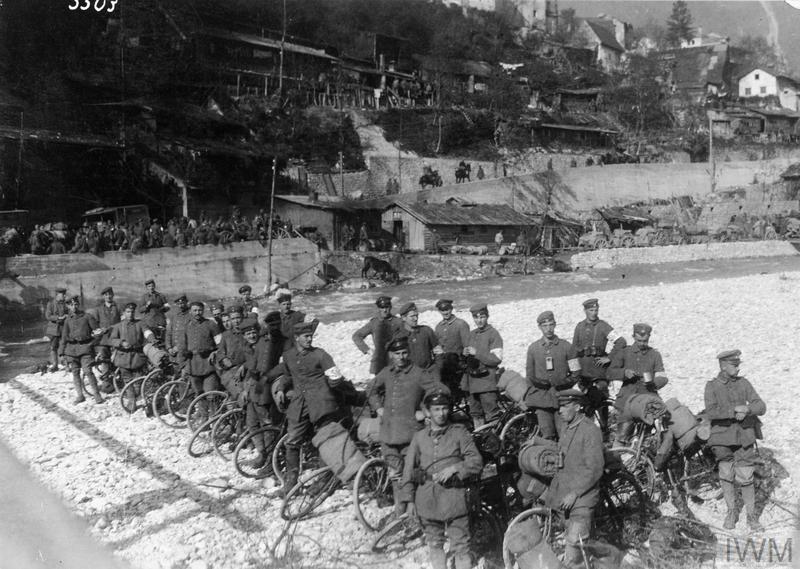
German troops in Italy, 1917 (IWM)

An Oxford College is looking to include on its war memorial the names of former students who fell while serving with non-Allied forces during the First World War.

The proposal, which would see five extra names added, would follow a precedent set by New College in 1930 and continued by Merton and Magdalen in 1994 and University College in 2018.

The former students whose names would be added are:

Carl Heinrich Hertz, from Hamburg, who died in France in 1918.

Erich Joachim Peucer, from Colmar, who died in Italy in 1917.

Paul Nicholas Esterházy, from Hungary, who died in Poland in 1915.

Gustav Adolf Jacobi, from Weimar, who died in France in 1914.

The fifth name is that of Birmingham-born Lieutenant Emile Jacot, of the Royal Warwickshire Regiment, who died in Switzerland in 1928.

A former pupil of King Edward’ School, Birmingham, Jacot went on to study sculpture at the Slade School of Art and also wrote poetry. Some reports suggest he died of tuberculosis, but his premature death may have been linked to wounds (and/or gassing) sustained during the Battle of the Somme in 1916.

An Avro 504, similar to the aircraft in which Conrade Jacot was killed (IWM)

His brother, second lieutenant Conrade Jacot of the Royal Flying Corps, was killed during a training flight on 23 June 1917, aged just 17.

Conrade was the observer in an Avro 504 of No28 Training Squadron operating out of Castle Bromwich airfield near Birmingham when the aircraft’s controls jammed at 3,500 feet and it crashed.

The plan to add the names of the five former students is likely to be approved by Oxford City Council in the coming weeks.

Posted in News, Soldiers of the Great War | Tagged , , , , , , , | Leave a comment

Three missing First World War soldiers identified in Belgium

The graves of three missing First World War British soldiers have now been marked with their names, following investigations by researchers.

Privates Albert (Wilfred) Culling and Charles Green of “C” Company, 1/24th London Regiment were killed alongside Private Albert Hale in a position on the Westhoek ridge at around midnight on 25 August 1917, during the Third Battle of Ypres.

The trio were buried in a shared field grave until March 1920, when their remains were transferred to Buttes New British Cemetery near Zonnebeke in Belgium.

While regimental insignia showed all three were members of the 24th Londons, only private Hale had an identity disk, while the other two were buried in graves marked “An Unknown Soldier” and their names were added to the Menin Gate memorial to the missing in Ypres.

Albert Culling was from Keinton Mandeville in Somerset, the eldest of five children. He had joined the Somerset Light Infantry in December 1915, having previously worked as a stonecutter. He went to France with the London Regiment on 15 June 1916.

Charles Green joined the army in December 1915, enlisting with the 3rd (City of London) Battalion, London Regiment. He arrived in France with the 24th London Regiment in August 1916.

Troops moving up towards Westhoek during the Third Battle of Ypres (IWM)

Serjeant John Harold Bott

Serjeant John Harold Bott was born in Longton, Staffordshire, one of four brothers. The 1911 census records that he was working as a hairdresser’s apprentice.

He joined the Army in September 1914 and was posted to 11th Battalion, The Royal Fusiliers (City of London Regiment). He arrived on the Western Front on 26 July 1915 and, in the summer of 1916, won the Distinguished Conduct Medal (DCM) during the Battle of the Somme.

His medal citation said his medal was awarded: “For conspicuous gallantry in action. He led a bombing party with great courage and determination, capturing an enemy machine gun and killing the team.”

On 10 August 1917, 11th Battalion Royal Fusiliers was involved in an attack on the Westhoek ridge. The two attacking companies went over the top at 4:35am. By 6am most of the officers and NCOs, including Serjeant Bott, had been killed or wounded and the Fusiliers were driven back by a German counter-attack.

After the war Serjeant Bott’s body was recovered and he was buried as an unknown soldier of the Royal Fusiliers in Hooge Crater Cemetery while his name was inscribed on the Menin Gate.

His grave has now been identified after research was submitted to CWGC by two separate researchers. Following additional investigations by CWGC, the National Army Museum and the Joint Casualty and Compassionate Centre Commemorations team (JCCC), the findings were confirmed.

Posted in Events, News, Soldiers of the Great War | Tagged , , , , , , , , , , , | Leave a comment

RN Submarine Museum unfurls First World War Jolly Roger flag

A group of Royal Navy submariners during the Gallipoli campaign (IWM)

A Jolly Roger flag, flown by Royal Navy submarine HMS E54 in 1916, will go on show at The Royal Navy Submarine Museum in Gosport in April.

The First World War-era ensign will be part of a wider exhibition focusing on the history of the famous skull and crossbones-style flag. Traditionally associated with 17th– and 18th-century pirates, the Jolly Roger has featured on Royal Navy submarines for more than 100 years.

The tradition began in 1914 when lieutenant commander Max Horton, captain of HMS E9, flew the flag as the boat returned after sinking the German warship SMS Hela. Horton would go on to become an admiral during the Second World War.

His action was in response to comments by Admiral Sir Arthur Wilson who, in 1901, commented that submariners were “underhanded, unfair and damned unEnglish” suggesting states should treat submarines “as pirates in wartime… and hang all their crews”.

A Royal Navy submarine in Mudros harbour (Greece) on its way to the Dardanelles (IWM)

Symbols and meaning

While famous pirates such as William Kidd and Henry Morgan raised the Jolly Roger to frighten ships, submarine crews would unfurl theirs when they returned to base after a successful patrol.

Alexandra Geary, curator (artefacts) from the National Museum of the Royal Navy said: “Each action a submarine carried out had its own symbol. These symbols would either be painted or sewn onto a bit of black material. A dagger, for example, would denote a secret mission; a bar signifies the sinking of an enemy merchant ship; a lighthouse that the boat was used as a navigation beacon and we even have a symbol of Popeye character ‘Eugene the Jeep’ as a nod to the popular utility vehicle.” 

By the Second World War, submarine crews were officially issued with fabric, and Jolly Roger flying became common, a tradition that has been maintained to the present day.

Posted in Events, News | Tagged , , , , , , , , , , | Leave a comment

Grave of 55-year-old First World War army doctor located in France

By Dan Hayes

The grave of a Royal Army Medical Corps doctor who was killed in 1918 has been identified in the Champagne region of northern France.

A rededication service for 55-year-old Captain Frederick Brooke took place at the Commonwealth War Graves Commission’s (CWGC) La Ville-aux-Bois British cemetery near Reims on 6 September 2023.

Born in Cambridgeshire, Captain Brooke was the father of seven children, one of whom, Cecil, was killed on 24 April 1917 while serving with 8th Battalion, The Gordon Highlanders and is commemorated on the Arras Memorial.

Captain Brooke was commissioned into the Royal Army Medical Corps on 10 July 1915 and was deployed to Sidmouth Barracks before serving onboard hospital ship HMS Britannic, the sister ship of the Titanic, and at Thornhill Camp near Winchester.

Despite his comparatively advanced age, he then went to France as medical officer of 1st Battalion, The Wiltshire Regiment.

Rearguard action

On 26 May 1918, the battalion was in positions in front of Guyencourt when it was subjected to a heavy gas bombardment. At 7am the troops moved forward to cover the retirement of frontline units before, just after 10am, they advanced to hold the line in front of Bouffignereux.

The Battalion HQ and nearby regimental aid post, from which Captain Brooke would have operated, came under heavy fire until, around 5pm, the Wiltshires were forced to retreat. Splitting into small groups, they fought rear-guard actions to delay the German advance. Captain Brooke was among those killed at some stage during the fighting that day.

The rededication service was attended by three generations of Captain Brooke’s family, including his great granddaughter, Ana Retallack, who had travelled from Australia, with her husband and children.

Painstaking search

Captain Brooke’s grave was found after a researcher from the Western Front Association submitted evidence suggesting that it could be identified. Further research was then carried out by the National Army Museum and the MOD’s Joint Casualty and Compassionate Centre (JCCC).

Speaking at the rededication service, the Reverend Tim Clarke-Wood CF, Chaplain to 4th Battalion, The Royal Regiment of Scotland, said: “Captain Brooke’s story is significant in that he served at a more advanced age than most – at 55 he was experienced in life and no doubt brought that wisdom into his role as a medical officer. As a Padre these moments are precious as you take opportunity to participate in a person’s story that started in the 19th Century. It is my great privilege to have rededicated Captain Brooke’s grave and to do so with so many of his family present.”

Captain Brooke had previously been commemorated on the Soissons Memorial to the Missing.

Posted in Events, News, Soldiers of the Great War | Tagged , , , , , , , , | Leave a comment

Welsh castle reveals WW1 secrets

LRB

Troops undergo training in trench warfare techniques, 1915 (IWM)

A range of artefacts from the First World War have been unearthed during a development project at Bodelwyddan Castle in north Wales.

Among the items unearthed are wooden duck-boards, .303 rifle cartridges and a uniform button which appears to be from a Canadian unit.

Practice trenches

The castle itself was used as a hospital during the First World War, but the grounds became a trench warfare training area for troops from the nearby Kinmel Camp.

Richard Cooke, senior archaeologist at Aeon Archaeology, told the Rhyl Journal: “This is the first time these World War I practice trenches have been investigated so extensively and they have given us an exciting window into this most fascinating part of our past.

“The work has shown that, despite ploughing, the bases of the trenches survive well and that they were not being excavated to full depth, but rather would have been reinforced with the addition of sandbags and upcast soil.”

Mr Cooke added: “Other finds include the butt of a flare cartridge showing that they were practicing night-signalling, as well as the priming cap from an artillery shell, suggesting that field artillery guns were also being used at the site.”

Posted in News | Tagged , , | Leave a comment

Book focuses on Sikh soldiers’ role in the First World War

large_000000-2.jpg

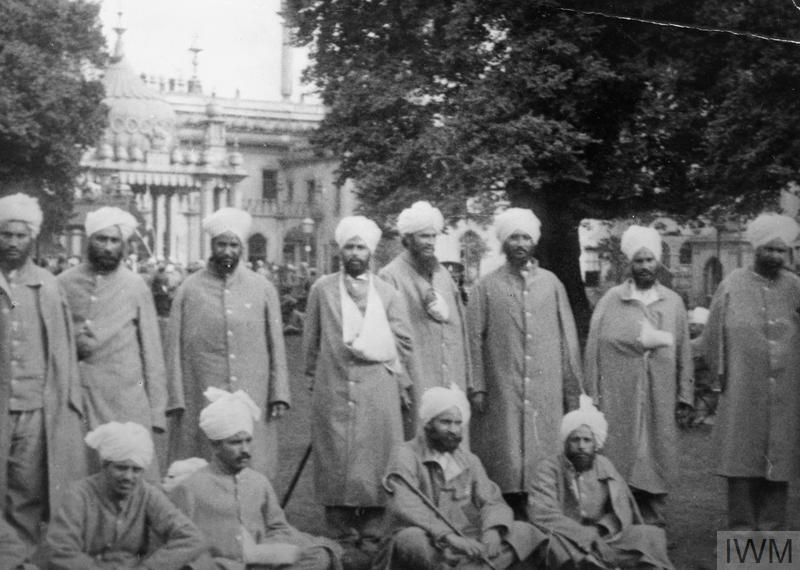
Wounded soldiers at Brighton (IWM)

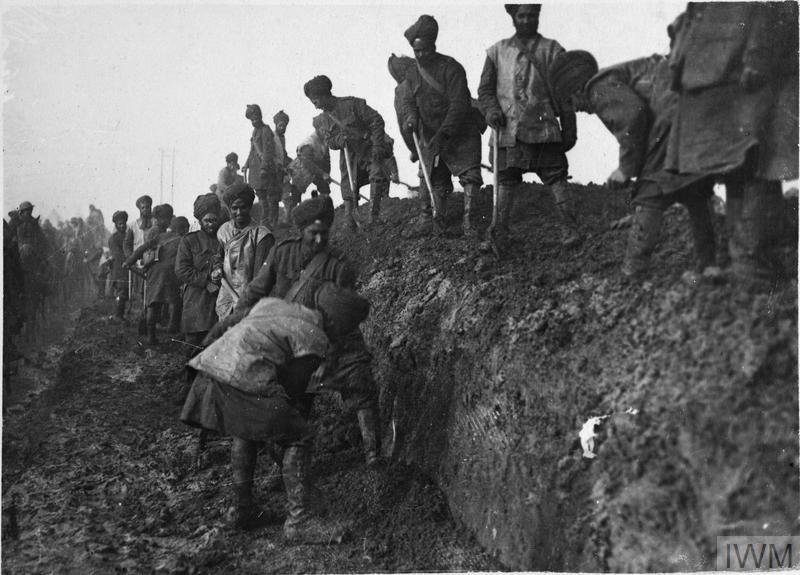
A London-based IT manager has written a book detailing the experiences of Sikh soldiers during the First World War.

Sukwinder Singh Bassi researched hundreds of letters written by and to Sikh troops, before publishing around 700 extracts under the title Thousands of Heroes Have Arisen: Sikh Voices of the Great War 1914 – 1918.

The author told the Ilford Recorder: “It was a time-consuming project but a real labour of love. The overall Indian contribution in terms of manpower was over one million people but most people don’t know that.”

large_000000-1.jpg

A working party on the Western Front (IWM)

Freedoms the Sikhs lacked at home

He added there was a poignancy to much of the information he discovered. “There was a feeling of helplessness to their situation that came through in many of the letters. The soldiers were also exposed to freedoms Europeans had that they were denied at home.”

He also discovered that many Sikh soliders who fought in the First World War went on to take important roles in the Indian independence movement.

The role of Sikhs during the conflict has been highlighted following actor Laurence Fox’s comments about the presence of a Sikh infantryman in the acclaimed film 1917.

Singh Bassi commented: “What Laurence Fox said was factually incorrect but he didn’t know it at the time. There’s no way people didn’t fight together then. It’s not revisionist history, it’s telling the truth.”

large_000000.jpg

Troops at Gallipoli (IWM)


Posted in News, Soldiers of the Great War, World War I memoirs | Tagged , , | Leave a comment

A British officer who served with Sikhs at Festubert in 1914

thumbnail.jpg

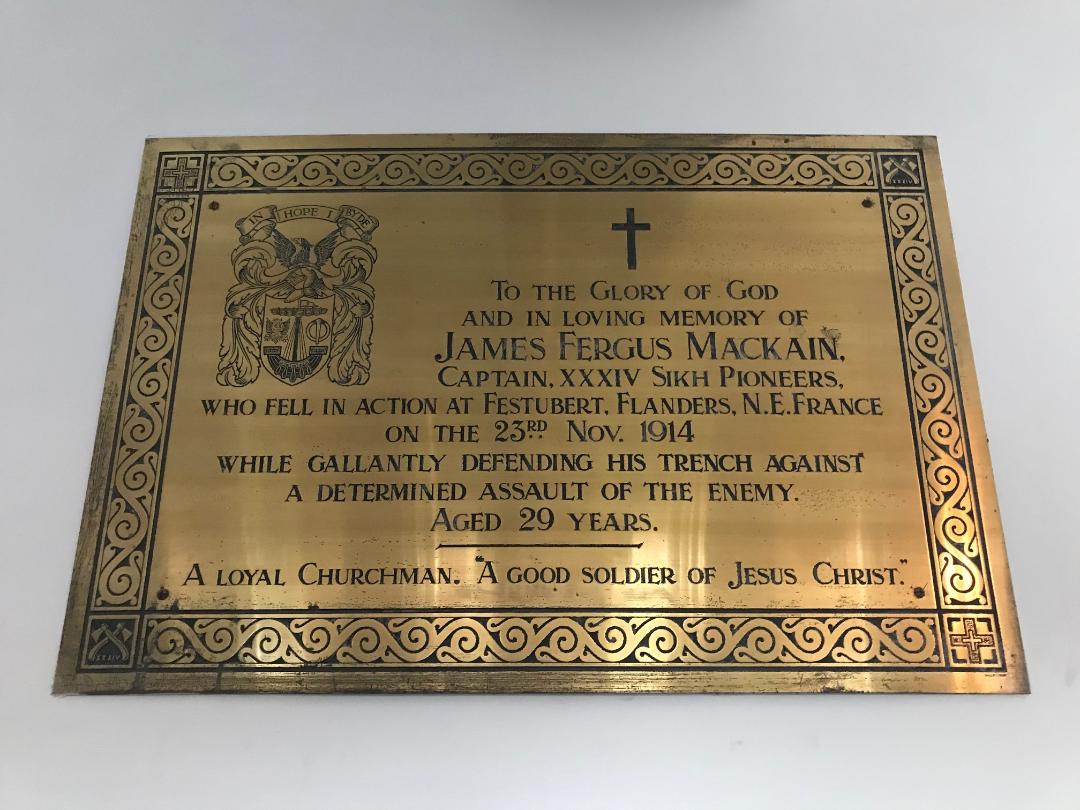
The recent furore involving actor Laurence Fox, the film 1917 and the role of Sikh soldiers during the First World War reminded me of a plaque in the Grosvenor Chapel on South Audley Street in London’s Mayfair.

It is dedicated to 29-year-old Captain James Mackain, of the 34th Sikh Pioneers, who was killed in action at Festubert on 23 November 1914.

Despite its name, the 34th were an infantry unit that also had engineering skills. They had been mobilised in August 1914 and had arrived in France the following month. No sooner had they been deployed to the Western Front than they were in action, fighting off a determined German assault on 22 October near Bailleul.

By the end of October the 34th Sikh Pioneers had lost one British officer and 15 other ranks killed and more than 190 wounded.

large_000000.jpg

Captain Mackain (IWM)

Battle of Festubert

On 22 November the unit was back in the front line when the Germans launched another fierce assault. Captain Mackain was integral to the defence, continuing to direct his men despite being wounded he was then shot in the head and his body was carried back to the first aid post by Sepoy Ishar Singh amid a general retreat.

The trenches were retaken during the course of that night, but the 34th had been badly mauled, with the battalion losing 161 killed and missing (including the commanding officer) and 105 wounded.

Captain James Mackain was the son of the Reverend William James Mackain, who was the vicar of Little Waldingfield and Posingford in Suffolk. He had studied at Clifton College and had joined the Indian Army in 1904, serving for a time with the Gordon Highlanders at Sialkot and Peshawar before he was posted to the 34th Sikh Pioneers in 1905.

He was promoted Lieutenant on 9 April 1906 and Captain on 9 January 1913.

“A fine Christian soldier”

Writing to Captain Mackain’s parents, a fellow officer of his battalion described the events of their son’s final hours: “He was commanding his company (No. 4) at the time, and was shot through the head in a very gallant attempt to stem an attack in great force by the enemy through breaches blown in our trenches. The enemy were armed with hand-grenades, which they threw into the trenches.

“Your son, while shooting down the grenadiers with his revolver over the top of the trench, was unhappily himself shot dead through the head. His loss to us personally, and to us as a regiment, I cannot yet realise. He was such a fine stamp of Christian soldier, and we looked on him as one likely to go a very long way.”

There is another commemorative plaque to Captain Mackain in Lahore Cathedral.

Posted in News, Soldiers of the Great War | Tagged , , , | 1 Comment

Wreck of First World War German cruiser found near Falkland Islands

_110015873_scharnhorstbattlecruiser.jpg

SMS Scharnhorst: she was sunk by the Royal Navy in 1914 with the loss of more than 800 men

Divers have discovered the wreck of a First World War German cruiser close to the Falkland Islands in the South Atlantic.

SMS Scharnhorst was sunk by the Royal Navy on 9 December 1914 with the loss of more than 800 men.

Among those who died was German Vice-Admiral Maximilian Graf von Spee, who was using the Scharnhorst as his flagship.

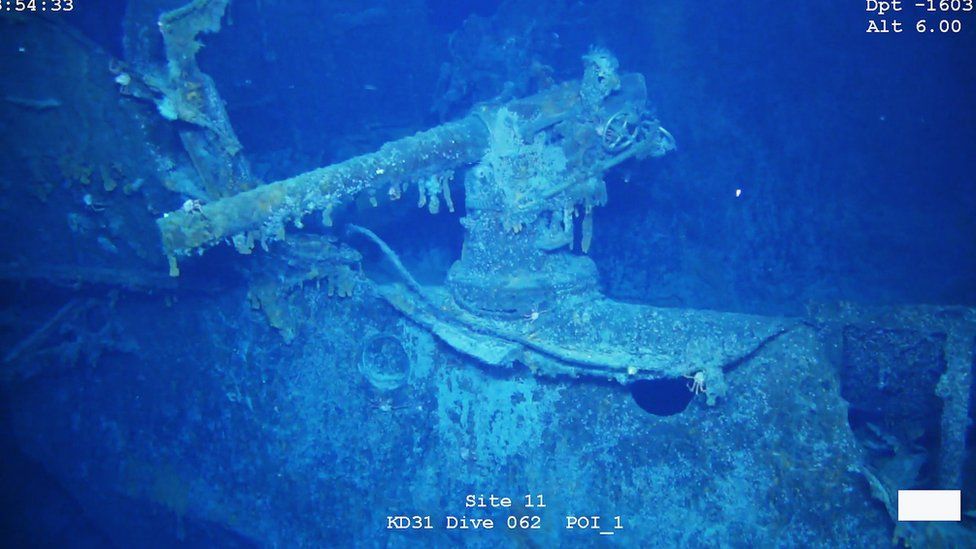
Marine archeologist Mensun Bound said the find was astonishing. “Suddenly she just came out of the gloom with great guns poking in every direction. As a Falkland Islander and a marine archaeologist, a discovery of this significance is an unforgettable, poignant moment in my life.”

_110015870_scharnhorstguns-1.jpg

The wreck today (photo: Falklands Maritime Heritage Trust)

Loss of life

Scharnhorst was part of the Imperial German Navy’s East Asia Squadron and she had already taken part in the Battle of Coronel off the coast of Chile. That encounter ended with two of four Royal Navy ships sunk with the loss of more than 1,600 men. Not a single German sailor died.

Five weeks later, however a British force led by HMS Invincible and HMS Inflexible attacked and sank Scharnhorst, before pursuing the remainder of the German squadron.

Vice-Admiral von Spee’s two sons were also killed, Heinrich on board SMS Gneisenau and Otto aboard the light cruiser SMS Leipzig. Around 2,200 German sailors lost their lives in the battle.

Wilhelm Graf von Spee, the current head of the von Spee family, said: “We take comfort from the knowledge that the final resting place of so many has been found, and can now be preserved, whilst also being reminded of the huge waste of life.

“As a family we lost a father and his two sons on one day. Like the thousands of other families who suffered unimaginable loss during the First World War, we remember them and must ensure that their sacrifice was not in vain.”


Posted in News | Tagged , , , | Leave a comment

Welsh school seeks WW1 relatives

Captain Angus Buchanan VC MC (left) Photo: IWM

A Welsh school is looking for relatives of 76 pupils who lost their lives during the First World War.

Monmouth School for Boys plans to re-dedicate its war memorial on Armistice Day, Monday, November 11. It hopes to trace as many of the descendants of the fallen and invite them to the ceremony.

The war memorial was originally unveiled in 1921 by former Monmouth pupil and Victoria Cross (VC) winner Captain Angus Buchanan.

Captain Buchanan won his gallantry award while serving with 4th Battalion, South Wales Borderers in September 1916.

The VC citation reads: “During an attack an officer was lying out in the open severely wounded about 150 yards from cover. Two men went to his assistance and one of them was hit at once. Captain Buchanan, on seeing this, immediately went out and, with the help of the other man, carried the wounded officer to cover under heavy machine gun fire. He then returned and brought in the wounded man, again under heavy fire.”

Buchanan was shot in the head by a sniper in 1917. Although blinded by the wound, he went on to study law at Jesus College, Oxford, rowing in the college VIII in 1919.

Anyone who has a relative listed on the memorial should email: boys.headsPA@habsmonmouth.org

Posted in Events, News, Soldiers of the Great War | Tagged , , , , , | Leave a comment