Vandals deface London war graves

Harefield.jpg

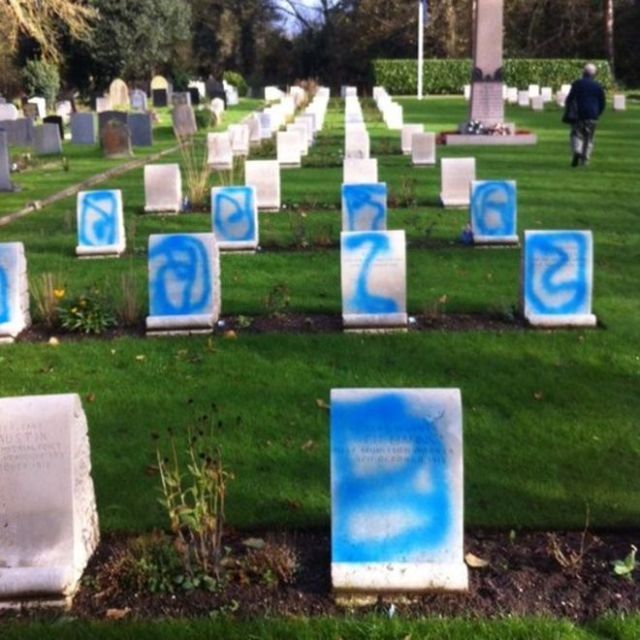
War graves in a London cemetery have been defaced by vandals using spray paint.

The graves – of Australian soldiers who died during the First World War – are in Harefield churchyard in the Hillingdon area. They are some of 120 First World War graves on the site, mostly commemorating soldiers who died at the Australian Auxiliary Hospital at nearby Harefield Park.

‘A disgrace’

Jane Palmer, a Conservative councillor for Hillingdon, said such a callous act of vandalism had brought tears to her eyes. One local resident, 67-year-old Albert Gordon, added: ‘I was shocked to see the graffiti. It’s some sort of blue squiggles or possibly writing, but either way it’s a disgrace. These men died to help Britain and this is how the country’s modern-day residents repay them.’

Local newspaper the Uxbridge Gazette reports this is the second case of vandalism directed at First World War graves this year. On the eve of the Gallipoli centenary, a memorial in the cemetery was sprayed with paint and an Australian flagpole was hacked into with an axe or cleaver.

The 1st Australian Auxiliary Hospital opened in June 1915. It contained around 1,000 beds and was used to treat soldiers who had been wounded in France and Belgium. The cemetery at Harefield contains unusual, scroll-shaped headstones – a design chosen by staff and patients at the hospital.

For more about the hospital, click here.
Posted in Events | Tagged , , , , , , , , , | Leave a comment

Charity takes on Reading University to save First World War building

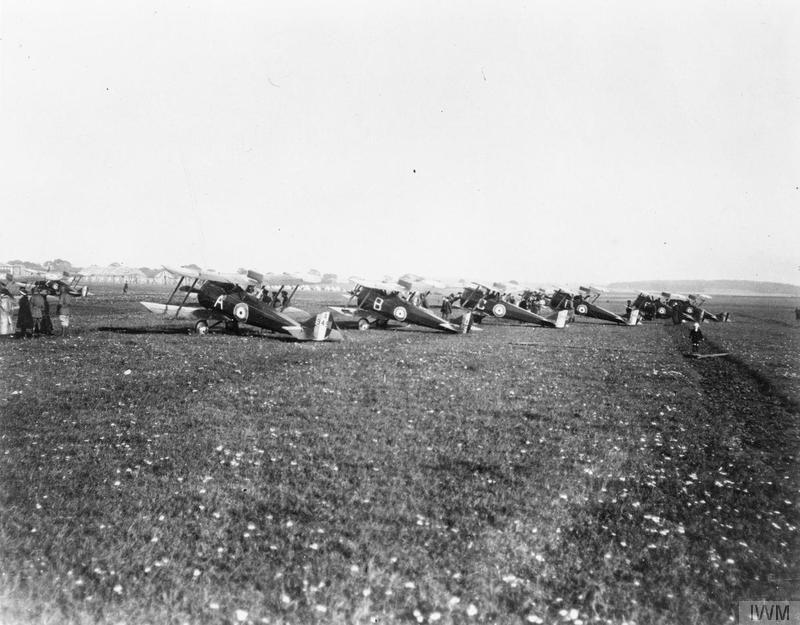
RFC

The Victorian Society has launched a campaign to try to stop Reading University from knocking down St Patrick’s Hall – a building that was used by air cadets during the First World War.

Among those who lived there was William Earl Johns, creator of the Biggles books, who may have based the book Biggles Learns to Fly on the time he spent at St Patrick’s.

Poignant symbol

The university says the existing halls are obsolete and cannot fulfill the needs of 100s of today’s students. It added: ‘What was appropriate for air cadets in the First World War is inappropriate for students in the 21st Century, who rightfully expect high standards.’

The Victorian Society said the proposed redevelopment was ‘especially poignant’ as 2015 marks the centenary of the establishment of the No 1 School of Military Aeronautics in the university’s buildings. Royal Flying Corp planes were kept on the university playing fields nearby.

Biggles’ creator

Captain WE Johns served in the trenches before joining the RFC. He first brought Biggles to his readers in a story entitled The White Fokker in 1932. The character eventually featured in almost 100 books and remained popular for decades. In more recent times, Biggles – white, middle class and not averse to a bit of Edwardian-style language – has fallen victim to the rulings of political correctness.

To find out more about the Victorian Society’s campaign, click here.

Posted in Events | Tagged , , , , , , , , , | Leave a comment

UK government unveils Battle of Jutland centenary plans

Jutland ships

Warships from Britain and Germany will lay wreaths in the North Sea to mark the commemoration of the centenary of the Battle of Jutland on 31 May 2016.

Fought off the Danish coast, the battle was one of a relatively few full-scale naval engagements to take place during the First World War.

It cost the lives of around 6,000 British sailors and almost 2,500 of their German counterparts.

Events across the UK

Other events for 2016 include a memorial service at St Magnus Cathedral in Kirkwall (Orkney) and commemorations at the Royal Navy Cemetery at Lyness, on the island of Hoy.

In Belfast, the light cruiser HMS Caroline, the last surviving Jutland warship, will open as a visitor attraction.

Speaking about the plans, UK Culture Secretary John Whittingdale said: ‘These commemorations will be an opportunity for the country to come together to honour those who lost their lives during the Battle of Jutland.

‘Behind the scenes of conflict there are also the contribution of Scotland and the people of Orkney who supported the war effort – we must remember their sacrifice too and ensure their stories are told for generations to come.’

Clash of Dreadnoughts

Admiral Sir George Zambellas, First Sea Lord and Chief of the Naval Staff, added: ‘The First World War remains characterised by imagery of the trenches of the Western Front. Yet the sea was Britain’s lifeline and the supremacy of the Royal Navy was crucial to national survival.

‘Today, the strategic effects of navies are just as relevant across oceans and onto the land. So, the Royal Navy works in close partnership with navies around the world to keep the seas safe for trade and to uphold security, stability and the rule of law.

‘It is right, a century after Jutland – the largest and last clash between Dreadnoughts, that we join together to remember those lost from both sides.’

To read more about the restoration of HMS Caroline, click here.

Posted in Events | Tagged , , , , , , , , | Leave a comment

Princess Royal to attend Edith Cavell commemoration

Edith_Cavell

A ceremony to mark the life and death of British First World War heroine Edith Cavell will take place in Belgium on 12 October.

Cavell, a British nurse, was executed by the Germans for her part in arranging the escape of wounded French and British soldiers during the First World War.

Centenary commemoration

To mark the centenary of Cavell’s death, Her Royal Highness the Princess Royal and Her Royal Highness Princess Astrid of Belgium will attend a ceremony at the Belgian Senate, the location of Cavell’s trial and sentencing.

Princess Astrid will then unveil a contemporary bust of the nurse, designed by Belgian sculptress Natalie Lambert, in Park Montjoie, close to the Edith Cavell hospital in Uccle, south of Brussels.

During the early stages of the First World War, Cavell helped to arrange the safe passage of soldiers from northern France via her hospital in Brussels to the Netherlands.

Shocking event

Her arrest and eventual execution by the Germans came as a shock to the British public. The first Geneva Convention 1864 guaranteed protection to medical personnel in wartime, but the Germans made an exception in Cavell’s case.

Stamps, postcards and posters of the nurse were used in propaganda and her status as a British heroine helped pave the way to a more cautious approach to female prisoners by German forces in France and Belgium.

Posted in Events | Tagged , , , , , , , , | Leave a comment

CWGC launches Battle of Loos Remembrance Trail

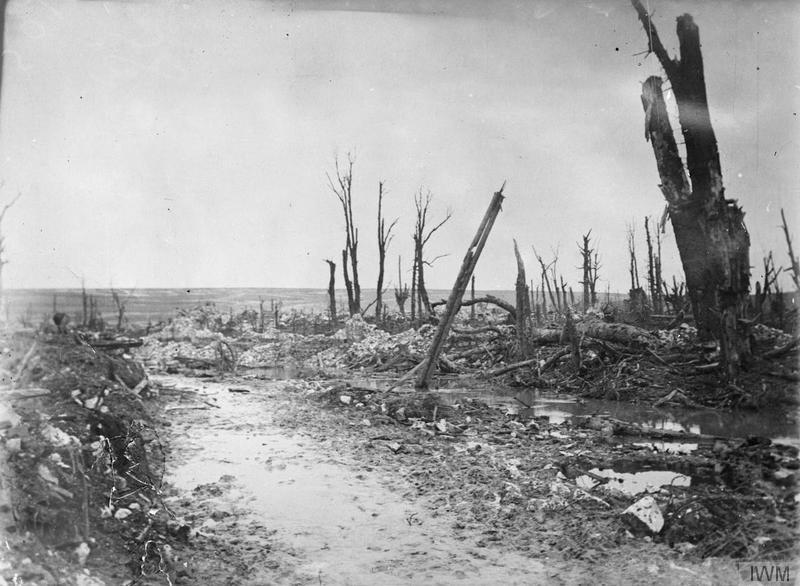
Loos trees

The Commonwealth War Graves Commission (CWGC) has unveiled a Battle of Loos Remembrance Trail.

It aims to tell the tale of an offensive that was the largest of the war for the British Army up until that moment and involved 75,000 men on its first day alone.

First use of poison gas

The Battle of Loos was fought from September until October 1915 and witnessed both the first British use of poison gas and also the first major deployment of inexperienced wartime volunteers in an offensive on the Western Front. At the time it was widely termed ‘the Big Push’.

The CWGC Loos Remembrance Trail creates a journey of discovery that incorporates the battlefields of Loos and some of the CWGC cemeteries where many of those killed in the battle lie buried.

The CWGC’s Director of external relations, Colin Kerr, said: ‘The casualties on the first day, 25 September, were the worst yet suffered in a single day by the British army – including some 8,500 dead – and yet the Battle of Loos has largely been forgotten.

‘We believe that is not right and that these men, and the cemeteries and memorials where they are commemorated, deserve to be better known and visited and that is why we have launched this fascinating and easy to follow remembrance trail.’

Scots at Loos-1

Scottish piper wins the VC

The remembrance trail tells the story of some of the 17 Victoria Crosses that were awarded during the Battle of Loos.

Among the medal’s recipients was 40-year-old Piper Daniel Laidlaw of the 7th Battalion Kings Own Scottish Borderers.

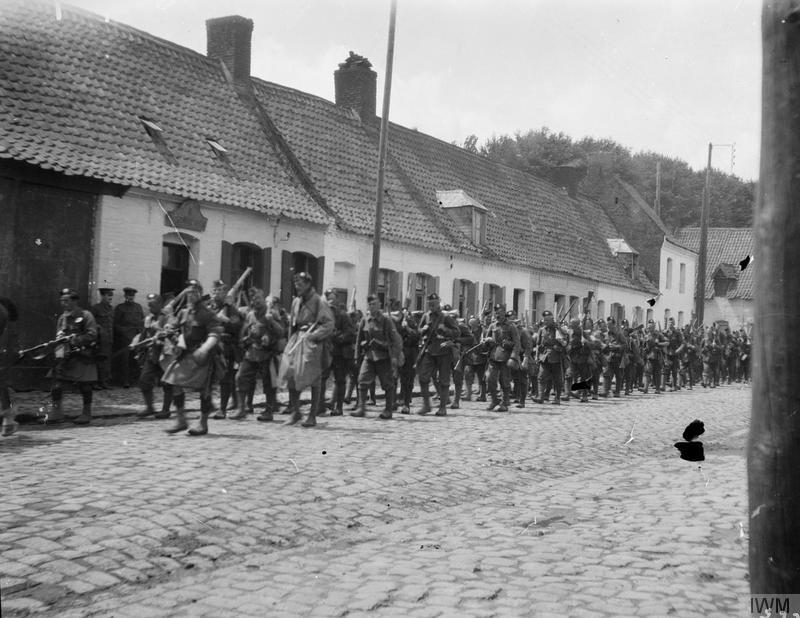
With his unit pinned down in a front-line trench by an artillery bombardment and with British gas blowing back towards their position, Laidlaw set his pipes to his lips and began a rendition of the regimental march Blue Bonnets over the Border.

So inspired were his comrades by the tune that they charged out of their trench and, despite heavy losses, reached the German trenches. Laidlaw followed the advance and despite being knocked over by a shell and wounded by shrapnel continued to play the pipes while lying on the ground weakened by his injuries.

Afterwards he said: ‘I was only doing my duty. A piper’s place is always at the head of his regiment. I always led them on the march, and it was right that I should lead them when they went to battle.’

Laidlaw’s medals are on show at the National Museum of Scotland in Edinburgh.

Loos advance

Posted in Events | Tagged , , , , , , , , , , , , | 1 Comment

Events mark sinking of tragic Navy warship

hms-natal-h

A series of events is planned to mark the hundredth anniversary of one of the lesser-known naval disasters of the First World War.

HMS Natal capsized in the Cromarty Firth in the Highlands on 30 December 1915, minutes after an explosion tore through the ship.

Explosion in a magazine

Captain Eric Black, the ship’s skipper, was hosting a film show for officers, their wives, a local family and nurses from the nearby hospital ship Drina when ammunition exploded in one of the vessel’s magazines. Around 400 people were lost, although many of the crew were saved because they were ashore at the time – either watching or playing in a football match.

Communities close to the Cromarty Firth will be marking both the 110th anniversary of the Natal’s launch at Barrow-in-Furness on 30 September 1905, and 100 years since it sank on 30 December 1915.

hms-natal-invergordon

The remains of HMS Natal in the 1920s

Tragedy covered up

Valerie Campbell-Smith, a trustee of Invergordon Museum, says the tragedy was hushed up at the time. ‘This came early on in the war and I don’t think they [the government and Admiralty] wanted to admit more than 400 died in their own land.’

The commemorative events will begin on 30 September with a memorial church service at Invergordon Parish Church. It will be followed by a wreath-laying ceremony at the buoy which marks where the remains of the wreck lie.

The hull of HMS Natal remained visible for many years after her sinking and it was customary for Royal Navy crews to salute the wreck on entering and leaving the Cromarty Firth. Much of the steel from the vessel was salvaged following World War II and what remained was blown up in the 1970s to prevent it providing a danger to shipping.

The exact figure of those lost remains unclear. Many survivors were picked up by nearby vessels, but in fading light and icy seas nobody would have lasted long in the water. Among those rescued was the ship’s cat, plucked to safety by leading stoker Thomas Robinson.

Survivors of HMS Natal

Survivors of HMS Natal

Posted in Events | Tagged , , , , , , | Leave a comment

Historians rediscover missing British soldier

Private-Edward-Pratt

The grave of a missing First World War soldier has been discovered by historians in the north of England.

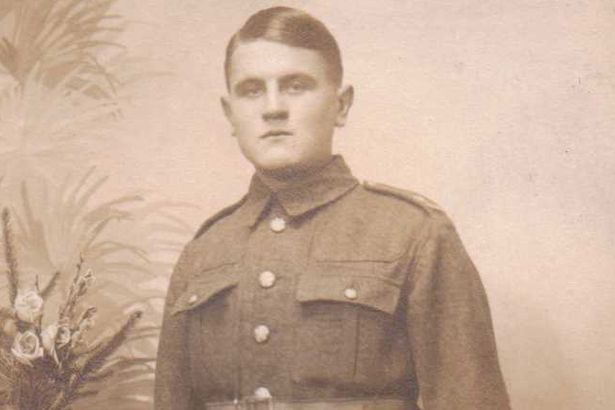
Private Edward Pratt, of the Durham Light Infantry, was a former quarryman who fought at the battles of the Somme and Passchendaele and was wounded in action on two separate occasions in 1916.

Died of wounds

In October the following year, he sustained injuries in a bombardment that left him with partial paralysis. He died of his wounds in September 1918, aged just 26.

Four years later his widow also died – leaving the couple’s three children (all under the age of 10) as orphans.

His grave was never marked, and Private Pratt remained a forgotten casualty of the First World War for almost a century. His tale came to light when members of the Aycliffe Village Local History Society set out to research the stories of the 13 men whose names were carved on their village’s war memorial.

‘The facts fitted’

An appeal for information was spotted by his granddaughter Margaret Prest, 74. ‘I was so pleased to find him after all these years,’ she said. ‘All the facts fitted. I read it and I was crying.

‘My mother knew that her father had died in the war, she had a photograph, but she was only two and she never knew where he was buried.’

Posted in News | Tagged , , , , | Leave a comment

Restored First World War ship on show at Portsmouth Dockyard

HMS_Monitor_M33_-_4_April_2010_at_Portsmouth_Naval_Dockyard

The First World War monitor HMS M33 is the latest addition to the collection of warships on display at Portsmouth’s Historic Dockyard.

Restored at a cost of £2.5m, largely paid for by the Heritage Lottery Fund, the vessel saw service at Gallipoli in 1915, when her guns bombarded Turkish defensive positions in support of British and Commonwealth infantry offensives.

Basic quarters

Essentially a floating gun platform with a shallow keel, M33 was far from being the most comfortable vessel in the First World War Royal Navy and creature comforts were decidedly limited for her crew of sailors and marines.

That workaday aspect of the vessel has been carefully preserved, adds project director Matthew Sheldon: ‘We want that impression of a real working ship to come across. ‘I think she is a wonderful contrast to Victory, to Mary Rose, to Warrior and to our own national museum. She is that piece of the First World War history that nobody has been able to see before so I really hope people will come and enjoy seeing her.’

‘Flirting with danger’

Following her service in the Dardanelles, M33 sailed to northern Russia during the British campaign against the Bolshevik forces, at which time she was given the distinctive ‘dazzle’ paint scheme that she exhibits today.

Professor Dominic Tweddle, director general of the National Museum of the Royal Navy, added: ‘Flirting with danger, but never hit, she lost not a single man. She was indeed a lucky ship.

‘Beautifully restored by a dedicated team she reminds of the sacrifice and bravery of those on all sides.’

To find out more about the restored First World War monitor M33 click here.

Posted in Events | Tagged , , , , , , , , , , , , | Leave a comment

Memorial garden for VC-winning Guards officer

Thomas_Tannatt_Pryce

A memorial garden has opened in Maidenhead, Berkshire, to commemorate a First World War Victoria Cross winner.

Captain Thomas Tannatt Pryce (32) of the Grenadier Guards, was reported missing on 13 April 1918 after a fierce, close-quarter battle with German troops at Vieux-Berquin in France.

‘Devotion to duty’

Captain Tannatt Pryce was born in The Hague, Holland, but lived in Gringer Hill, Maidenhead. Prior to entering the army he worked in the City of London and he served initially with the Honourable Artillery Company and the Gloucestershire Regiment prior to transferring to the Guards. He had already been awarded the Military Cross.

His VC citation states he won the gallantry medal for, ‘most conspicuous bravery, devotion to duty, and self-sacrifice’.

It adds that the officer had led two platoons of guardsmen to attack a village, where they had killed more than 30 enemy soldiers.

The following day, however, the group faced a number of intense counter-attacks. By the evening only around 17 men were left out of the original force and these were very low on ammunition.

‘Overwhelming odds’

Tannatt Pryce was last seen, ‘engaged in a fierce hand-to-hand struggle with overwhelming numbers of the enemy’.

His body, like those of many of those under his command, was never found. His name is inscribed on the Ploegsteert Memorial to the Missing. His VC is on show at the Guards Museum in London.

Posted in Events | Tagged , , , , , , | Leave a comment

Band tells story of Welsh soldier shot at dawn

640px-Shot_at_dawn_memorial_2

The story of a young soldier who was shot for desertion after he turned himself in at a police station has been re-told by the Welsh rock/folk band Trenchfoot.

Private William Jones, of the Royal Welsh Fusiliers, had volunteered for the army in 1915 while still a teenager. Assigned to the front line he was serving as a stretcher-bearer when he went missing on 15 June 1917. He had helped a wounded comrade to an aid post near their trenches, but then disappeared.

He made his way across the Channel and home, but was then persuaded by his mother to hand himself in at the local police station in Neath. However, he was shown no leniency and was one of 306 British soldiers who were executed during the First World War.

Andy Edwards, spokesman for Trenchfoot, said: ‘It is thought William’s mother urged him to turn himself in after he arrived home in Glynneath having deserted the army, an act that would have brought shame on the family.

‘The young soldier was probably suffering from post-traumatic stress disorder induced by the very grim things that he saw. To make matters worse, it’s thought he was actually too young to join up and was likely one of the many hundreds of volunteers who lied about their age and were signed up by a desperate army.’

The band’s song Post at Dawn tells the story of Private Jones and his fateful decision to hand himself in.

For more about the band Trenchfoot, click here.

Posted in Events | Tagged , , , , , , , , , , , | Leave a comment