World War I German U Boat visible in Kent

Image

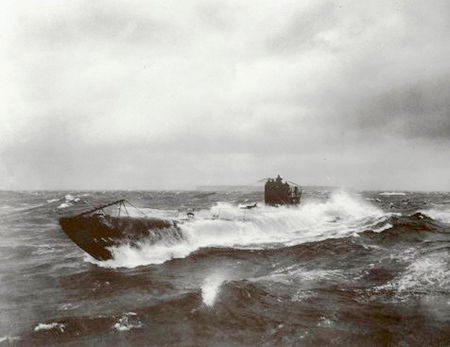
The remains of a German World War I U boat are visible on a mudflat next to the River Medway in Kent.

The BBC reports that experts believe it is UB122, which was one of more that 100 U boats that surrendered at the end of World War I and were subsequently scrapped by the British.

UB122 was built in Bremen and launched on 4 March 1918. She carried 10 torpedoes and a 8.8cm deck gun. She had a crew of three officers and 31 men

To see the BBC footage of the boat, click here.

Posted in News | Tagged , , , , , , , , , | Leave a comment

Heroic World War I women remembered at Etaples

Image

The CWGC has installed new visitor information panels (VIP) at Etaples Military Cemetery in France.

The smartphone technology embedded within this panel reveals the contribution made by women during World War I and features the stories of 32-year-old Nursing Sister Dorothea Crewdson and YMCA volunteer Bertha ‘Betty’ Stevenson.

Sister Crewdson was serving as a Voluntary Aid Detachment nurse at Etaples when it was attacked by German aircraft. Despite having been wounded, she refused treatment in order to care for her patients. For this selfless action, she was awarded the Military Medal. She died in March 1919.

In April 1917, Betty Stevenson was posted to Etaples as a YMCA driver, where she was responsible for transporting relatives visiting wounded soldiers. In 1918, she was killed in an air raid while assisting French refugees.

She was posthumously awarded the Croix de Guerre avec Palme by General Pétain.

Etaples was the largest British base during World War I and was a place with which most troops would have been familiar. There are more than 10,000 identified casualties in the town’s military cemetery.

There is more about Sister Crewdson’s diary, which has been published by W&N, here.

Posted in Events | Tagged , , , , , , , , , , , , | Leave a comment

Premier League to finance football pitch in Ypres

Image

The Premier League is to build an all-weather football pitch in Belgium as part of World War I Centenary commemorations.

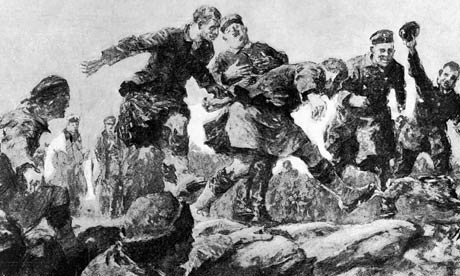
The Daily Mirror reports that a high-tech ‘3G’ pitch will be opened in Ypres and will be the venue for an annual tournament marking the anniversary of the games played between British and German troops in 1914.

VC medal holder Johnson Beharry was in Ypres yesterday to witness football games between youngsters from Belgium, France, Germany and Great Britain and to lay a wreath at the Last Post ceremony at the Menin Gate memorial.

Beharry, who won his award for bravey in Iraq, said: ‘The youngsters involved were very much engaged in what was going on and discovering the history of the war. It means the message will be carried into future generations.’

Posted in Events | Tagged , , , , , , , , , , | Leave a comment

Lost Diggers of Vignacourt at Australian National War Memorial

Image

Remember Me; the Lost Diggers of Vignacourt is one of the exhibitions currently on show at the Australian National War Memorial.

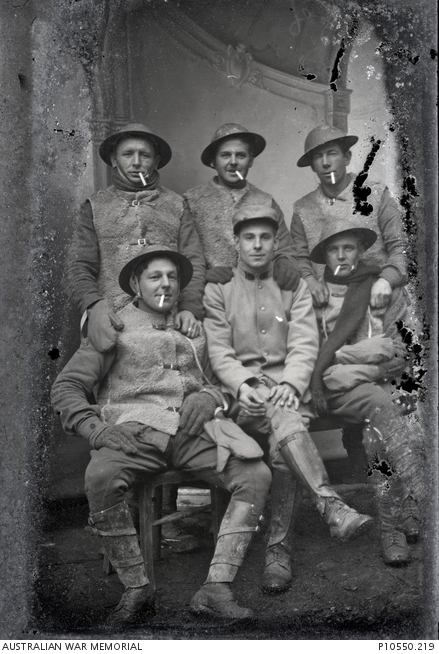
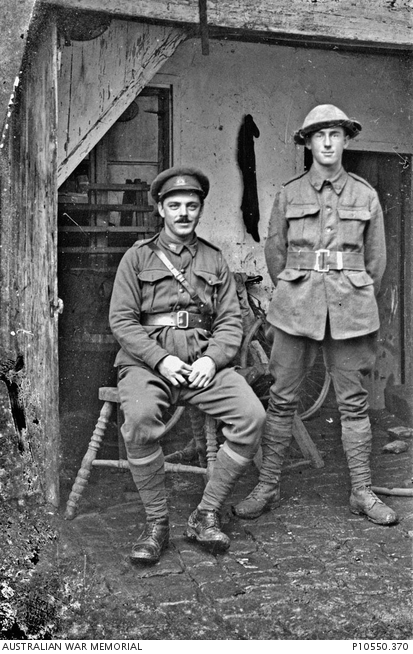
Vignacourt was a small French village in a rear area of the Allied forces that served as a staging point, casualty clearing station and recreation area for troops of all nationalities on their way to and from the battlefields of the Somme.

Remember Me; the Lost Diggers of Vignacourt focuses on how one entrepreneurial local photographer made a business out of taking portrait photographs of passing soldiers.

Captured on glass, printed into postcards and posted home, the photographs made by the Thuillier family still endure and this show concentrates mostly on how they depict the Australian involvement on the Western Front, from military life to the friendships and bonds formed between soldiers and civilians.

To see the more than 800 of these glass-plate negatives featuring Australian troops that can be viewed on the Australian National War Memorial website, click here

Image

Image

Posted in Events | Tagged , , , , , , , , | Leave a comment

Welsh Memorial Flanders seeks completion funds

Image

The campaign to create a memorial to the Welsh soldiers who lost their lives in Flanders during World War I has raised more than £30,000, but requires a further £60,000 to complete its plans.

The monument will comprise a cromlech, similar to those seen atop ancient Welsh burial chambers, topped by a bronze dragon and surrounded by a garden of remembrance.

The regional authority has donated a piece of land on Pilkem Ridge, near Ypres, for the memorial and planning permission is in place. It will bear the inscription: ‘Dedicated to all persons of Welsh descent who took part in the First World War.’

Campaigners point out that Wales suffered particularly high per capita losses during World War I, with Welsh units heavily engaged on the Somme and at the major battles of 1917 and 1918.

Many Welsh soldiers also served in non-Welsh infantry regiments, the Royal Artillery, Army Service Corps, Royal Flying Corps and the tunnelling battalions of the Royal Engineers, which recruited many Welsh coal miners.

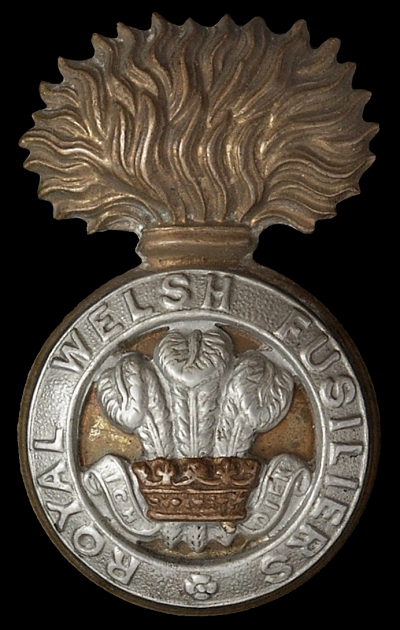
While there is a specifically Welsh monument at Mametz on the Somme, there is currently no similar memorial in Flanders, despite the numbers who fell there. The area around Langemark and Pilkem Ridge is a particularly emotive one because it was here that Welsh poet Hedd Wyn was killed in 1917 while serving in the 15th Battalion, Royal Welsh Fusiliers as part of the 38th (Welsh) Division.

For more about the memorial and to donate, click here.

Posted in News | Tagged , , , , , , , , , , , , , | Leave a comment

Real life in the trenches of World War I

Image

Lieutenant Hugh Butterworth, 9th Battalion, Rifle Brigade writes home on 10 June 1915.

‘Men look fearsome ruffians in the trenches. The water is bad for shaving, as if you cut yourself you may get a bit poisoned, so they mostly grow beards. 

‘Personally I take a tot out of my water bottle, but I haven’t washed yet today (2.30pm). We’re in for four days and can’t have our boots, putties or equipment off all that time. We’ve had rain, so I’m slopping about in gum-boots fairly covered in mud owing to crawling operations this morning.

‘Shall get a wash before dinner tonight. However, officers don’t get much sleep – about 4 in the 24. Also rifles and ammunition get filthy dirty and have to be continually inspected.

‘I am going out with the captain soon to some spot where we can see the German lines very well. Of course, I have looked at them through periscopes and when flares are shot up at night. Shall probably work off a big mail before I go out, as there’s plenty to talk about, and one can dart into one’s dugout when things are quiet.

‘Best wishes to all. The only thing I object to is censoring my platoon’s letters.

‘My servant has just got one in the head – not badly – which is highly annoying for me.’


Posted in Events | Tagged , , , , , , , , | Leave a comment

World War I paintings at Historic Dockyard, Chatham

Image

An exhibition of works by Sir John Lavery (1856 – 1941), held recently at the Historic Dockyard in Chatham, illustrated the variety of the artist’s work.

The 31 paintings were mostly from the extensive collection of the Imperial War Museum.

The showed insights into the conflict through the eyes of a renowned war artist and depict scenes from the naval campaigns. The Battle of Jutland, Scapa Flow and the channel coast all featured, as did the sailors who crewed Britain’s many warships.

Image

Posted in Events | Tagged , , , , , | Leave a comment

French President acknowledges World War I African troops

Image

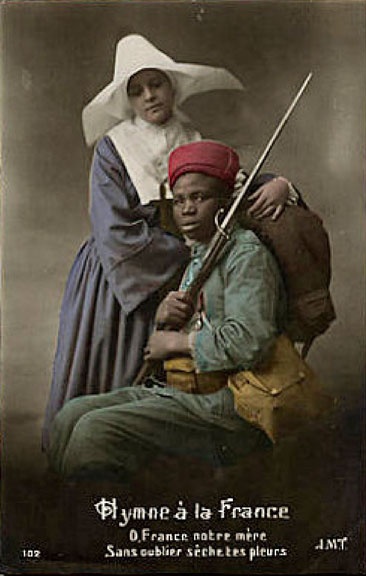
French President François Hollande has said France will not forget the African soldiers who died for it during World War I.

The President says the Centenary of World War I in 2014 will offer the chance to remember their sacrifice. ‘I would like no soldier who shed blood in battle to be forgotten,’ he said.

‘African troops actively participated in World War I. Their contribution was crucial,’ Charles Onana, a French journalist and essayist who has written widely on 20th century French and African history, told France 24. ‘But apart from the villages and rural regions where they were present on the ground, the larger French public isn’t necessarily aware of that. I’ve often been faced with high school and university students who knew nothing about these men’s engagement.’

France called on roughly 500,000 African men to fight alongside 8 million soldiers from mainland France. Present in what was referred to as the ‘colonial army‘ were 175,000 Algerians, 40,000 Moroccans, 80,000 Tunisians and 180,000 sub-Saharan Africans.

Onana has also called for more rigorous teaching of World War I history in French class rooms. ‘The duty of remembrance must have an academic component, which consists of including the African contribution [to France’s World War I effort] in history text books.

‘It’s important not just to mention, but to explain the history of these men in order to combat ignorance and reactionary behaviour. Young people would then know that during the war, there was solidarity between all soldiers and that no one paid attention to race differences.’

Onana believes France still lacks a willingness to acknowledge its colonial history. ‘It’s a part of the French story that is ignored, because it is linked to colonialism, a subject that elicits discomfort whenever it is raised.’


Posted in Events | Tagged , , , , , | Leave a comment

Remains of missing World War I soldier found on Somme battlefield

Image

Remains of a missing World War I soldier were discovered last week near the Ulster Tower memorial on the Somme battlefield.

They were found as a mechanical digger was operating as part of plans to improve the parking area and provide a cobbled pathway from the Tower to Connaught Cemetery and Thiepval Wood as well as to widen the roadway.

Soldier’s equipment and what appeared to be human remains were spotted, the Commonwealth War Graves Commission (CWGC) was notified and all necessary steps put in place to recover the remains.

The Western Front Association suggests the soldier may have been a member of the Royal Irish Rifles – the regiment’s cap badge was among the remains recovered (pictured above).

There is more on the story on the WFA site, here.


Posted in Events | Tagged , , , , , , , , , , | Leave a comment

Letter home tells of dangers of Ypres in 1915

Image

A letter home from lieutenant Hugh Butterworth of the 9th Battalion, Rifle Brigade. In it, he displays a characteristic joviality and dry wit despite the dangers of his situation.

Trenches

Sunday, June 20th, 1915.

3.15am

What a night! We left camp at 7, marched through Ypres, the most impressive sight I’ve ever seen, the whole place is absolutely gone. Every house is smashed to bits, absolutely a wonderful sight and very awesome.

Well – at about 9 or so I picked up a couple of guides (we were marching by platoons), Scotchmen, and they brought us up to these trenches. We got gassed just as we came up. We were entering the most complicated trenches imaginable and we got the gas good and proper.

My men were distinctly panicy and I had to mix profanity and jest in even quantities, slight preference given to profanity. Every platoon in the British army seemed to be mixed up. Fortunately we had respirators and good smoke helmets so we got through. It’s rotten, though.

After a bit I collected my platoon, (I reached my position the first time with one corporal and one rifleman) and got them told off in their places and then things started. 

We had continual shell-fire, shrapnel and gas-bombs and some very heavy rifle and machine-gun fire away to the left and right.

So far, my platoon is unhurt but we’ve had some close calls. I had a sand-bag whipped off just above my head at about 1.15 this morning. Bullets of course whizz the whole time.

The chief objection to this trench is the fact that it is more or less littered with dead, and if you dig you invariably hit some corpse. It’s quiet at least now and I’m penning this.

It’s a gruesome business, but perhaps we get used to it. One doesn’t seem to have a dog’s chance when things are moving.

Oh! Inter alia I was knocked clean over by a shell coming in this morning but was unhurt – a quaint sensation it was too. Why it didn’t slay me I know not. I will continue anon if I am still cumbering the planet. Au revoir. I must take a turn round the trench and see that all is serene.

Posted in Events | Tagged , , , , , , , , , | Leave a comment