Cruise ship prepares for April 2015 Gallipoli visit

Image

On 25 April 2015, cruise ship Saga Sapphire will be anchored off Anzac Cove – 100 years to the day that the Australian and New Zealand Army Corps went ashore there.

Passengers will be able to take part in trips to the Gallipoli battlefield and the Greek island of Lemnos, near the entrance of the Dardenelles, which acted as the muster point for the landings. They will also be invited to join the ship’s War Literature Club – a chance to read and discuss poetry, novels and letters from World War I, accompanied by an expert on this literary genre.

Saga Sapphire departs Southampton on 5 April 2015 for 31 nights visiting El Ferrol, Cartagena and Palma, Spain; Tunis, Tunisia; Piraeus, Syros, Thessaloniki and Lemnos, Greece; Canakkale, Istanbul, Anzac Cove, Turkey; Iraklion, Crete; Valletta, Malta and Gibraltar. Prices begin at £3,499.

For more on the cruise, click here.

Posted in Events | Tagged , , , , , , | Leave a comment

Former Australian PM says World War I ‘devoid of virtue’

icknield_176_mid

Former Australian prime minister Paul Keating has described World War I as a war devoid of virtue that arose from the quagmire of European tribalism.

The Australian newspaper reports that Keating was forthright as he delivered the Remembrance Day commemorative address at the Australian War Memorial in Canberra.

He said: ‘Nine months from now, 100 years ago, the horror of all ages came together to open the curtain on mankind’s greatest century of violence – the twentieth century.’

‘What distinguished the First World War… was the massive power of the antagonist, modern weaponry, mass conscription and indefatigable valour produced a cauldron of destruction the world had never seen.’

‘The First World War was a war devoid of any virtue. It arose from the quagmire of European tribalism. A complex interplay of nation-state destinies overlaid by notions of cultural superiority peppered with racism.’

‘The virulent European disease of cultural nationalism and ethnic atavism not only destroyed Europe, it destroyed the equilibrium of the world.’

Australia was dragged into the conflict by its historic links to the UK, Mr Keating added. ‘We had escaped that mire, both sociologically and geographically. But out of loyalty to imperial Britain, we returned to Europe’s killing fields to decide the status of Germany, a question which should earlier have been settled by foresight and statecraft.’

To read the original story, click here.

Posted in News | Tagged , , , , , , | 2 Comments

Remembering a Seaforth Highlander of World War I

Image

Corporal John MacKenzie of the Seaforth Highlanders was killed in action in Belgium on 1 August 1917.

His descendants say the 20-year-old from Sutherland had been awarded the Military Medal four months earlier and have letters written by his officers that refer to him as a ‘bold, fearless and inspiring’ soldier and a ‘typical Highlander’.

The Ross-shire Journal reports that John enlisted in June 1915 at the age of 18 and joined the 4th Battalion, Seaforth Highlanders. He went to the Western Front in October that year and was later placed in charge of his company’s bombing section.

On the evening of 1 August 1917, he and his comrades were digging in at a new position. MacKenzie, 25-year-old lance sergeant Thomas Fraser and a few others from No.9 Platoon were working together when a shell landed among them, mortally wounding MacKenzie and killing Fraser.

The newspaper reports that lieutenant John MacDonald, of 3 Company, wrote to the MacKenzie family: ‘I cannot tell you how sorry I feel at his death, and how I sympathise with you in your loss of such a son. Jock was to us the finest type of solider, bold, fearless, inspiring all his comrades to do gallant deeds which were only natural to him.

‘He was in charge of the bombing section and I can tell you I have no NCO I respected and trusted more than I did your son. His loss will be a big blank in the platoon. The bombers will miss their bold, intrepid leader sorely. He was always ready to cheer and encourage them when everything seemed dark, and they were weary with the water and the mud.

‘His cheery smile and genial atmosphere was enough to dissipate everything that seemed disheartening, and they were ready to follow him in everything that had to be done.’

‘We know the blank there will be in your household, and while we sorrow with you in your sorrow, we are proud, as you are proud, of having had with us the finest soldier the British Army could have had. You have truly given of your best for your country.’

Corporal MacKenzie’s name appears on the Tyne Cot Memorial to the Missing near Ypres. Sergeant Fraser, from Inverness, is commemorated on the Menin Gate. To read the original story, click here.

Posted in Events | Tagged , , , , , , , , , , , , | Leave a comment

The murder of prisoners of war in World War I

Image

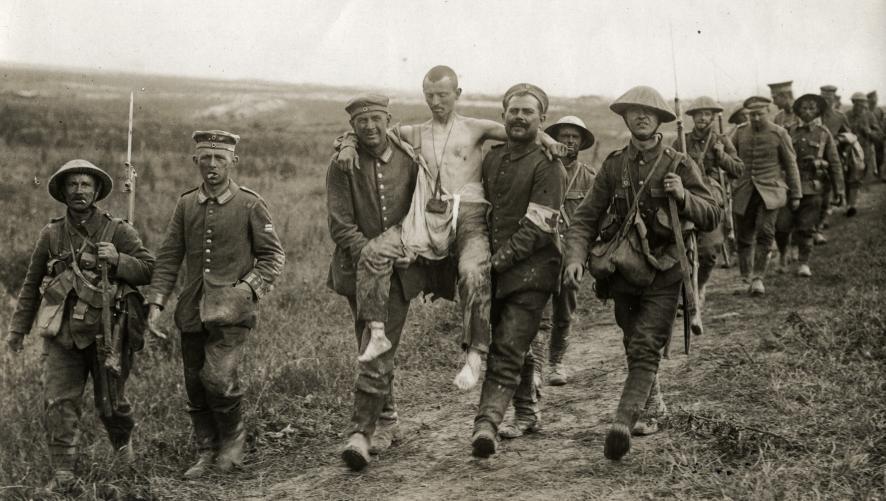
The recent conviction of a Royal Marine for the murder of a wounded Taliban fighter has brought to the fore the question of when a combatant should be treated as a prisoner of war and viewed with mercy.

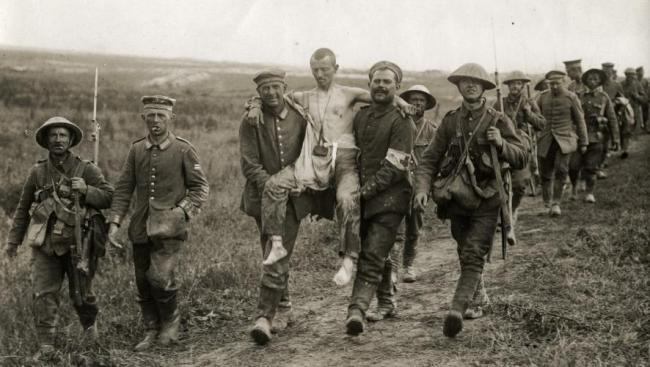
During World War I this line was crossed probably far more frequently than acknowledged by official versions of events.

To an extent this is understandable. Soldiers would live for weeks, months, possibly even years with barely a glimpse of the enemy. Then, within a few minutes they could be in close proximity with the soldiers who they felt had been trying to kill them for so long.

In addition it must have been difficult for attackers in particular to react calmly when defenders attempted to surrender in the heat of battle – especially when they had just witnessed their friends and comrades being killed and maimed.

The idea of the very people responsible suddenly offering to surrender must have proved a difficult one for many soldiers to comprehend.

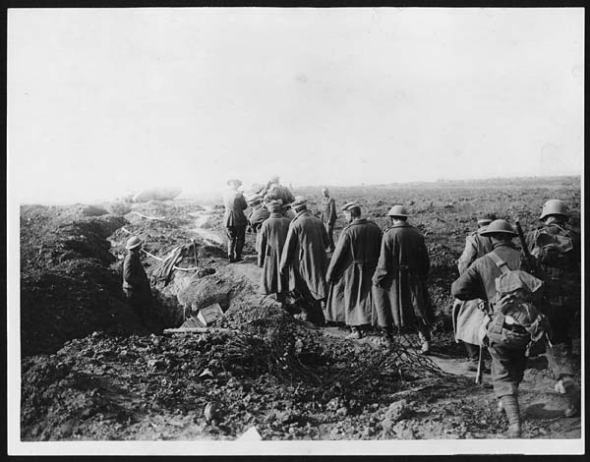
Various first-hand accounts describe the dangers involved for those trying to surrender or who had suffered wounds during an attack and were unable or unwilling to move.

Lance-corporal HC Lancashire of the London Regiment recalled an episode on 1 July 1916 (the first day on the Somme) in Martin Middlebrook’s book of the same name.

‘One of our bombers, ignoring instructions, pulled a hessian curtain aside in the entrance of a dug-out, instead of calling out first. As he bent down to call out, a German hiding behind the curtain delivered an upper-cut.

‘Infuriated that a German should punch him on the jaw, he screamed at him to come out. It was a low entrance, the German had to emerge bending down. The bomber raised his knobkerrie and felled the German with one blow.’

A knobkerrie was a stout stick with a spiked metal ball on the top. A blow to the head with such a weapon would have been fatal.
Image

Prisoners were also killed in more cold-blooded circumstances than that mentioned by Lancashire.

Private TS Frank of the 2nd Battalion, the Green Howards, recalled: ‘In the heat of an attack, a German came running past us, surrendering. One of us dropped a grenade with the pin out into his wide pocket and waved him back. When it went off we all laughed, me included.’

A similarly chilling episode was mentioned by lance corporal JJ Cousins of the 7th Battalion, Bedfordshire Regiment.

‘We are filled with a terrible hate. Our actions are born of a terrible fear, the will to survive. Some of the Germans were getting out of their trenches, there hands up in surrender; other were running back to their reserve trenches. To us they had to be killed. Kill or be killed. You are not normal.’

Private JH Harwood of the 6th Battalion, Royal Berkshire Regiment, witnessed a similar episode at the Battle of the Somme.

‘I watched some Germans coming out of a dug-out and surrendering. They were holding up photographs of their families and offering watches and other valuables in an attempt to gain mercy but, as the Germans came up the steps, a soldier, not from our battalion, shot each one in the stomach with a burst from his Lewis gun.’

Even some distance from the frontline prisoners were not necessarily safe and could lose their lives for relatively trivial reasons. Lieutenant AW Lee MC saw the following episode unfold.

‘I watched our troops bringing German prisoners back, trying to make them walk in the open alongside a communication trench. The Germans kept going down into the trench. This annoyed their escorts so much that, eventually, they threw some grenades among the Germans and left them to it.’

Seen through the prism of 100 years such events seem truly dreadful, but war is a dehumanizing business. It is easy to be judgmental from the safety of one’s own living room – or courtroom – and less easy for the vast majority of us to understand the extremities of emotion experienced by those caught up in the immediacy and horror of close-quarter combat. As private Cousins observed about that day in 1916: ‘You are not normal.’

Posted in Events | Tagged , , , , , , , | Leave a comment

Herts at War seeks lottery funding for Centenary commemoration

Image

Centenary community project Herts at War is in the process of seeking funding from the UK’s National Lottery Heritage Fund.

If successful, it hopes to set up an exhibition on Hertfordshire’s experience in World War I. This will open as a pop-up museum in Letchworth town centre in 2014 and then tour to various locations around the county. Entry will be free to the public.

Organisers of the project intend to work in line with a ‘real-time’ concept that will chart the progress of the war day-by-day 100 years after the event, allowing Hertfordshire residents to understand what their ancestors of a century ago would have experienced.

The project’s aim is to remember the sacrifice of the people of Hertfordshire during World War I and to provide understanding of those whose lives were inevitably changed by the conflict.

To find out more and to get involved e-mail info@hertsatwar.co.uk

Posted in Events | Tagged , , , , , , , | Leave a comment

Commemoration at Menen Wald German Military Cemetery

Image

On 5 October, a commemoration ceremony was held at Menen Wald German Military Cemetery by the city of Menen and the municipality of Wevelgem.The event was supported by the Volksbund Deutsche Kriegsgräberfürsorge (VDK).

Menen Wald, with 48,049 burials, is the largest German World War I cemetery in Europe.

The event marked the publication of the history of the cemetery and of all those former German cemeteries that were concentrated into Menen Wald over the decades.

The ceremony was attended by the German ambassador to Belgium, Dr Eckart Cuntz and other dignitaries. The CWGC was represented by France and Northern Europe area director, Ian Hussein.

Construction of Menen Wald began in June 1917 and, by the end of the war, there were 2,664 casualties here, including 30 Commonwealth airmen and prisoners of war who had died in captivity.The Commonwealth war dead were later reburied at Tyne Cot Cemetery and Harlebeke New British Cemetery.

The German cemetery was enlarged around 1930 and again in 1955-1956. It is one of the four remaining German military cemeteries in West Flanders.

Posted in Events | Tagged , , , , , | Leave a comment

Francois Hollande announces France’s Centenary plans

Image

French leader Francois Hollande has announced that France will invite representatives from all 72 countries involved in World War I to take part in its annual Bastille Day military parade in July 2014.

Hollande added that Germany’s president, Joachim Gauck, will attend a ceremony in France on 3 August 1914 – a century after the two countries declared war on each other.

‘I asked the president of the Federal Republic [Germany] Mr Gauck to come to France on the occasion of the commemoration of this tragic act, he has accepted and I thank him for that,’ said Mr Hollande during a speech at the Elysée palace launching France’s Centenary commemorations.

French authorities added that war dead from among the allies, Germany and Austria-Hungary will receive equal treatment when a memorial is built in Notre Dame de Lorette in the Pas-de-Calais, northern France.

Some 600,000 soldiers who died on the battlefield in the area will have their names listed in alphabetical order.

France itself lost around 1.4 million soldiers killed during the war. ‘There is no municipality in France that did not have victims in World War I,’ Hollande said, adding that World War I was, ‘the hardest trial that the French population had ever known’.

He also promised to create a space commemorating soldiers who were shot for cowardice and desertion in war to be built at Paris’ war museum, Les Invalides.

Posted in Events | Tagged , , , , , , , , | Leave a comment

Centenary exhibitions announced at Royal Museums Greenwich

PU9963

Rozanne Hawksley: War and Memory

May – November 2014

Queen’s House

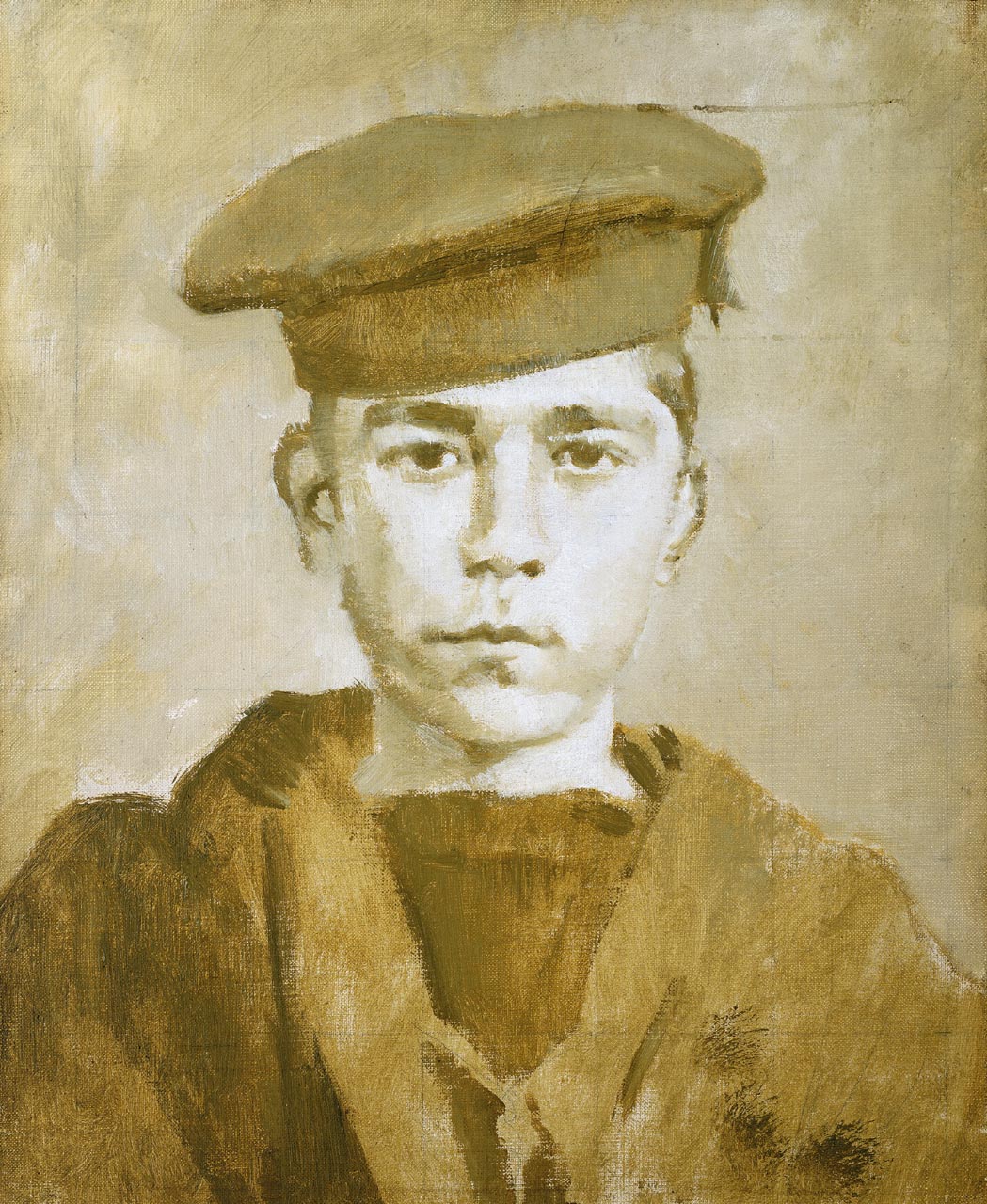
Rozanne Hawksley is regarded as one of the UK’s great textile art innovators. Rozanne Hawksley: War and Memory examines remembrance, representation and memory in the Queen’s House, which was once a school for sailors.

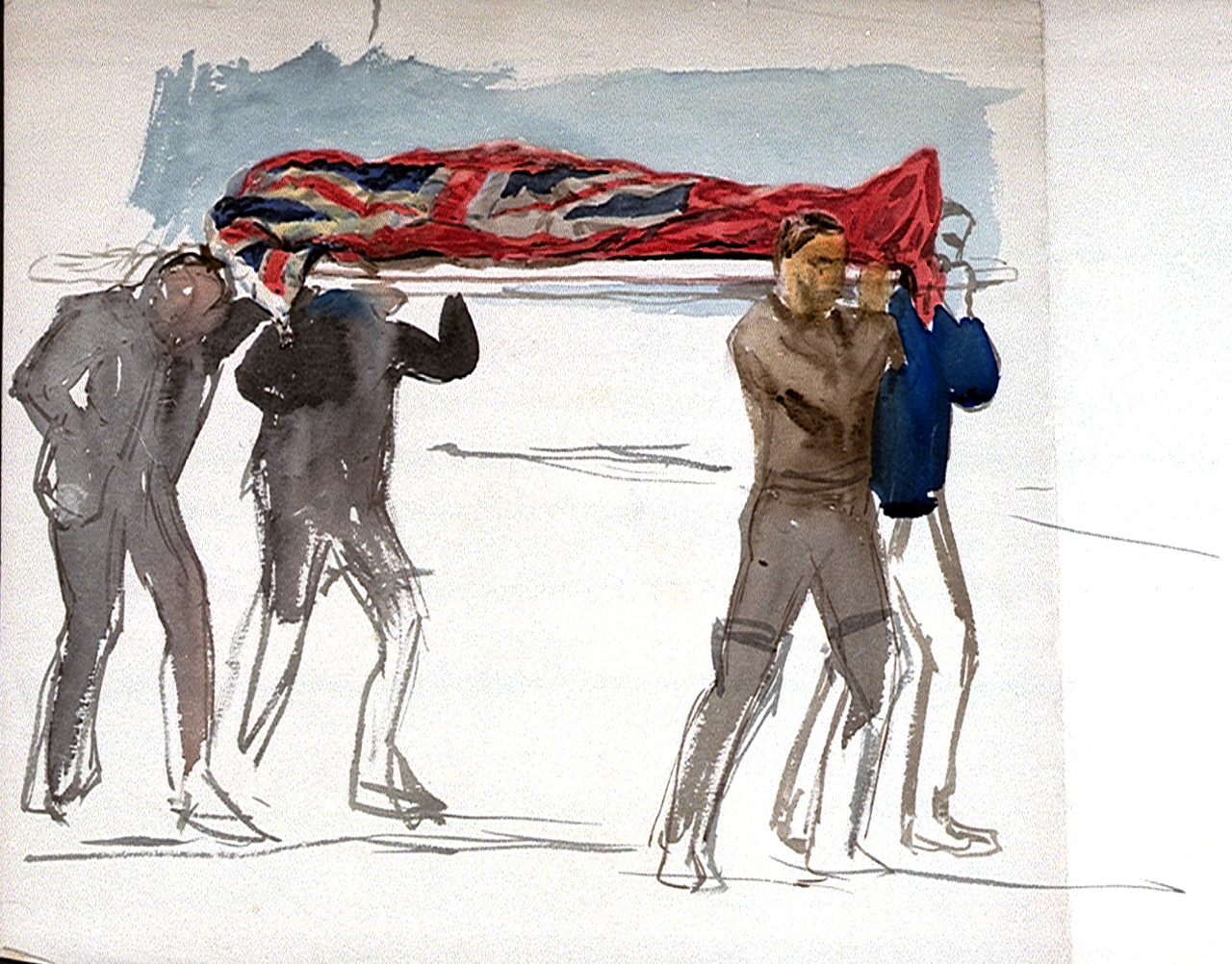
The installation features new work alongside pieces from Hawksley’s career including Seamstress and the Sea, which refers to the artist’s maternal grandmother – a widow who sewed sailor’s collars for a living from the World War I until her death during World War II.

PW1790

War Artists at Sea

Queen’s House

February 2014 – February 2015

Showcasing the Royal Museums Greenwich’s collection of World War I and World War II art, this new display includes portraits, battle scenes and depictions of everyday life during conflict.

Official war art served the purposes of commemoration, instruction, documentation and propaganda as well as raising morale at home and at the front.

War Artists at Sea features paintings and works on paper and consists of a rolling programme of displays throughout 2014.

Artists on display include: Leslie Cole, Eric Ravilious, Richard Eurich, Norman Wilkinson, Stephen Bone, William Dring, John Worsley, and Charles Wheeler.

Bhc2635

Forgotten Fighters: the First World War at Sea

National Maritime Museum

Opens August 2014

This new gallery explores the naval and maritime dimensions World War I.

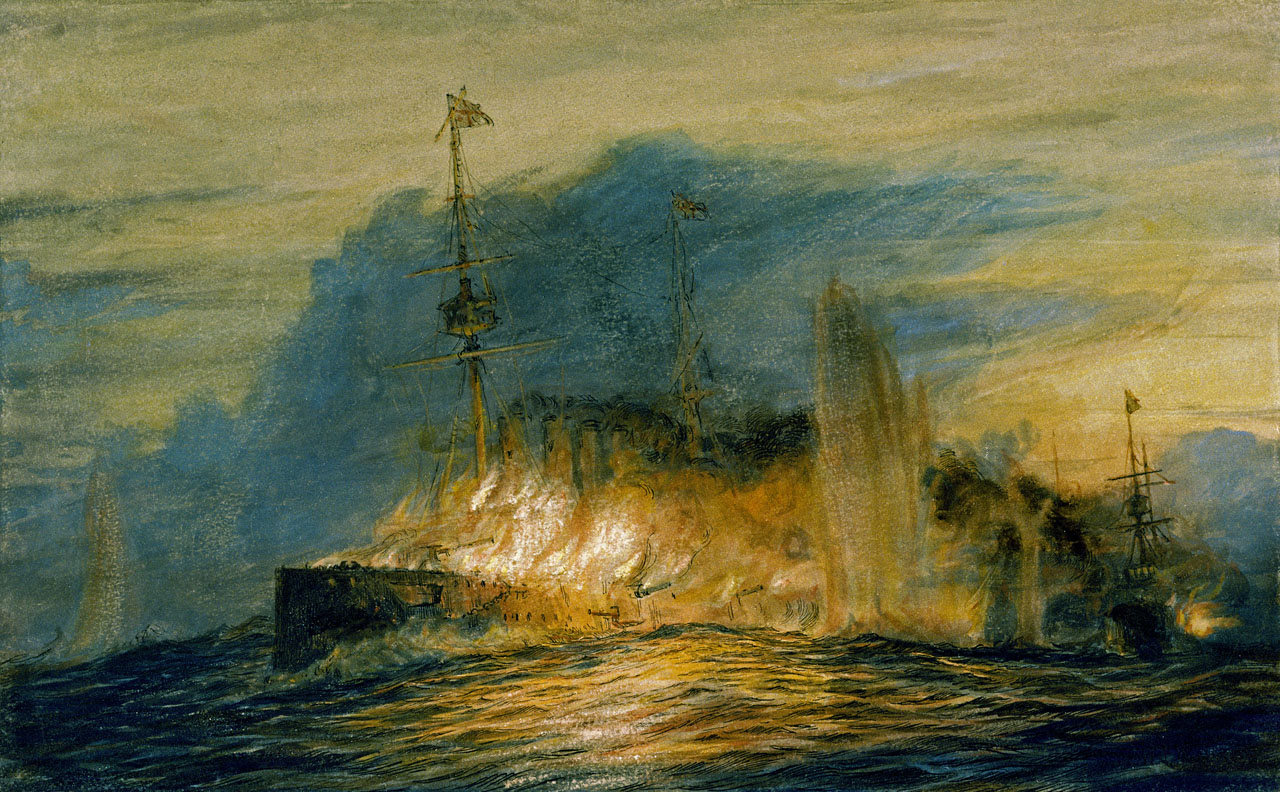
Despite often being seen as a relative sideshow in comparison to the Western Front, the war at sea was fought on an epic scale and with great loss of life.

Forgotten Fighters follows the personal stories of those who participated through a wide range of objects including weaponry, photographs, medals and ship models; in a gallery which takes visitors from the heroism of merchant mariners to the shattering realities of naval battle, and from the Falkland Islands and the Mediterranean to the Atlantic and the North Sea.

Posted in Events, News | Tagged , , , , , | Leave a comment

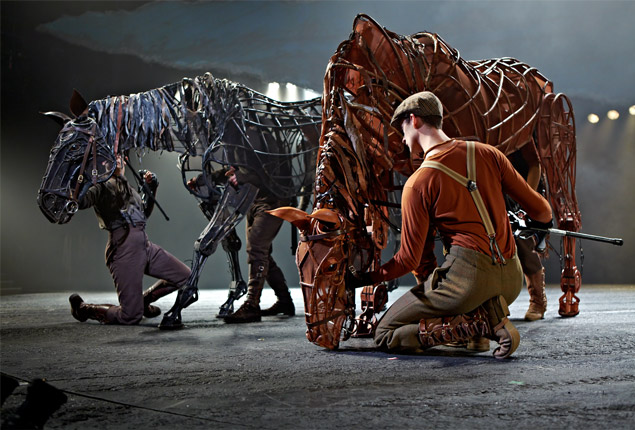
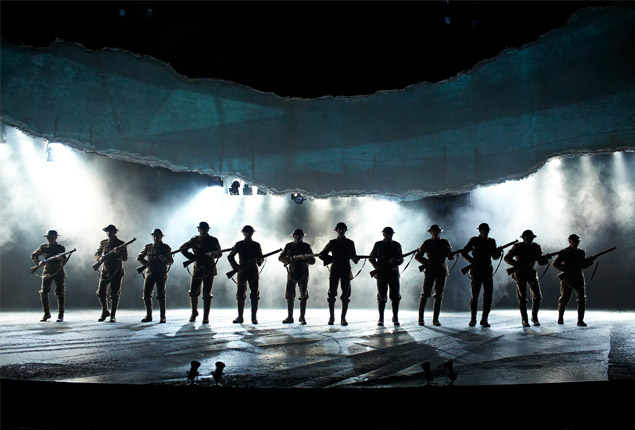
Michael Morpurgo’s War Horse tours UK, US and Germany

photo_4

The National Theatre’s adaptation of Michael Morpurgo’s novel War Horse has already been seen by more than 4 million people worldwide since its debut in London in 2007.

The show is also currently touring the UK and Ireland and will continue to do so until September 2014.

Internationally, a major US tour is in progress and a German version of the spectacle, entitled Gefährten, has opened at the Stage Theater des Westens in Berlin.

War Horse tells the tale of a young man named Albert and his horse, Joey, who is requisitioned by the British army during World War I.

For more on the productions, click here.

photo_10

Posted in News | Tagged , , , | Leave a comment

Home-town recognition for sub-lieut Rex Warneford, VC

Image

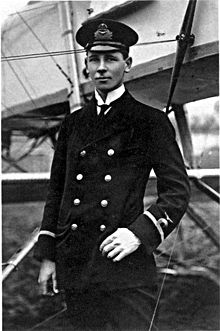
The British government has decided an Indian-born Victoria Cross winner will, after all, be granted a memorial plaque in his home town of Exmouth, Devon.

Royal Navy sub lieutenant Rex Warneford was awarded the VC, aged 23, when he shot down German airship LZ-37 in 1915.

Warneford will be commemorated alongside the town’s other VC winner, lieutenant Richard Sandford in Exmouth’s Phear Park. Sandford won his VC at the Zeebrugge raid of 1918.

The naval aviator was born in Darjeeling in 1891, the son of a colonial administrator and spent his first 13 years in India.

On 7 June 1915, he was one of four pilots, flying Morane Parasol aircraft, who were detailed to attack Zeppelin sheds in occupied Belgium.

Sub lieutenant Warneford had never flown in the dark before and at some stage lost the other members of his flight. He spotted airship LZ-37 airship cruising at 7,000ft near Ostend and destroyed it, though the blast damaged his own plane and he was forced to crash-land.

He was killed 10 days later in a flying accident in France. He is buried in Brompton Cemetery, London.

Image

Posted in News, Soldiers of the Great War | Tagged , , , , , , , , , | Leave a comment