Mansfield appeal for Trent to Trenches exhibition

Image

People in Nottinghamshire are being asked to bring objects and heirlooms related to World War I to Mansfield Library on Sunday 19th May from 11am – 3pm.

The Mansfield Chad reports that Nottinghamshire Council is looking to collect items such as photographs, trench art and memorabilia for an exhibition, entitled Trent to Trenches, focused on the Centenary of World War I.

Nottinghamshire County Council archives manager Mark Dorrington said: ‘We hope people will search through their attics and garages and turn up with artefacts that are unique to Nottinghamshire.

‘Next year there will be a Great War blog which will document every day of 2014 and beyond so letters and diaries would be welcomed by the experts.’

The exhibition will take place from July to November 2014 at Nottingham Castle Museum & Art Gallery.

For the original article, click here.

Posted in Events, News | Tagged , , , , , , | Leave a comment

Second lieutenant Robert Butler Nivison, 21st KRRC

Image

Walking through Hampstead Cemetery in London this week I saw a memorial to Sir Robert Nivison, 1st Baron Glendyne of Sanduhan, his wife Jane and their son, Robert Butler.

Sir Robert Nivison was a well-known banker and stockbroker, whose company, R Nivison & Co, was one of the most successful of its day. He and his wife lived at Branch Hill Lodge in Hampstead.

CWGC lists a Second Lieutenant JHR Butler of the Coldstream Guards who was killed on 16 September 1916 and is buried at Grove Town Cemetery, Meaulte.

The date is about right and it is the right sort of regiment for the son of an extremely wealthy stockbroker… But the London Gazette of 15 March 1916 refers to a John Henry Rippon Butler transferring from the Royal West Kent Regiment to the Coldstream Guards. He then joined the 2nd battalion in France on 20 June 1916.

Also, of course, the officer in question’s name is Robert Butler Nivison… CWGC lists him as being killed on 15 September 1916 while serving with 21st Battalion, the King’s Royal Rifle Corps. He is commemorated on the Thiepval Memorial.

21st Battalion, KRRC was known as the Yeoman Rifles and its members were generally recruited from the farming communities of Yorkshire, Durham and Northumberland.

The battalion war diary for 15 September 1916 reads:

‘The 124th Brigade advanced on a line which passed between the villages of Flers on the left and Gueudecourt on the right. The Battalion was on the left of the first line with the 10th Queens on the right & the 26th & 32nd Royal Fusiliers in support.

‘The 122nd Brigade was on the left & the 14th Division on the right. The attack started at 6.30 after artillery & the first objective the Switch Trench was taken without difficulty practically no living enemy being encountered.

‘After further artillery preparation the attacking force went on & took the second objective the Flers Trench where a few prisoners were taken, but the enemy showed little disposition to fight.

‘During this stage of the advance the Battalion suffered rather heavily through getting too near our own barrage. It was found impossible to continue the advance, owing to lack of support on the flanks & the line of the second objective was consolidated.

‘During this stage of the operations the Battalion lost 2nd Lieuts. Hervey, Benton & Nivison killed. Capts Watson, Pitt, Law, & Coates & 2nd Lieuts Waldy, Yeatman & Jones wounded.

Late in the day Lt Col the Earl of Feversham went forward with Lt Col Oakley of the 10th Queens & as many men as could be collected to the third & fourth objectives in front of Gueudecourt village. They reached the third objective & successfully withstood more than one counter attack. During this time Lt Col the Earl of Feversham was killed.

‘They were eventually forced to retire & consolidate on a line about 400 yards in front of the second objective when the remnants of the Battalion remained until relieved about 3 am the following morning by the [11th?] Queen’s, when they returned to Brigade Headquarters at Quarry Dump.

‘During the late operations the Battalion lost in addition to the Colonel killed Capt Honey & Lieuts Basiter? & Taback? wounded.’

Second lieutenants Nivison and Benton had been transferred to the 21st KRRC from the 15th KRRC on 12 July 1916.

Anthony Eden, later to become prime minister, was another junior officer in the battalion at the time. Following the action on 15 September 1916, which saw the majority of the battalion’s officers killed or wounded, he was made adjutant – at the tender age of 19 – a fact he recalls in his book, Another World.

Posted in News, Soldiers of the Great War, World War I memoirs | Tagged , , , , , , , , , , , , | 1 Comment

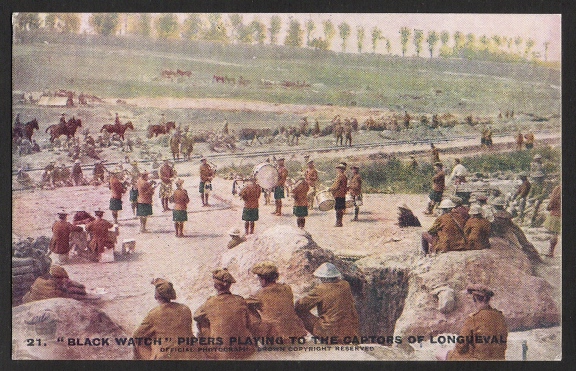
Canadian schoolchildren research Highlander’s World War I medal

Image

A class of Canadian children has partially solved the mystery of a long-lost World War I medal found in a box of oddments by a receptionist at their school – West Point Grey Academy in Vancouver.

The service medal bears the name of Private Andrew Gibson, whom the students believe served with the Black Watch, and who was killed in Mesopotamia (modern-day Iraq) in 1917.

The BBC reports teacher Brian Roodnick, who said: ‘Many of our students were saddened that this young soldier’s medal had been forgotten and immediately set out to uncover his story.

‘They had so many questions: Who was he? How did his medal end up in a box of trinkets in Victoria? Did he have any surviving family?’

Private Gibson was born in 1891 to Andrew and Maggie Gibson. He lost his father when he was nine, and his sister died of tuberculosis in 1914. His brother died in France in 1916.

After enlisting in Scotland, Pte Gibson arrived in France in 1915 and was assigned to 2nd Battalion of the Black Watch.

For the next two years he fought with the regiment along the valley of the Tigris and Euphrates rivers, as Baghdad was liberated and the Turks were pushed up the valley.

On 21 April 1917, the battalion was heavily engaged. Private Gibson was killed along with 37 other Black Watch soldiers and two officers. Another 155 were wounded.

That day one soldier of the battalion, Private James Melvin, won the VC for his bravery in taking a Turkish trench.

Private Gibson is commemorated on the Basra Memorial, Iraq. 

The class at West Point Grey Academy are now looking for living members of the soldier’s family.

Posted in Events | Tagged , , , , , , , , | Leave a comment

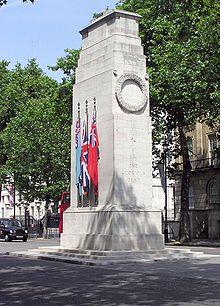
London’s Cenotaph in £60,000 restoration

Image

The Cenotaph in London is due to undergo restoration prior to the centenary of the outbreak of the First World War.

The monument is one of hundreds being cleaned and repaired in readiness for the anniversary next year.

The Daily Telegraph reports that the £60,000 work on the Cenotaph, which started last week, is being paid for by English Heritage, which is funding work on numerous other memorials.

Councils have pledged to clean up their memorials, while the War Memorials Trust has seen a 40 per cent increase in inquiries about grants.

Simon Thurley, the chief executive of English Heritage, told the newspaper: ‘The Cenotaph’s austere beauty reminds us of the millions who died in the terrible events that happened all over the world between 1914 and 1918. English Heritage is honoured to have responsibility for making sure the Cenotaph is in good condition for the commemorations.

For the original story, click here.

Posted in News | Tagged , , , , , | Leave a comment

Stolen World War I medals: County of London Yeomanry

Image

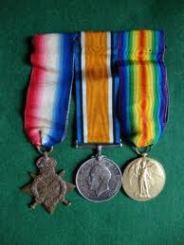
Leicestershire newspaper The Harborough Mail today reports the theft of three World War I medals – presumably similar to the above.

The medals were stolen from a canal boat in Theddingworth between 6am and 6pm on Saturday 27 April.

From the newspaper’s report it sounds like a World War I trio inscribed with the name ‘VJ Smith… County of London Yeomanry’.

For the original story, click here.

Posted in News | Tagged , , , , , | Leave a comment

A commanding officer who fell while leading his men on 1 July 1916

Image

Lieutenant colonel William Lyle was one of the most senior British officers killed on the first day of the Battle of the Somme – 1 July 1916.

He was commanding the 23rd Battalion Northumberland Fusiliers (4th Tyneside Scottish) which suffered 686 casualties that day.

Part of the 34th Division, Lyle’s battalion had the objective of La Boisselle village and had to cross around 500 yards of open ground that was covered by largely intact German machine gun positions.

Advancing at a walk towards largely uncut wire the Tynesiders were mown down. Lyle presumably set off at their head and rapidly became one of the casualties.

The other three battalions of the Tyneside Scottish were also involved in the same attack and each lost more than 500 men killed, wounded and missing.

A large Celtic-style cross in Hampstead cemetery, London, commemorates Lt-col Lyle’s mother Jane, his father and himself. Their family was one half of Tate & Lyle sugar.

Lt-col Lyle is also commemorated by a memorial window in St Mary’s Church, Tipperary, where his father-in-law, the Reverend Robert Popham Bell, was the vicar.

Lyle’s brother-in-law, Captain Robert Bell, is also commemorated via a window in the church. He is listed as being from Tipperary and a captain in 3rd Battalion, the Royal Irish Regiment.

A former pupil of the Abbey School, Tipperary, Captain Bell was killed near Mametz on 5 July 1916, aged 32, and his name appears on the Thiepval Memorial to the Missing.

A third window in St Mary’s church commemorates his father, the Reverend Robert Popham Bell, who died on 21 December 1916.

Lt-col Lyle himself is buried at the Bapaume Post military cemetery along with numerous members of his battalion.

Posted in Soldiers of the Great War | Tagged , , , , , , , , , | Leave a comment

Film tells of fight for Doughboy memorial in Washington

ImageUS newspaper the Intelligencer reports how a documentary film about the last American veteran of World War I, Frank Buckles, highlights his fight for a memorial to his comrades on the National Mall in Washington, DC.

The unfinished film, Pershing’s Last Patriot, was first screened in Iowa earlier this month. Producer David DeJonge said he hopes to secure enough donations to finish the film, which he calls ’90 minutes of unbelievable American history’.

Buckles died on his farm in West Virginia in February 2010 at age 110. He had devoted his final years to seeking greater recognition for the conflict that claimed 116,516 American lives.

For the original story, click here.

Posted in News, Soldiers of the Great War | Tagged , , , , | Leave a comment

Artists’ Rifles HQ in Euston, London

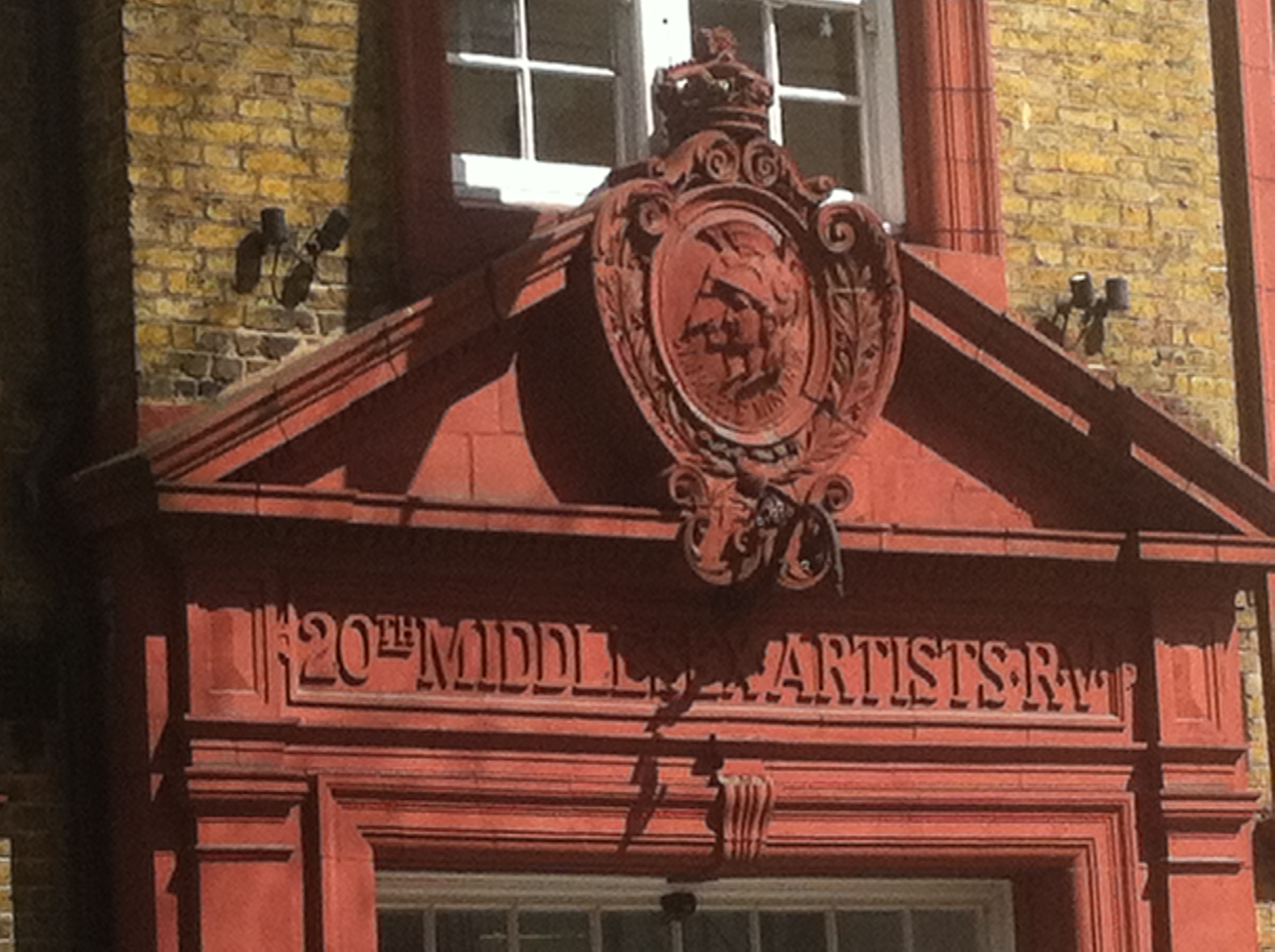
ImageThe former HQ of the Artists’ Rifles still stands at 17 Duke’s Road in London, close to Euston station.

It is easy to walk past it without noticing that, above the doorway, is a rendition of the regimental badge and the words: ’20th Middlesex Artists RV’.

The Artist’s Rifles formed a dual function in World War I. It was both an operational infantry unit and a cadre for officer training.

During the conflict the regiment lost 2,003 men killed, 3,250 wounded, 533 missing and 286 prisoners of war.

Its members won eight Victoria Crosses, fifty-six Distinguished Service Orders and over a thousand other awards for gallantry.

Posted in News | Tagged , , , , , , | Leave a comment

Interest in ANZAC Day grows in France

Image

ANZAC Day, held every year on 25 April, and commemorating the Australian and New Zealand Army Corps’ (ANZAC) 1915 landing at Gallipoli, has an increasing resonance in France, reports France 24.

More than 8,700 Australians died at Gallipoli, along with 2,700 New Zealanders, 21,000 British, and 1,358 Indians. Less well known is that 9,800 French soldiers were also among the dead.

France is taking greater interest in remembering its personal sacrifice in the ill-fated campaign.

In addition to annual celebrations held at Gallipoli, an increasing number of people in France have adopted the date to make a pilgrimage to the battlefields in the country’s north.

Each year, busloads of French, Australian and other tourists make a pilgrimage to a dawn service at the military cemetery at Villers-Bretonneux, where in April 1918, Australian troops played a prominent role in taking the town.

The battle effectively ended the German offensive on the Somme.

Catherine Pascaud, managing director of Servitours, one tour company that is making the annual journey, said she has noticed a real increase in enthusiasm for the commemoration compared to a decade ago.

‘Usually the French don’t know about ANZAC Day, but now there is more and more information given to the French public. And of course it will be even bigger next year because of celebrations marking the centenary since the start of World War I,’ she said.

Kader Arif, delegate for the French veterans’ affairs minister, said: ‘What nation today would be able to send a tenth of its population to the other side of the world to defend the principles of freedom and democracy?’

‘It demonstrates the bonds between our two peoples under the most extreme circumstances.’

For the entire story, click here.

Posted in Events | Tagged , , , , , , , , | Leave a comment

Australian sniper Billy Sing remembered

Image

Billy Sing was known as ‘The Gallipoli Sniper’ and is said to have killed 300 men during World War I, reports Adelaide Now.

The newspaper suggests Sing claimed he never lost sleep over the men he shot, but died in obscurity, traumatised by the war, and lay in an unmarked grave for more than 50 years prior to being recognised and gaining an official headstone.

Sing’s mother was English and his father a Chinese farmer from Shanghai. He was born at Clermont, north-west of Rockhampton, Australia, in 1886 and became a marksman as a boy, shooting the curly tails off pigs.

He worked as a stockman, cane-cutter and kangaroo shooter. He enlisted in October 1914.

Ray Poon, of the Chinese-Australian Historical Association, told the newspaper: ‘Recruiting officers had the right to knock back volunteers if they didn’t look European enough, but Billy was taken because of the reputation he had as a crack shot.

‘Even though the Chinese Australians encountered prejudice they still wanted to fight for their country.’

Sing was awarded the Distinguished Conduct Medal for gallantry at Gallipoli and the Belgian Croix de Guerre for his bravery on the Western Front.

He survived being shot on three separate occasions but after he was gassed in Belgium he suffered lung problems for the rest of his life.

While recuperating from his wounds he married a Scottish waitress in Edinburgh in 1917 and brought her home to Clermont after the Armistice. The marriage did not survive and Sing drifted from one failed endeavour to another prior to his death in 1943.

To read the original story, click here.

Posted in News, Soldiers of the Great War | Tagged , , , , , , | Leave a comment