World War I losses link French and English villages

Image

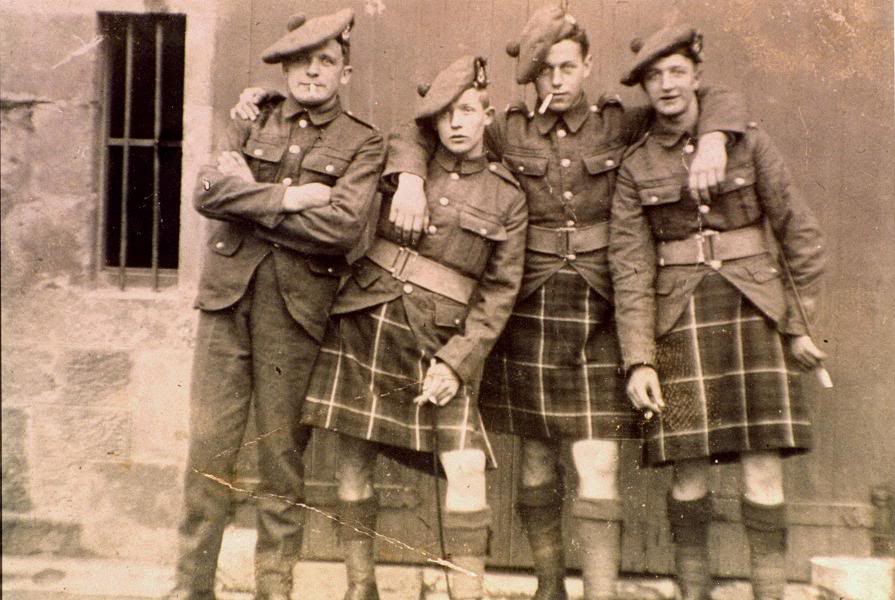
The inhabitants of the French village of Fromelles have decided to start an association to create links with the Buckinghamshire village of the Lee.

Newspaper La Voix du Nord Nine reports that nine soldiers from the Lee died in the Battle of Fromelles during World War I.

Community leaders from the two villages plan a series of exchanges and representatives will be invited to attend the inauguration of Museum of the Battle of Fromelles, scheduled for 19 July.

To read the original story, click here.  

Posted in Events | Tagged , , , , | Leave a comment

Body of missing British officer to be reburied in France

Image

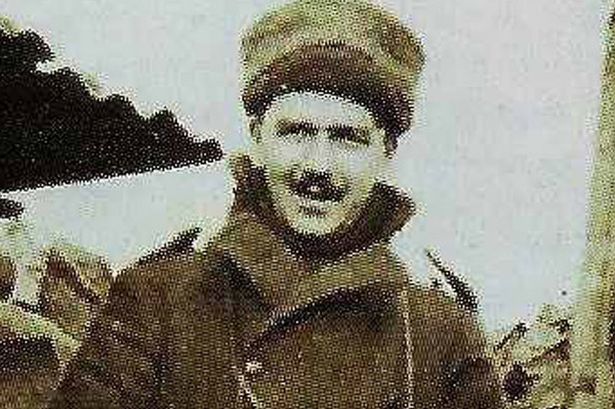
A British officer is to be buried in France after his remains were discovered by a farmer, according to the Daily Mirror.

The newspaper reports how Didier Guerle uncovered the remains of Acting captain John Pritchard, along with five other bodies, when digging up a World War I gas canister, located by a metal detector.

Captain Pritchard, 31, was a member of the Honourable Artillery Company and was killed  along with many members of his regiment at the Battle of Bullecourt on 15 May, 1917.

The officer will be buried at the CWGC cemetery at Ecoust-St Mein later this month. He was formerly commemorated on the Arras Memorial to the Missing.

For the Daily Mirror story, click here

Posted in Events | Tagged , , , , , , , , | Leave a comment

World War I time capsule to be opened in Dundee, Scotland

Image

The opening of a 100-year-old Dundee war memorial made by post office workers is to be part of the city’s commemoration of World War I, reports the Dundee Courier.

Local woman Janice Kennedy’s discovered the location of the historical treasure chest, while researching her great-great-grandfather’s brother Henry Adams.

She said: ‘It was quite emotional when I was invited to go and see it. It was in a beautiful oak cabinet with a brass plaque on it. The plaque said the box was to be opened by the postmaster in the presence of the lord provost of Dundee.’

It is thought the box contains a large number of letters, newspaper cuttings, photographs, old gramophone recordings as well as coins and stamps.

Since the find the post office, Dundee City Council and representatives from the army have all taken an interest and the opening of the box will form part of the city’s commemoration of the Centenary of the start of World War I.

Said Kennedy: ‘We’ve got something quite unique and different to anywhere else in the whole United Kingdom. We have been given a gift.

‘We don’t know who wrote those letters and that’s really exciting. There were no photocopies in that time so they were giving up something really precious.’

To read the original story, click here.

Posted in Events | Tagged , , , | 1 Comment

Auction house Bonhams to sell Conan Doyle manuscript

Image

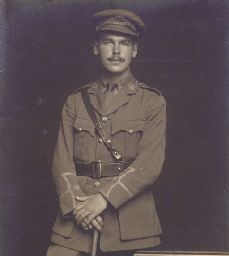
Kingsley Conan Doyle

The signed manuscript of a patriotic poem by the creator of Sherlock Holmes, Sir Arthur Conon Doyle, is to be sold in Part I of the Roy Davids Collection III: Poetry: Poetical Manuscripts and Portraits of Poets at auction house Bonhams, of New Bond Street, London, on 10 April. It is estimated at £5,000-8,000.

Written in 1915 – the manuscript is dated 10 October – the poem, entitled Ypres was Conan Doyle’s contribution to The Queen’s Gift Book, published for Christmas 1915 ‘In aid of Queen Mary’s Convalescent Auxiliary Hospitals For Soldiers And Sailors Who Have Lost Their Limbs In The War’.

It was subsequently included in Doyle’s The Guards Came Through and Other Poems, 1919.

The work begins:

‘Push on, my Lord of Wurtenburg, push on, across the fen!

See where the Town of Ypres calls you!

There’s just one ragged British line of Plumer’s weary men,

It’s time they held you off before, but venture it again!

Come, try your luck, whatever fate befalls you!’

The Lord of Wurtenburg was in fact William II, King of Württemberg, a German field marshal at the Second Battle of Ypres in Spring 1915 where he faced the British troops of V Corps commanded by field marshall Sir Herbert Plumer.

Conan Doyle’s son, Kingsley, a captain in the Royal Hampshire Regiment, was badly wounded on the first day of the Battle of the Somme in July 1916 and though he survived was subsequently struck down by the Spanish influenza epidemic of 1918.

Kingsley is buried in Grayshott (St Luke) Churchyard, Hampshire.

Poetry: Poetical Manuscripts and Portraits of Poets is the fruit of 40 years of collecting by the poet and scholar Roy Davids and is the finest collection of poetry ever to come to auction.

David says: ‘It would now be impossible for the present collection to be even approximately replicated.’

Posted in Events, Soldiers of the Great War | Tagged , , , , , , , | Leave a comment

Recollections of the British front line on 21 March 1918

Image

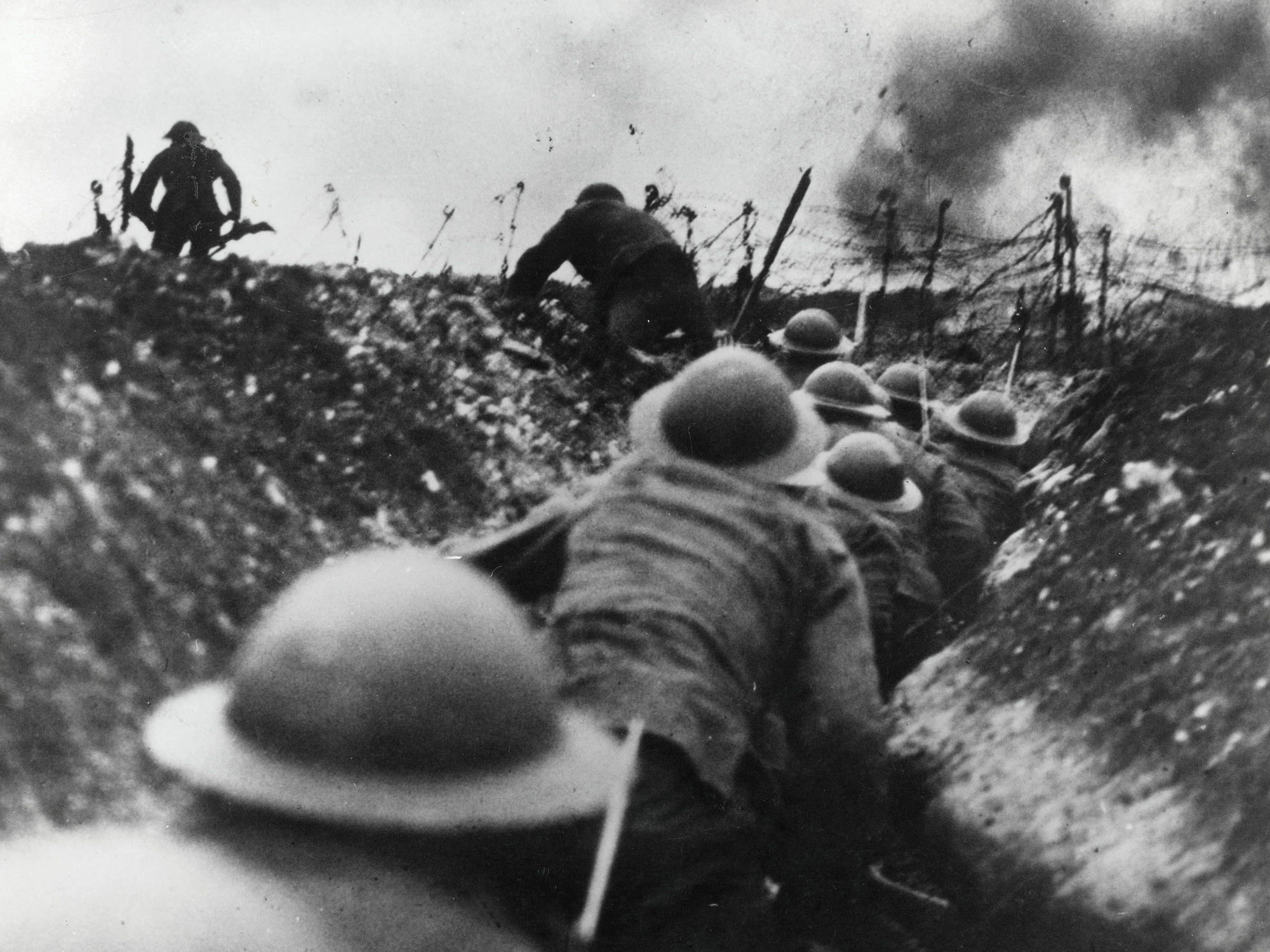
A private of the North Staffordshire regiment describes his experience on 21 March 1918, the first day of the German offensive, Operation Michael.

‘There seemed to be thousands of Jerries swarming down the slopes behind us and we retired to a refuge behind a barricade of sandbags. I’ve not the sligtest idea whether I was hitting anything. I certainly never saw anyone fall. I’d been in France 10 months and this was the first time I’d fired at the enemy. I wasn’t frightened; it seemed to be something that was happening outside of me.

‘I was lying there with my friend, Private Sykes Dobson, with whom I had enlisted, firing away, when we saw a mouse come out of a hole and sit up between us. I immediately moved to hit it with the butt of my rifle, but Dobson said: “Don’t do that. Leave the little bugger alone. It’s better off than us.” The mouse scooted off.

The young second lieutenant who appeared to be in charge of us ordered us to move out towards another position. I told him I wanted to stay with Dobson, who was wounded, but he refused to let me and threatened to blow my brains out if I didn’t come.

I resented this but had to do as I was told. That officer was certainly wound up a bit.

The space for rifle fire in this next position was rather restricted, so, after having a rifle discharged in my ear, I suggested that I should fire while my companion loaded.

After having two rifles shot from my hands, I turned to speak and found the only British person visible disappearing into a small tunnel under the embankment. I found the tunnel full of our wounded, many of whom greeted me.’

Private F Beardsell, 2/6th North Staffordshire Regiment.

The battalion suffered heavy casualties on 21 March. Among the dead was Private Sykes Dobson, who is listed on the Arras Memorial to the Missing.

The lieutenant colonel commanding the battalion was also killed. Thomas Thorne was 44 and the son of Bezley Thorne MD. He is buried at Ecoust Military Cemetery, near where the battalion was overwhelmed in 1918. He had formerly served with the Middlesex Regiment.

Posted in Soldiers of the Great War | Tagged , , , , , | 1 Comment

UK tour operators visit Flanders Fields

Image

Last week more than 50 UK tour operators visited Ypres and the surrounding area.

In readiness for the Centerary next year, the Flemish government has invested millions of euros in the tourism sector of this region.

The forum offered operators the chance to see a number of the hotels, museums and attractions that have been renovated and updated in the approach to the Centenary of World War I.

The operators were able to view the updated In Flanders Fields Museum, (opened in Summer 2012) and the trip also provided an opportunity for the group to experience the Last Post ceremony, which takes place every evening in Ypres by the Menin Gate.

Excursions included Poperinge’s Talbot House and the newly opened Lijssenthoeck military cemetery visitor centre. Some operators also visited Tyne Cot cemetery and the Memorial Museum Passendaele 1917, which is due to open its new wing in July 2013.

An alternative tour offered a trip to Diksmuide’s Yser Tower (site of a new Museum which will open next year) and the Vladslo German cemetery. The group were also treated to a sample of the local beer at the historic St Bernadus Brewery, in nearby Watou.

The Centenary is expected to attract approximately two million visitors to Flanders Fields and across the region and UK operators are getting ready to cater for this extra demand. 

Posted in Events | Tagged , , , , , , , , , | Leave a comment

World War I exhibition to open in Portsmouth

World War I trench

A World War One Remembrance Centre is scheduled to open in Portsmouth on Saturday 30 March.

The centre, at Fort Widley on Portsdown Hill, explores the conflict through photos and documents, many of them gathered from local people.

The Portsmouth News reports that its centre-piece is a recreation of a Western Front trench, underneath a mural of no-man’s land.

The newspaper quotes Charles Haskell, one of the centre’s founders, who said: ‘There are lot of museums about the armed forces around Portsmouth, but there’s no World War One museum and a lot of what’s here is navy-related.

‘But we shouldn’t forget the army’s role around here, particularly around the First World War. If people can’t get out to the battlefields to see them for themselves, we are doing our best to bring it to them.

‘We want to give them a tiny feel of what it was like.’

To read the original article, click here.

Posted in Events | Tagged , , , , , | Leave a comment

Museum of Army Flying opens World War I exhibition

Image

The Museum of Army Flying is showcasing an exhibition entitled The Last Post: Remembering the First World War.

The exhibits explore World War I communications, the Post Office and its impact on war and home fronts.

Items on display include postcards from air mechanic Jack Cooper, who was based in France in 1916 and 1917, to his wife.

There is also a postcard commissioned by Harry Joyce, father of second lieutenant Philip Joyce of 60 Squadron.

The 20-year-old airman, from Edgbaston in Birmingham, was last seen flying over Bapaume in a Nieuport Scout at 11am on 6 March 1917.

The postcard, containing an image of 2/Lt Joyce, features appeals in English, French and German for information on his whereabouts.

Unfortunately, he was never found and is commemorated on the Arras Flying Services Memorial in France.

Curator Susan Lindsay told the BBC: ‘We have been able to pick out things that really fit this particular topic. It’s a great opportunity for us to give a window on people’s lives at the time.’

The exhibition runs at the museum in Middle Wallop, Hampshire, until 27 September.

To read the original BBC story, click here.

Posted in Events, News | Tagged , , , , , , , , | Leave a comment

World War I artillery guns found on Salisbury Plain

Image

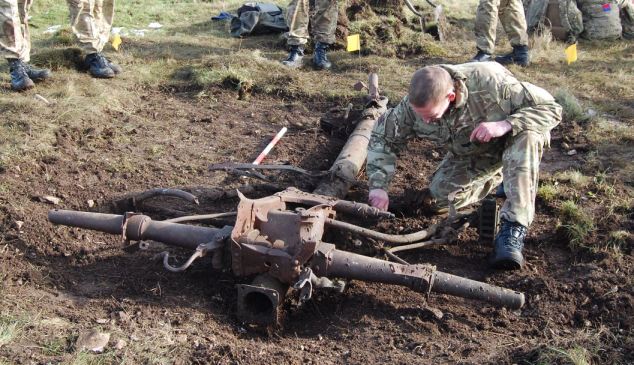
Historians searching for the wreckage of a World War II German aircraft have discovered the remains of two World War I 15-pounder field guns.

The guns were probably used as targets during World War II training exercises.

The Daily Mail quotes Mark Khan, one of the military historians leading the project, who said: ‘We were hoping to do a crashed aircraft recovery and found out about a possible Ju-188 German plane shot down by a night fighter group in the Second World War.

Image

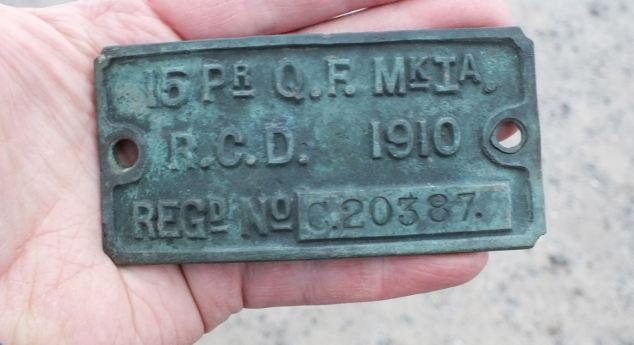
Maker’s plate from one of the field guns, showing a date of 1910

‘We got a grid reference for the plane on Salisbury Plain but could only find what we think was the impact crater. We were heading back to our vehicles when we spotted one of the two guns. The second gun was located about 30 feet away, also partially buried.

The 15-pounder guns were originally issued to Territorial Army and New Army units in lieu of the more modern 18-pounders. They were generally phased out in 1916.

The guns may go on show at Firepower, the artillery museum in Woolwich, London, or at the Honourable Artillery Company (HAC), also in the UK capital.

For the entire story, click here.

Posted in News | Tagged , , , , , , , , | Leave a comment

On the Roads of the Great War online exhibition

Image

An interesting online exhibition, On the Roads of the Great War, provides insights into how World War I’s demands for people and materiel brought with it huge amounts of movement across countries and continents.

The exhibition focuses on five lesser-known areas: the experience of Chinese workers, the displacement of civilians, the area between the front line and the rear areas, the British Empire in Africa and tourism and memory.

While limited in scale, it brings together some intriguing facts and photographs. The section about the Chinese workers is perhaps particularly fascinating, telling about how and why men travelled across the world to assist in rear areas and the privations and dangers they faced.

To view the exhibition click here.

Posted in Events | Tagged , , , , , , , | Leave a comment