Unknown New Zealand soldier to be buried at Messines

Image

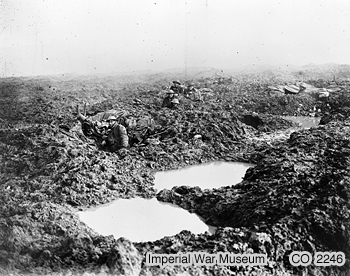
An unknown New Zealand soldier of the First World War will be buried at Messines Ridge British Cemetery in Belgium on 25 February.

Archeologists discovered the remains in April 2012 and were able to identify him as a New Zealander from surviving insignia.

He will be buried next to another New Zealand soldier, whose remains were found in 2011.

In the cemetery is the Messines Ridge (New Zealand) Memorial which commemorates over 800 soldiers of the New Zealand Expeditionary Force who died in or near Messines in 1917 and 1918 and who have no known grave.

To read the official announcement from the New Zealand Embassy in Brussels, click here.

Posted in Events | Tagged , , , , , , , | 1 Comment

Captain Charles La Coste MC

Image

Captain Charles La Coste MC

General List att. 1/8th West Yorkshire Regiment

Killed in action at Poelcappelle, 9 October 1917

Captain La Coste is commemorated on the Tyne Cot memorial.

There is also a La Coste listed on the Great Eastern Railway memorial at Liverpool St Station in London. CWGC has only one soldier of this surname on its lists, so presumably this must be the individual concerned.

In 1916, captain La Coste was based at Chisledon camp, near Swindon, which was a large training area for troops destined for France. Thousands of men were trained here and a large complex of trenches was dug nearby.

During the attack on Poelcappelle, casualties in 49th (West Riding) Division – of which the 1/8th West Yorks was part – amounted to 2,585 of which 654 were fatal.

CWGC states captain La Coste was educated at Wellington College and Sandhurst. He was commissioned in the Royal Warwickshire Regiment and retired in 1905.

He rejoined the army in September 1914 becoming a staff captain in 57th Brigade. In 1916 he was a brigade major at Chisledon, returning to France in June, 1917.

The was the son of colonel Charles Frederick La Coste (RMLI) and Margaret Mary Ann Banks, his wife; husband of Grace La Coste (née Neilson), of Philadelphia, US, and of Manor House, Shottermill, Haslemere, Surrey.

Posted in Soldiers of the Great War | Tagged , , , , , , , , , , , | Leave a comment

Adrian Van Klaveren to lead BBC coverage of WW1 Centenary

Adrian Van Klaveren, the former Radio 5 Live controller who lost his job following Jimmy Savile scandal, will head up the BBC’s World War I Centenary coverage next year.

Van Klaveren will oversee all of the corporation’s related programming across TV, radio and online in 2014. He will also coordinate BBC events around the country.

‘The First World War had an enormous impact on individual people’s lives, society as a whole and world politics and it’s vital that our coverage reflects that,’ said Van Klaveren.

Incidentally, he was one of the temporary BBC News management team – put in place after the Savile scandal to deal with issues relating to the disgraced TV host – that approved Newsnight’s erroneous report on Lord McAlpine.

Posted in News | Tagged , , , , , | Leave a comment

Leeds City Council makes bid to trace World War I soldier

Image

Leeds City Council is attempting to trace relatives of a World War I soldier, whose name was found in a 100-year-old national roll book.

A report in the Morley Observer states the book, one of just 14 published, was discovered at Leeds Civic Hall and was presented to sergeant major A Lake at Leeds Carlton Hill barracks in 1919.

A highlighted passage states that Lake volunteered in September 1914. He served in several engagements including Bullecourt and Cambrai with the West Yorkshire Regiment.

He was demobilised in December 1918.

According to the book, Sergeant Major Lake’s address at the time was 5 Kelsall Grove in Leeds.

Lord Mayor of Leeds Councillor Ann Castle said: ‘This rare book… has been deep in the council archives for many years. We would be delighted to reunite it with the soldier’s family and I sincerely hope they come forward.’

Posted in News, Soldiers of the Great War | Tagged , , , , | Leave a comment

Plans for football games to mark Centenary of World War I

Image

The UK press is today reporting plans for football matches to be played as part of the commemoration of the Centenary of World War I.

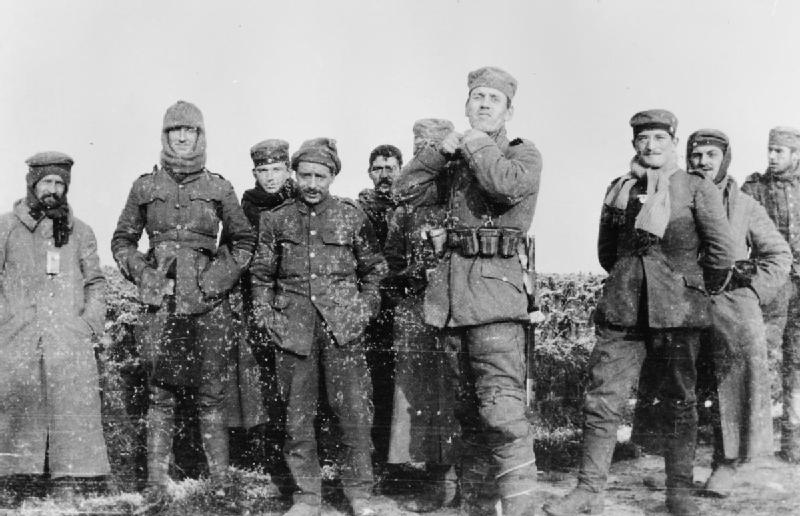
Andrew Murrison, minister in charge of overseeing the commemorations, told the Guardian: ‘I think football has a particular part to play because of the totemic significance of the Christmas truce in 1914.

‘We have been in touch with Football Association and the National Children’s Football [Alliance] to see how this can be done. I know they are enthused and have already clocked the fact that other countries are thinking along similar lines.’

‘Clocked the fact’ is interesting terminology to use and perhaps does not seem all that appropriate in the context of commemorating a war that cost millions of lives.

Continuing in the same laboured style the minister added that staging a football match in Belgium on the battlefields where soldiers had briefly put down their weapons was ‘a no-brainer in terms of an event that is going to reach part of the community that perhaps might not get terribly entrenched into this’.

‘Entrenched’ – again an interesting choice of word.

Murrison went on to tell the newspaper that the focus of public interest will ‘be personal and parochial’, adding: ‘Frankly, most people aren’t really interested in the grand strategy of this time. If you can engage them in things like the Christmas truce then I think that you do offer them something that is of relevance and use and of interest to them.’

Posted in News | Tagged , , , , , , , , | Leave a comment

Sergeant major Fred Hall VC, Winnipeg Rifles

File:Frederick_William_Hall

Sergeant major Fred Hall won the Victoria Cross during the Second battle of Ypres in Belgium.

Sergeant major Hall was born in Kilkenny, Ireland, on 21 February 1885. He is believed to have emigrated to Canada around 1910.

On 23 April 1915, he was a company sergeant major with 8th (Winnipeg Rifles) Battalion, Canadian Expeditionary Force.

The battalion was in action that day and after dark several men were missing. Under cover of darkness Hall brought in two injured soldiers.

Then, around 9am the next day, aware that others were still out in no man’s land, he and two other men attempted to bring back more of the wounded. The two others were soon hit and returned to their lines.

Hall attempted to rescue a man who was lying around 15 yards from the trench. In lifting him, however, they were both shot and killed. He was one of three World War I VC winners who lived on the same Winnipeg street.

The others were corporal Leo Clarke of the 2nd (Eastern Ontario) Battalion and lieutenant Robert Shankland of the 43rd (The Queen’s Own Cameron Highlanders of Canada) Battalion. Clarke, who won his VC for taking around 20 German prisoners during a counter-attack, was killed in 1916. Shankland, who also won the DCM, survived the war.

In 1925, Winnipeg’s Pine Street was renamed Valour Road in honour of the trio.

Posted in News | Tagged , , , , , , , , | Leave a comment

RAF Museum secures lottery funding for World War I showcase

Image

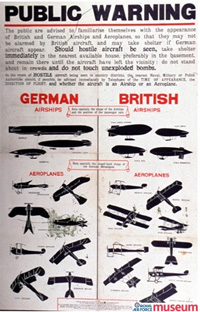
London’s Royal Air Force Museum’s plans to develop its Grahame-White Factory building into a showcase for its World War I collections have received initial support of £74,500 from the Heritage Lottery Fund (HLF).

The new exhibition, entitled the First Air War, is due to open in time for the centenary of the conflict in 2014.

A public participation project has already been launched in the shape of the 100 First Air War Objects online survey, which is inviting people to nominate items to be displayed.

A digitiation project is also underway which will make important historic documents from the First World War – such as casualty records and personnel lists – digitally available to the public.

Peter Dye, director of the RAF Museum, said: ‘Our new interpretation strategy will help people to learn about the importance of the first war in the air and to understand the lives of all those who participated.’

Image

Posted in Events | Tagged , , , , , | 1 Comment

Dame Judi Dench supports campaign to remember VC winner

File:Victoria_Cross_Medal_Ribbon_%26_Bar

Dame Judi Dench is supporting a plan to erect a statue in memory of a World War I Victoria Cross recipient.

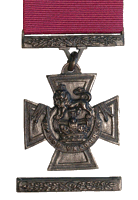
Private Herbert Columbine, 24, was a private in the Machine Gun Corps and was awarded the decoration posthumously for his actions at Hervilly Wood on 22 March 1918, the second day of Operation Michael – the German spring offensive.

Columbine helped to hold back the German advance in the area for several hours, allowing other troops to retreat.

The Columbine Statue Fund hopes to raise £60,000 to erect a life-size statue of the soldier and Dame Judi has donated a signed photograph to be auctioned.

Private Columbine, of 9 Squadron Machine Gun Corps, was born in Penge and is commemorated on the Pozieres memorial to the missing. He had previously served with the 19th Royal Hussars.

His VC citation reads: ‘For most conspicuous bravery and self-sacrifice displayed, when, owing to casualties, Pte Columbine took over command of a gun and kept it firing from 9am till 1pm in an isolated position with no wire in front.

‘During this time wave after wave of the enemy failed to get up to him. Owing to his being attacked by a low-flying aeroplane the enemy at last gained a strong footing in the trench on either side. The position being untenable he ordered the two remaining men to get away, and, though being bombed from either side, kept his gun firing and inflicting tremendous losses.

‘He was eventually killed by a bomb which blew up him and his gun. He showed throughout the highest valour, determination and self-sacrifice.’

Posted in News, Soldiers of the Great War | Tagged , , , , , , , , | Leave a comment

World War I archeology at Cannock Chase

Image

Archaeologists plan to excavate a unique training area that was created on Cannock Chase in Staffordshire during World War I.

The site was based on Messines Ridge near Ypres and was used to help troops gain experience of conditions on the Western Front. It was constructed using aerial photographs taken in 1916.

During World War I, two training camps were created on Cannock Chase and more than 500,000 men from Britain and the Commonwealth would have been posted to them prior to heading off for the front.

Each camp was designed to accommodate an infantry division containing 20,000 men. When the war ended in 1918, the camps were dismantled, but Cannock Chase remains one of the most complete World War I archeological sites in the UK.

Posted in Events | Tagged , , , , , , | Leave a comment

Training with the 2/19th London Regiment

‘The first attempts at route marching were round the outer circle in Regent’s Park and even this proved too much for some.

Colonel Christie had always been a great believer in the efficacy of singing on the march, so much so that when he commanded the battalion originally they came to be known as ‘Christie’s Minstrels’, and it certainly kept the battalion going in those early days.

Before long, as the men became fitter, greatly daring, the climb to Hampstead was attempted and achieved, although one of the company commanders, a veteran of the South African War, completed the journey in a taxi cab.

On one occasion, two companies, with Captain Stokes in command, ventured as far afield as Totteridge, and halted for the midday meal in close proximity to the Orange Tree Inn.

The rush of business so taxed the resources of this pleasant establishment that the junior officers were detailed to assist behind the bar, an event probably without precedent up to that time in the annals of the British Army.’

Captain FW Eames, 2/19th London Regiment

Posted in Events | Tagged , , , , , , | Leave a comment