How trench talk changed the English language

Image

The trenches of World War I were the birthplace of many a modern English phrase, notes The Guardian newspaper.

‘Binge’, ‘fed up’, ‘washed out’, ‘cushy’, ‘snapshot’ and ‘bloke’ are among the words the paper lists as having their origins in the conflict.

Many such words originated in regional slang or belonged to certain social groups, but the conflict brought millions of soldiers together to share their language.

Julian Walker, who works at the British Library, told The Daily Telegraph newspaper: ‘The war was a melting plot of classes and nationalities, with people thrown together under conditions of stress.

‘It was a very creative time for language. Soldiers have always had a genius for slang and coming up with terms.

‘This was a citizen army – and also the first really literate army – and at the end of the war, those that survived took their new terms back to the general population.’

The results of the research are included in a new book, Trench Talk: Words of the First World War.
Posted in Events | Tagged , , , , , , , | Leave a comment

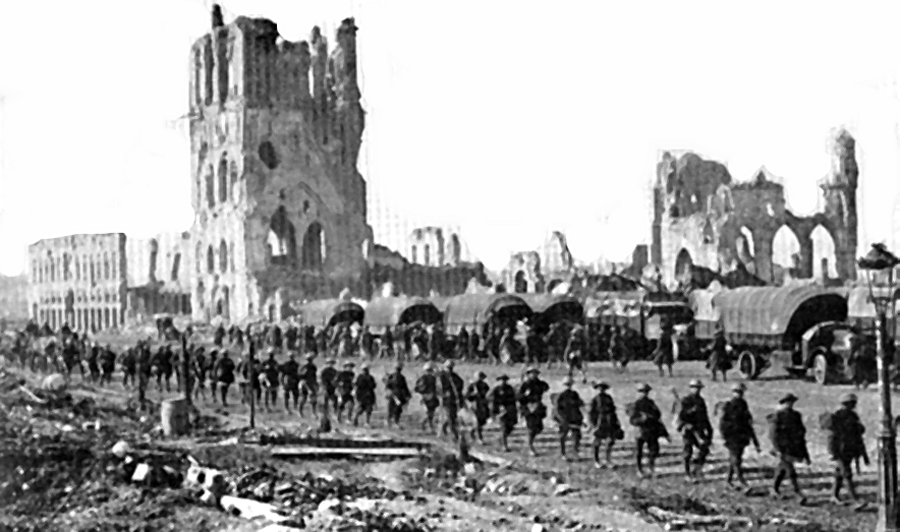
CWGC unveils first Belgian info panels

Image

The Commonwealth War Graves Commission has placed the first of up to 65 Visitor Information Panels in Belgium.

They are at Ypres Town Cemetery and Extension and the Potijze Chateau Cemeteries.

Some 500 such panels are due to be installed at cemeteries and memorials as the CWGC looks to provide additional information in the run-up to the centenary of the  World War I.

The panels will have general information about the CWGC, and will explain why the cemetery or memorial is placed where it is. They will also explain the some of the historical and military context.

Smartphone users will be able to download further information about the cemetery, including the stories of some of the casualties.

The panel at Ypres Town Cemetery and Extension explains that British troops arrived in Ypres on 14 October 1914. Within days fallen soldiers were being buried at the edge of the town’s civilian cemetery.

Posted in Events | Tagged , , , , , , , , | Leave a comment

Two brother officers

Image

‘The daily newspapers published casualty lists, and also extracts from The London Gazette. Naturally we looked through these for possible news of friends. 

‘One day I saw my brother’s name – commissioned a second lieutenant in the Sherwood Foresters. I wrote my congratulations at once. Now he was an officer we could go about together in public if we happened to have leave at the same time.

…’He was still my elder brother and I couldn’t refrain from a playful dig, “We are both officers now, but don’t forget army seniority counts from the date of commission, so you will always be my junior.

‘In practice, this wasn’t likely to mean much, since we were in different regiments, but I was rather pleased with my little joke and wondered what he could reply.

‘I addressed my letter to him in France. He never received it. On his third day in the front line he died of wounds. My letter was returned unopened with his personal effects.’

Second lieutenant Bernard Martin, 1st Battalion North Staffordshire Regiment.

His brother, Second lieutenant Frederick Martin, died of wounds near Ypres on 7 September 1915, aged 20. He had recently been commissioned in A Company, 2nd Battalion the Sherwood Foresters.

He had joined the army in September 1914 and had previously served as a private in 28th Battalion, County of London Regiment (the Artists’ Rifles).

He is buried at Hop Store cemetery, Belgium.


Posted in Events | Tagged , , , | Leave a comment

Douglas Haig lecture at National Army Museum

Image

Leading historian Professor Gary Sheffield will be assessing how much credit Sir Douglas Haig deserves for allied victory on the Western Front at the National Army Museum on 17 January.

The lecture, entitled Douglas Haig: Was He the Accidental Victor in 1918? will begin at 7pm and will consider how Haig remains perhaps the single most controversial general in military history.

Feted as a victor in 1918, within fifteen years his reputation had collapsed, and despite the efforts of some military historians, it has never fully recovered.

Tel: 020 7881 6600

http://www.nam.ac.uk/

Posted in Events | Tagged , , , , , | Leave a comment

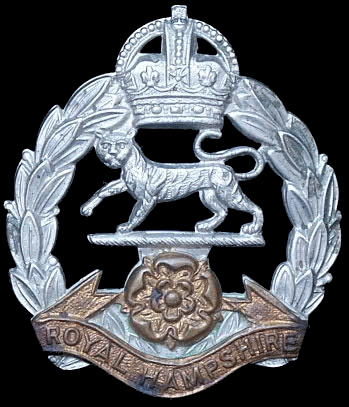
Captain George Sandeman, Ist Royal Hampshire

Image

Captain George Amelius Crawshay Sandeman

3rd Battalion Royal Hampshire Regiment (att. 1st Battalion)

Missing in action 26 April 1915

Aged 32

Commemorated on the Menin Gate, Ypres.

George Sandeman was the son of Lieutenant Colonel George G Sandeman and his wife, Amy of Fonab, Perthshire.

His mother died in 1882 and his father in 1905 – when he inherited the family’s Scottish estate. He lived at 24 Grosvenor Gardens, London.

He was a barrister and his name appears on the war memorial at the Temple church in London.

A pupil of Eton and Christ Church College, Oxford, he also played first-class cricket for Hampshire, appearing three times for the county in 1913. In 1914 he played for the MCC and the Free Foresters – representing the former against Oxford University and the latter against both Oxford and Cambridge.

Sandeman was a left-arm slow bowler, whose bowling average over his six first-class games was 48.40.

He wrote two books, Metternich and Calais Under English Rule.

He was also an officer in the 3rd (TA) battalion of the Hampshire Regiment. At the time of his death, however, he was serving with the 1st Battalion. He was killed during the second battle of Ypres, near Zonnebeke.

A memorial service was held for Captain Sandeman on 3 June 1915 at St Peter’s Church, Eaton Square.

Posted in Soldiers of the Great War | Tagged , , , , , , , | 1 Comment

Hidden dangers of war

Image

‘In the shallow ditch outside that Le Touret farm, among the black mud now nearly dry, were to be seen a variety of old grenades brown with rust, tumbled in with tin cans and broken harness.

‘I looked at them with suspicion; and later on, returning on some errand, I saw them again. Why did no one see to it that these relics were duly destroyed? For that same summer they brought death to some sauntering Tommy whose curiosity led him to disturb the heap, seeming safe because of its antiquity.

‘This was a characteristic of the war – that long talon reaching for its victim at its leisure.’

Second Lieutenant Edmund Blunden, 11th Royal Sussex, in Undertones of War (1928)

Posted in Soldiers of the Great War, World War I memoirs | Tagged , , , , , , | Leave a comment

World War I New Zealand soldiers shown of Flickr

Image

Te Papa (Museum of New Zealand Te Papa Tongarewa) is using photsite Flickr in a bid to find out more about the country’s World War I soldiers.

The museum has added a large number of photographs that were taken in Wellington during the war.

Each caption, though, comprises just a surname by way of identification. The museum is appealing to members of the public in a bid to discover more about the people shown.

http://www.flickr.com/photos/tepapa/sets/72157630061669907/

Posted in News, Soldiers of the Great War | Tagged , , , , , , | Leave a comment

Choosing your religion

Image

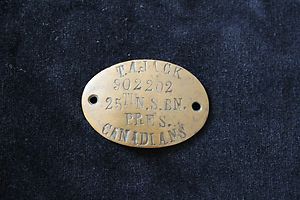
‘Every soldier was supplied with an identity disk to be worn around his neck, on which was embossed his name, number, regiment and religion.

A member of my company, one Eastwood, when asked for his religion replied: “What are you short of?”

He finally settled for Roman Catholic, in the belief that as we were a Scottish regiment he would not have to attend church parades.

But alas! The following Sunday he was mustered and marched off with other Roman Catholics to a service about five miles away. On Monday he changed his religion. I have never seen such a dramatic conversion.’

Private Stuart Dolden, 14th (County of London) Battalion, the London Regiment (London Scottish).

Posted in Soldiers of the Great War, World War I memoirs | Tagged , , , , | Leave a comment

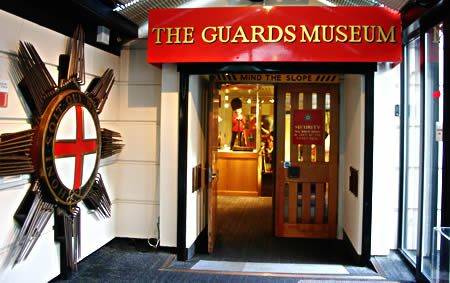
Remembrance garden planned for Guards Museum

Image

A £600,000 fundraising appeal is aiming to create a ‘haven of remembrance’ at the Guards Museum – within the Wellington Barracks site near Buckingham Palace in London.

Soil taken from battlefields in France and Belgium will be used in the proposed Flanders Field Memorial Garden, designed by Belgian landscape architect Piet Blanckaert and backed by a match funding pledge from the Government of Flanders.

‘We hope the momentum of the fundraising appeal will also help to raise awareness of the forthcoming centenary,’ said Geert de Proost, the authority’s representative in the UK.

‘The Guards Museum is the ideal location, because it is the home of five of the most famous British regiments and attracts many visitors.

‘This is the opportunity for organisations or individuals to pledge a contribution, however small, to bring this project to fruition.’

Organisers are hoping to open the garden in July 2014.

Home Page

Posted in Events, News | Tagged , , , , , | Leave a comment

Private Alfred Ell, 1st Middlesex

300px-Coat_of_Arms_of_the_Middlesex_Regiment

19838 Private Alfred Ell

1st Battalion Middlesex Regiment

Killed in Action 24 October 1918

Age 33

Buried at Romeries, France.

Son of George Ell, of London; husband of Lilian Daisy Ell, of 151, Offord Rd, Barnsbury, London N1.

Private Ell was killed during the actions prior to the Battle of the Sambre, just three weeks before the war ended.

On 23 October, the 1st Middlesex attacked the village of Forest near Le Cateau. Zero hour for the attack was 2am and at 2.45am a message was received by Battalion Headquarters from Captain Tate, commanding ‘B’ Company.

This said: ‘On outskirts of Forest. Everything going splendidly. Enemy retiring. Very few casualties.

At 4am on the 24th the advance was continued. The 1st Middlesex was on the left of the line and ran into lethal machine gun fire.

At 6.50am Captain Francis Boase Broad MC reported that the enemy’s machine-gun fire was extremely heavy, but he believed that, although he could not get touch, some of the Battalion were ahead of him, though the enemy also was in front.

At 7.25am he reported that he had ‘D’ Company with ‘C’ Company – a total of just 50 men.

At around 9.15am the battalion reorganised. There were just 90 other ranks present, with Captain Tate in command.

During the two days’ fighting Captain Broad, Lieutenant Alexander Kroenig-Ryan and 2/Lieutenant Richard Holland were killed. Lieutenant AAT Harris was fatally wounded. 2/Lieutenant CE Cade was reported missing.

Captain Broad was 23 and from Earlsgate, Watford, Hertfordshire. He had been a pupil at St Lawrence College, Ramsgate, Kent.

2/Lieutenant Holland was 22 and from Mitcham in Surrey. His parents lived at 96 Melrose Avenue.

Lieutenant Kroenig-Ryan was 24, the son of a vicar from Braintree in Essex and a graduate of Cambridge University. He had a wife, Mabel, and lived at Alameda House, Vange, Pitsea, Essex. He had originally served with 8th Battalion the Middlesex Regiment.

Posted in Soldiers of the Great War | Tagged , , , , , | Leave a comment