Duke of Edinburgh opens First World War exhibition

HRH_Visit_3

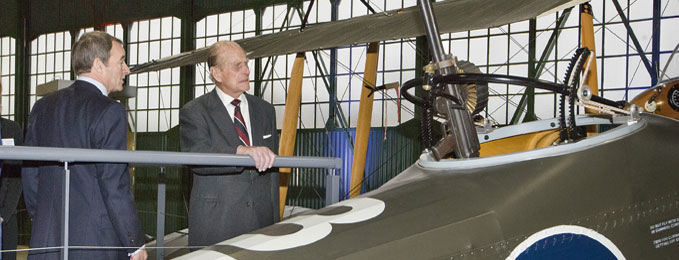
The Duke of Edinburgh has opened the new permanent First World War exhibition at the Royal Air Force Museum in north London.

Entitled The First World War in the Air, the exhibition focuses on the often overlooked role of air power during the First World War through the stories of the men and women who were involved in the conflict.

Authentic surroundings

It is set in a Grade II listed building that was used as an aircraft factory in the First World War. The exhibition uses these surroundings and the RAF Museum’s collection of aircraft, documents, film and photographs to reveal how aviation changed the character of war.

Karen Whitting, director of public programmes at the Royal Air Force Museum, said: ‘It was a pleasure and an honour to have the Museum’s Royal Patron The Duke of Edinburgh, open this landmark exhibition.

‘The Museum looks forward to sharing this incredible story with both local visitors and audiences from across the globe. It is particularly fitting that we mark this anniversary in the approach to 2018, the centenary of the founding of the Royal Air Force.’
HRH_Visit_2

Experiences of airmen and workers

Designed by Ralph Appelbaum Associates, the exhibition explores what it was like to be involved in the earliest days of military aviation through the story of Britain’s air services, the Royal Flying Corps and Royal Naval Air Service. These two organisations merged on 1 April 1918 to become the world’s first independent air force, the Royal Air Force.

Displays incorporate the experiences of pilots, ground crew and factory workers to help tell the story. A linked online resource includes the digitisation of and wider public access to historical documents such as First World War Casualty Cards, Casualty Forms and Muster Rolls, that tell the story of the men and women of the Royal Flying Corps and Royal Air Force.

These can be accessed at www.rafmuseumstoryvault.com

Posted in Events | Tagged , , , , , , , , , , | Leave a comment

WW1 posters on show at Ulster Museum

BELUM.Zg14596

The Ulster Museum in Belfast is currently running an exhibition focused on the posters of the First World War.

Entitled Answer the Call, the exhibition covers the development of such artworks throughout the conflict.

Curator of history for National Museums Northern Ireland Dr Vivienne Pollock said the exhibition tracks a change in tone and method as the war progressed: ‘The exhibition was curated to reflect the fascinating shifts in approach during the war. In 1914, the enlistment campaigns appealed to patriotic and moral values as well as a sense of adventure. As the war continued, these public appeals increased in their sense of urgency and their methods became more varied and sophisticated.’

Voluntary Enlistment Collection Ulster Museum

Pollock added: ‘The exhibition features some very recognisable posters as well as lesser-known ones aimed specifically at Irish audiences. Answer the Call shows the messages Britain wanted to communicate during the war period, from appeals to volunteer for the army to calls for financial assistance and support for the wounded. The varying styles were designed to appeal to a range of groups and classes of people.’

At the start of the war, text-based posters were used to encourage enlistment but it was not until October 1914 that a more eye-catching national campaign was set in motion.

By the end of 1915, 89,000 Irishmen had joined the British Army, with numbers equally split between Ulster and the rest of Ireland, and between Catholic and Protestant, Nationalist and Unionist.

By 1918, 200,000 volunteers and conscripts had been recruited in Ireland. Volunteering declined during 1915 and conscription was introduced in Britain in January 1916.

Answer the Call is part of National Museums Northern Ireland’s series of events and exhibitions to mark the Centenary of the outbreak of the First World War. Admission is free and it will run at the Ulster Museum until May 2015.

www.nmni.com

Posted in News | Tagged , , , , , | Leave a comment

Tower of London poppy designer shares feelings

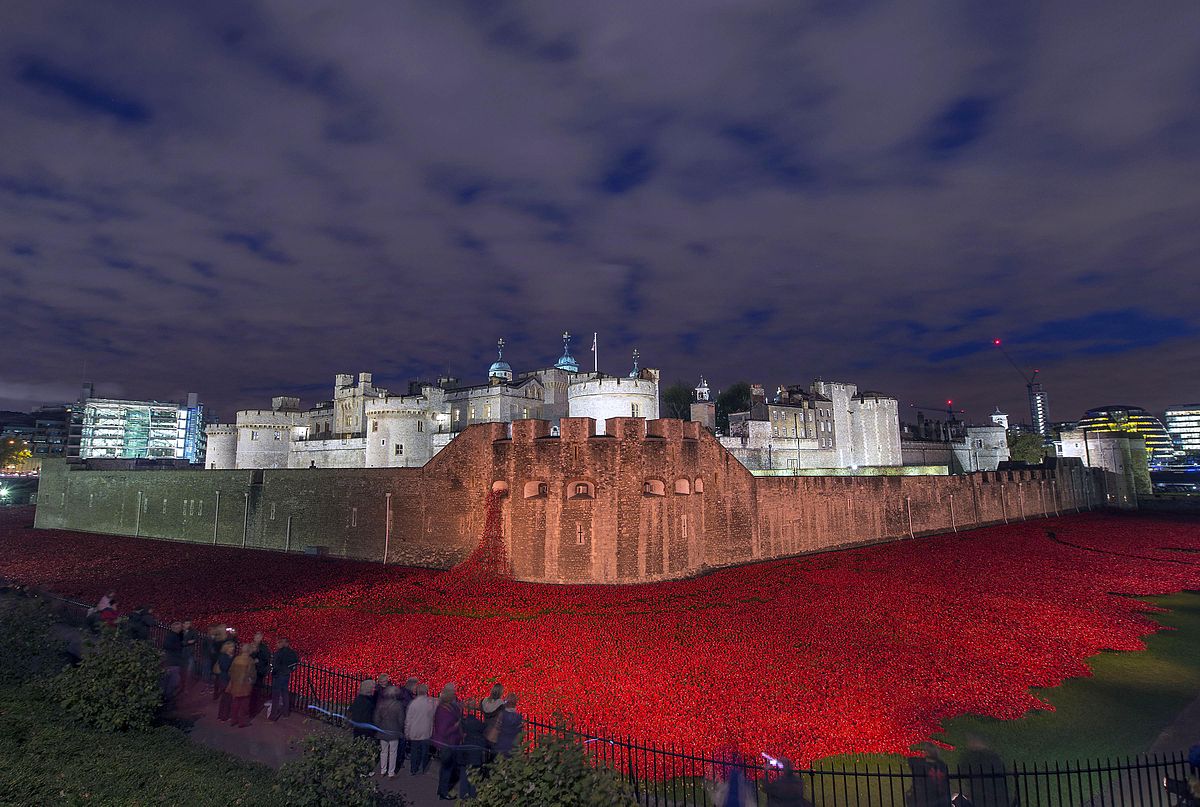
Tower_of_London_Poppies_MOD_45158094

Designer Tom Piper, who laid out the Tower of London poppy memorial, has spoken of his surprise and emotion at the public’s response to the artwork.

Emotional moment

He said: ‘It was a wonderful thing to see it finished. I found it very moving. To think one poppy is one life and to see the sheer numbers that are there is still emotionally draining.

‘It’s rather amazing and humbling that it has been taken to heart by the public. It’s allowed people to personally connect with Remembrance Day and the scale of the losses has been brought to people’s attention.’

Thousands of volunteers will now remove the 888,246 poppies, created by ceramic artist Paul Cummins and arranged by Piper in the Tower of London’s moat.

Poppies tour the UK

Two elements of the memorial – the Weeping Window cascade of poppies from a window and a group entitled the Wave, will remain until the end of the month. The two huge poppy structures will then tour the UK for four years before being installed at the Imperial War Museums in London and Manchester.

Piper added: ‘The removal of the poppies was for me always part of the theatre. The tide has reached full flow today and now it is ebbing again. For the next two weeks the public will be able to watch them taken away.’

Posted in News | Tagged , , , , , , | 3 Comments

Largest First World War archeological dig under way in Belgium

A project to lay a new pipeline through an area that was once part of the Western Front is yielding a large number of archeological finds.

As Belgian energy company Fluxys works to put the pipeline in place, archeologists are taking the opportunity to take part in the largest-ever excavation of First World War battlefields.

Reports state that every day they are finding a range of items from regimental badges, to discarded weapons, to remains of uniforms and helmets.

The hope is that the Belgian government will donate the finds to a museum – perhaps creating a new collection that provides an insight – 100 years on – into the realities of the Western Front

Posted in Events | Tagged , , , , , , | 1 Comment

Exeter Rugby Club remembers First World War soldiers

SPORT & GENERAL PRESS AGENCY COLLECTION

Twelve former Exeter Rugby Club players and officials are to be remembered with a new commemorative plaque at Sandy Park – home of the Exeter Chiefs Premiership Rugby team.

A special memorial service will take place at the stadium on Tuesday 11 November at 10.30am.

Missing First World War casualties

For years, Exeter Rugby Club has displayed a plaque commemorating members who lost their lives in the Second World War.

Research by local historian and club supporter Roy Hough has unearthed a further 12 men associated with the Devon club who never returned from the battlefields of the First World War.

Exeter Rugby Club chairman and chief executive, Tony Rowe OBE, said: ‘For some time we have displayed a plaque remembering those former players that died during the Second World War. However, we’ve since been made aware that there were also a number of old players and club officials who were killed during the First World War.

‘The fact these people were not remembered anywhere at the club needed to be addressed, so I immediately commissioned a new plaque – on behalf of the club membership – to be produced and hung alongside that of those who died during the Second World War.

Names remembered

Among those listed on the memorial are the following.

36-year-old lieutenant William Goff (MC), of the 7th Battalion Royal Welsh Fusiliers, who was killed on 22 April 1918.

Private Geoffrey Culverwell, of 1st/4th Battalion the Devonshire Regiment, who died on 10 June 1916 and is commemorated on the Basra Memorial in Iraq.

Major John Veitch (MC) of 1st Battalion, the Devonshire Regiment, who was killed on 21 May 1918 and is buried at Thiennes British Cemetery in France.

Second-lieutenant CE Tudor-Jones of the East Lancashire Regiment and the Royal Flying Corps. A former reservist with the 7th Battalion Devon Regiment, he died in December 1915.

Lieutenant SE Hucklebridge of 21st Battalion, West Yorkshire Regiment, who died on 19 March 1919 and is buried at La Louvière town cemetery in France.

Posted in Events | Tagged , , , , , , , , | Leave a comment

The First Australian to fall in the First World War

The first Australian soldier to lose his life in the First World War may well have been 22-year-old Lieutenant William Malcolm Chisholm, who was killed at the Battle of Le Cateau in August 1914.

Delphine Bartier, press and media manager for France’s Nord Region, who has looked into the events surrounding the officer’s death, said: ‘We are pretty sure he was the first Australian to die in World War I, certainly the first to die in the campaign here in France.’

Moved to England

Chisholm had been born in Sydney and educated at Sydney Grammer School, but he moved to the UK when the father got a job at a London hospital. He entered the military academy at Sandhurst in 1911 and joined the East Lancashire Regiment a year later.

On 26 August 26, 1914 the British Expeditionary Force was pulling back from Mons and made a stand near Cateau Cambresis. Lieutenant Chisholm and his men arrived at Le Cateau on the afternoon of the 25th and went into action at 4am. Around 3pm on the 26th Chisholm was hit by a bullet. He died of his wounds the following day.

Lieutenant Chisholm is one of 19 identified soldiers to be buried at the cemetery at Ligny en Cambresis.

Posted in Events | Tagged , , , , , , , , | Leave a comment

Surviving Gallipoli ship to be restored and put on display

m33_m

The last surviving ship that took part in the Gallipoli campaign of 1915 is to be restored and opened to the public with the help of a £1.75m grant from the Heritage Lottery Fund (HLF).

HMS M33 was a monitor – essentially a 53m-long, floating gun platform – that bombarded the Turkish positions while British and Commonwealth troops attempted to break through.

The ship currently sits close to Admiral Nelson’s HMS Victory in Portsmouth’s Historic Dockyard.

Gallipoli veteran

Project director Matthew Sheldon said: ‘HMS M33 is a small ship, but has a big history. Finally, we’ll be able to share the story of her part in the Gallipoli Campaign, and reveal what it was like for the 72 crew who were crammed on board.’

The ship was able to come closer to shore than most of its counterparts because of its shallow hull. It was then able to bombard targets on land.

Russian Civil War

Following the Gallipoli campaign, M33 took part in the Russian Civil War, where it was involved in the withdrawal of troops during the North Russia Intervention, which took place between 1918 and 1919.

It spent the remainder of its active service in Portsmouth, where it remains to this day.

Museum director Professor Dominic Tweddle said: ‘We are delighted that the Heritage Lottery Fund has made this grant to the National Museum of the Royal Navy to conserve and restore the ship – she will be a permanent commemoration and a reminder that the First World War took place at sea just as much as on land.’

Posted in Events | Tagged , , , , , , , , , , | 1 Comment

WW1 vintage champagne sells for £5,600

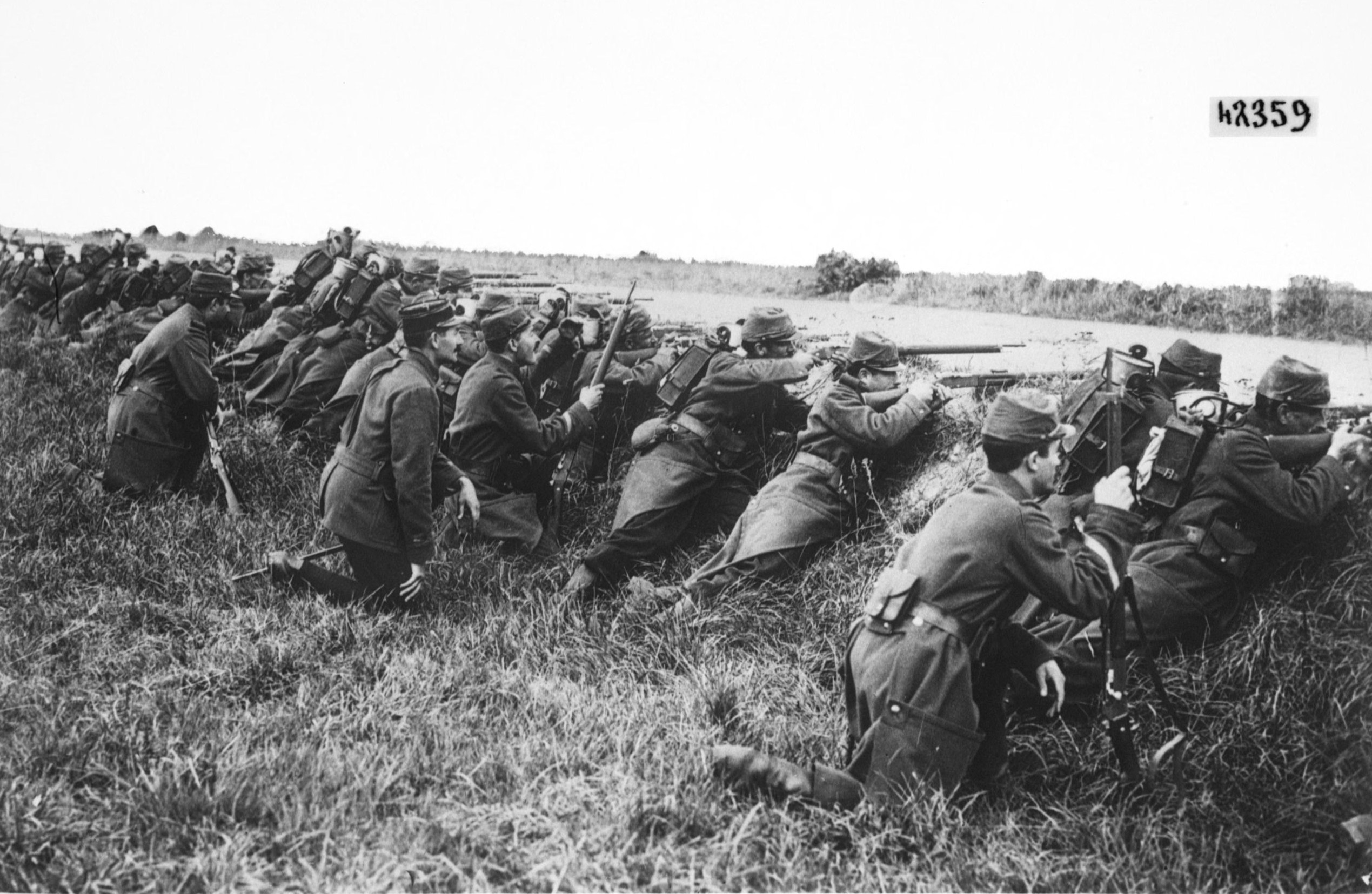
French_soldiers_ditch_1914

A bottle of Pol Roger 1914 – Winston Churchill’s favourite vintage of his favourite wine – which has lain undisturbed in the cellars of the champagne house for 100 years, was sold at auction house Bonhams’ Fine Wine Sale in London on 24 October for £5,640.

The proceeds will be donated to the Imperial War Museum to support the refurbishment of its First World War Galleries.

Fine vintage

Pol Roger 1914 is regarded as one of the finest vintages of the 20th century, but the grape harvest that year nearly didn’t take place. The German offensive at the beginning of the war came through Épernay where the Pol Roger vineyards are sited.

On the evening of 4 September the commander of the French forces, General Joseph Joffre, issued the order: ‘The hour has come to advance whatever the cost and to die where we stand rather than retreat.’

The subsequent battle of the Marne established the front line about 10 miles north of Épernay. The adversaries dug in for the years of trench warfare and the grape harvest was saved.

Saving the harvest

All able bodied men in France under the age of 45 had been called up so the harvesting of the grapes was done by women, children and men who were too old or unfit to fight. There was no guarantee the Germans would not return and the harvesting was accompanied by the sound of constant gunfire in the distance.

In the words of Pol Roger’s head winemaker at the time, the wine was, ‘harvested to the sound of gunfire but [would] be drunk to the sound of trumpets.’

‘Special wine’

Some of the grapes were picked earlier than usual because the champagne house feared the Germans would renew their offensive. This made the wine acid to the taste when young, but as it matured the flavour blossomed and the initial acidity contributed to its unusual longevity.

Bonhams’ Head of Wine, Richard Harvey MW said: ‘I’m delighted that this very special wine made such a good price and that the proceeds are going to benefit such a worthwhile cause.’

Posted in Events | Tagged , , , , , , , , | Leave a comment

Queen and Duke of Edinburgh visit WW1 artwork at Tower

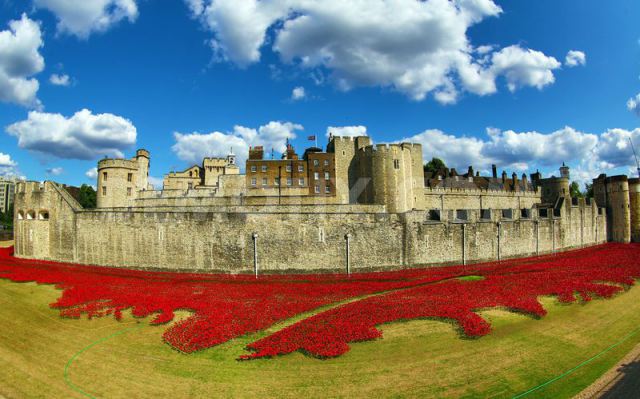
paul-cummins-ceramic-poppies-tower-of-london_01

HM The Queen and HRH the Duke of Edinburgh have visited an art installation that marks the Centenary of the First World War.

The Royal pair toured the exhibit, featuring thousands of ceramic poppies, at the Tower of London.

A poppy for a casualty

The Queen laid a wreath at the Blood Swept Lands And Seas Of Red exhibit, where each poppy commemorates a fallen First World War serviceman.

By 11 November, Armistice Day, there will be 888,246 ceramic poppies, one for each British and colonial death.

More than 1,600 men enlisted at the Tower of London and it also served as a military depot and the execution spot for 11 German spies.

Poignant memorial

Artist Paul Cummins, who created the ceramic poppy field, said: ‘I approached the tower as the ideal setting as its strong military links seemed to resonate.

‘The installation is transient, I found this poignant and reflective of human life, like those who lost their lives during the First World War.

‘I wanted to find a fitting way to remember them.’

Posted in Events | Tagged , , , , , , , , , | Leave a comment

French soldier’s bedroom preserved for almost 100 years

Rochereau_3072863b

A First World War French dragoon officer’s bedroom has been preserved for almost 100 years exactly as he left it in 1918.

Second Lieutenant Hubert Rochereau lived with his parents in the village of Bélâbre in central France. When he was killed in 1918, they kept the room just as it was the day he left them after his last period of leave.

Eerily complete

Rochereau died on 26 April 1918 in Belgium after being wounded in fighting near the village of Loker. He was awarded a posthumous Legion of Honour for bravery and his name is on the war memorial in his home village.

According to a report in La Nouvelle République newspaper, the young man’s room is eerily complete. His blue jacket still sits on a stand. His books rest in piles on the mantelpiece and his bed is still covered by the same lace spread as it was nearly a century ago.

Kept unchanged for 500 years

When the Rochereaus sold their home in 1935, they made the new owners sign a clause stating that the bedroom where their son was born in 1896 could not be changed for 500 years.

On the desk is a vial with a label saying it contains ‘the earth of Flanders in which our dear child fell and which has kept his remains for four years’.

The current owner of the house in the village in central France, Daniel Fabre, said the clause on maintaining the bedroom has no legal value but that he intends to honour it. Mr Fabre, a retired civil servant, and his wife inherited the large family home from her grandparents.

Posted in Events | Tagged , , , , , , , , | 1 Comment