Family recovers medals of Australian Aboriginal soldier

dbImage

The family of an Australian Aboriginal soldier who was killed during the First World War have been reunited with his war medals.

Private Arthur Walker’s great-grandson, John Lochowiak, was given the medals by a relative after she saw him at the unveiling of the Aboriginal and Torres Strait Islander War Memorial.

Mr Lochowiak said: ‘Being killed overseas is a big deal for anyone, but in Aboriginal tradition where you are born is where you return when you die, so Arthur was separated from his country.

‘It’s overwhelming to think his mother received these medals after he was killed and now they are back in the right place.’

Gallipoli veteran

Private Walker enlisted in 1914 aged 32. He landed at Gallipoli on 25 April, 1915, with the 10th Battalion Australian Infantry. He survived the campaign was killed on the Western Front in 1916 serving with the 50th Battalion. He is commemorated on the memorial to the missing at Villers-Brettonneux.

Lochowiak added: ‘What’s significant is in order for him to enlist he had to say he wasn’t Aboriginal and lie about being married, because of the policy of the time. Because he wasn’t listed as married, the medals were sent to his parents who passed them on to his sister and they went down another side of the family.

‘Getting the medals back is better than winning the lottery because we’ve also found my aunty and cousins.

‘His body hasn’t come home but it’s almost like his spirit has, 100 years later, so our family is complete.’

The family has a tradition of naming a son in each generation ‘Anzac’ in Private Walker’s memory. The latest holder of the name being 12 years old.

There is more about Australian Aboriginal soldiers in the First World War, here.
Posted in News, Soldiers of the Great War | Tagged , , , , , , , , | 2 Comments

Missing British soldiers to be reburied at Loos

Image

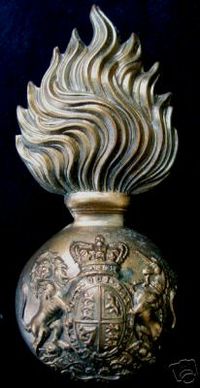
On 14 March 2014, private William McAleer of the Royal Scots Fusiliers and 19 unknown British soldiers of the First World War will be reburied at the Loos British Cemetery in France. Private McAleer was killed in action on 26 September 1915, while serving with the regiment’s 7th Battalion.

These soldiers of the Great War will be laid to rest at 10am (local time) in the CWGC cemetery.

Identification of the missing

The remains of the 20 British servicemen were uncovered in a communal grave in Vendin Le Vieil, France. The remains of 30 German soldiers were also found in close proximity and were handed over to the German authorities.

Surviving regimental insignia helped to link some of the remains to specific regiments. Seven of the men had belonged to the Royal Scots Fusiliers, two to the Queen’s Own Cameron Highlanders, one to the Northumberland Fusiliers and one to the York and Lancaster Regiment. Nine of the soldiers remain completely unknown.

Each of the regiments involved suffered high casualties in September 1915 and there were very few personal artefacts to assist further identification. Only one of the soldiers had an identity tag – 22-year-old private McAleer of the Royal Scots Fusiliers.

Posted in Events | Tagged , , , , , , , , , , , , | Leave a comment

Exhibition focuses on Gordon Highlanders in the First World War

Image

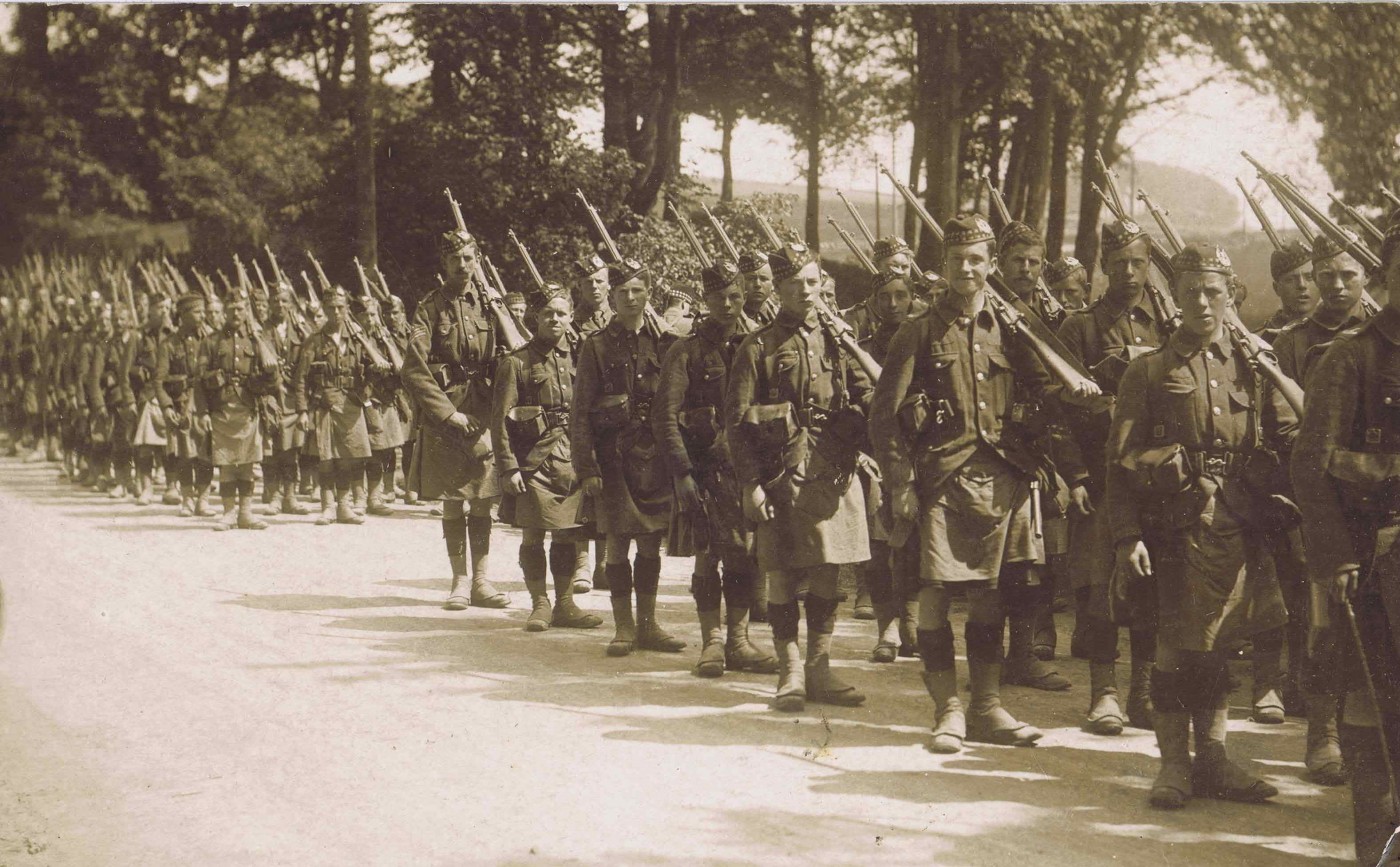
An exhibition focusing on the Gordon Highlanders and their experience during the first months of the First World War has opened at the regiment’s museum in Aberdeen.

Shattered Hopes: The Gordon Highlanders in 1914 follows the unit throughout the battles of Mons, Le Cateau and Ypres.

Victoria Cross

Highlights include the sword carried by Captain James Brooke, posthumously awarded the Victoria Cross on 29 October 1914, during the first battle of Ypres.

Captain Brooke led two attacks German positions, regaining a lost trench and preventing an enemy breakthrough. His Victoria Cross, one of 19 is on permanent display at the museum.

The exhibition also features a drum belonging to 2nd Battalion, Gordon Highlanders that was abandoned in Ostend, Belgium, in October, 1914 and the medals of Private Peter Imlah, of the same battalion, who in 1918 was the sole survivor from a draft of 200 men who had left for France in 1914.

‘Extremely moving’

Jesper Ericsson, curator of the Gordon Highlanders Museum, said: ‘This is the exhibition that people have been waiting for. Public interest in the First World War is huge, and the story of the Gordon Highlanders in 1914 is both unique and extremely moving.

‘Focusing purely on the first few months of the war for the exhibition was a deliberate decision, as the Gordons were among the first to travel to France and Flanders after the outbreak of hostilities in August 1914, and were involved in all the major actions that summer and autumn, culminating at the end of the year in the Christmas Truce.’

To find out more about the exhibition, which will run until 19 November, click here.

Posted in Events, News | Tagged , , , , , , , , , , , , , , , , , | Leave a comment

British Library launches First World War website

Image

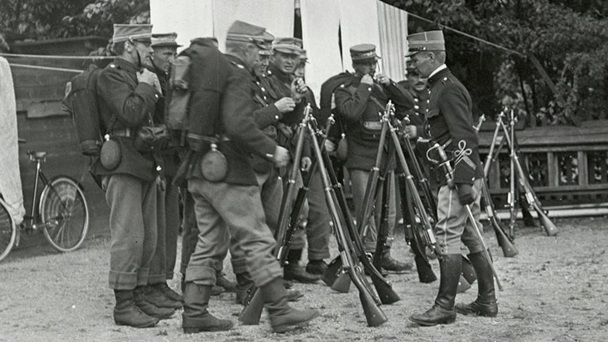
Danish reservists mobilsed in 1914 to preserve neutrality (British Library Collection)

The UK’s British Library has launched a website dedicated to the Centenary of the First World War.

It combines 50 scholarly articles about the First World War with a wide range of archive material that covers a large number of nations that were involved in the conflict.

Themes covered include: life as a soldier, civilians, propaganda and historical debates.

Pan-European commemoration

The British Library is taking a lead role in the UK’s part in a pan-European commemoration of the First World War, Europeana 1914-1918.

The project has made hundreds of thousands of newly digitised material relating to stories and events of the war available online for free, including 10,000 items from the British Library’s First World War collections.

The British Library’s dedicated First World War website offers curated access to nearly 500 of these items. Collection items are complemented by short films and interviews with academics and authors, plus a dedicated teachers’ area.

To find out more about Europeana 1914-1918, click here. The British Library’s First World War website can be accessed here.

Posted in Events | Tagged , , , , , , , , , | Leave a comment

WW1 Centenary exhibition at Jewish Museum in Vienna

Image

Austro-Hungarian troops in the First World War

On 3 April the Jewish Museum in Vienna will open an exhibition focused on the Centenary of the First World War entitled Doomsday – Jewish Life and Death in World War I.

The show considers how the First World War had wide-ranging consequences for the established order of 1914.

The Habsburg Empire collapsed, Tsarist Russia became the Soviet Union, the sun began to set on the British Empire, France was fatally damaged as a world power and the US began an inexorable rise.

Austria’s Jewish community

The war also had grave consequences for the Jews of Austria-Hungary, who had been among the most loyal subjects of Emperor Franz Joseph I – who guaranteed them legal security and detested anti-Semitism.

Some 350,000 Jewish soldiers served in the First World War while the front overran and devastated the Jewish area of Galicia. Around 80,000 Jewish refugees arrived in Vienna, changing the structure of the community.

The Jewish Museum’s exhibition considers the lives of soldiers, politicians, rabbis, artists, revolutionaries and pacifists.

On show are objects such as letters by the Jewish community assuring loyalty to the emperor, paintings of prominent figures, memorabilia of Jewish soldiers, and items from Galicia and Vienna will also be shown.

The show runs until 14 September 2014.

Posted in Events, News | Tagged , , , , , , , , | Leave a comment

Women and Industry in the First World War at IWM North

Image

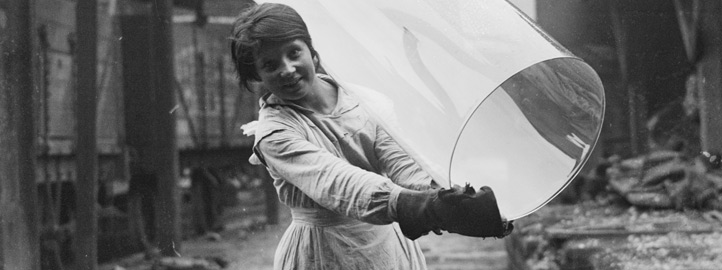
Women and Industry in the First World War, at IWM North in Manchester, is a photographic display what considers the role of female workers during the First World War.

The display, outside IWM North, comprises six images by the official First World War photographer GP Lewis that have been enlarged to fill huge, five-metre-high frames.

Women in the First World War

Lewis was an official photographer of the home front. His brief included capturing images of heavy industry and within this he photographed women workers in the glass, automotive and food industries.

The images help to show visitors the wide range of roles performed by women during the First World War.

Visitors are invited to contact IWM North on Twitter #IWMNorth or on Facebook if they recognise family members in any of GP Lewis’ photographs on display.

The show runs until 28 September 2014.

Posted in Events | Tagged , , , , , , , , , , | Leave a comment

UK communities focus on Last Post project

Image

The Last Post, a mass participation music project for 300 communities, will take place in the UK during each year of the Centenary of the First World War from 2014 to 2018.

For a fortnight either side of Remembrance Sunday, 300 communities across the country will research their own local First World War heritage and hold musical recitals in schools, libraries, places of worship and community centres, where they will share stories, local memories and testimony.

Poignancy of the Last Post

Volunteers at each event will play the Last Post in new and traditional arrangements of the bugle and trumpet call.

Last Post songbooks will also offer traditional music from the era including It’s a Long Way to Tipperary and Keep the Home Fires Burning.

UK Government Communities Secretary Eric Pickles said: ‘The poignancy of the Last Post is something that everyone in Britain recognises as a way of remembering those who lost their lives in war in service to this country fighting for liberty.

‘This is a fitting time to bring that music back home, closer to the heart of communities and use it to remember the remarkable role so many local people played in the First World War.’

Posted in Events | Tagged , , , , , , , , | Leave a comment

Reading footballer Joe Dickinson remembered for the Centenary of World War I

Image

Joe Dickinson was one of 44 Reading Football Club players to serve in World War I and one of 11 who never returned home.

Dickinson had been a regular army soldier prior to his stint at the club, serving with the Grenadier Guards between 1909 and 1912. He was signed by Reading in February 1913 for £5.

On the outbreak of war he was recalled by the army and was one of the first soldiers to arrive in France – on 13 August 1914.

Some time afterwards he wrote to Reading FC’s club secretary-manager, Harry Matthews from a position some way behind the front line in Belgium.

‘As you know we have had many hardships since we came out here, and for the last five weeks we have never been out of the trenches.

‘We have been defending Ypres, which the Germans have been trying so hard to take – and are still trying.

‘What with their strong attacks and the severe weather it has been very hard with us.’

His letter went on: ‘We have about a hundred left out of a total of 275 in my company and I am pleased to say I am one of the hundred.

‘By Jove, it is nice and comforting for us to be able to walk about in peace, free from the German shot and shell. Now we are here they are doing all they possibly can to make us happy.

‘We have been plentifully supplied with games, football especially, and talk about going mad, I thought the boys would, including myself, when they caught site of a football. It was the first one I had seen this season, but I think I made up for lost time, for I played in three matches yesterday.

‘Although we were in every-day attire we were in earnest, in fact I could not have played harder if it had been a cup-tie.

‘Please remember me to all. I am wondering how you got on with Brighton today, and hoping you have kept your form up.’

Dickinson survived the fighting at Aubers Ridge and Festubert, but was killed by a shell on 19 May 1915.

The 2nd Battalion, Grenadier Guards’ War Diary for the day states: ‘Heavy shelling all day with every description of shell – some very big.’ The document records that only one man lost his life in the bombardment: 26-year-old Corporal Joe Dickinson. He is commemorated on the Le Touret Memorial.

To see Joe Dickinson’s details on the CWGC website, click here.

Posted in Events | Tagged , , , , , , , , , , | Leave a comment

RAF Museum announces World War I Centenary events

Image

A Sopwith Camel. Biggles would approve.

Throughout 2014 the Royal Air Force Museum will be hosting various events that will commemorate the outbreak of World War I.

Three events have already been announced

A story workshop for children, entitled Where the Poppies Now Grow, will be taking place on 7-8 April.

The unveiling of our World War I Art Exhibition Biggles and Chums will open to the public on 2 June and will showcase the drawings and watercolours of author WE Johns and his contemporaries.

A World War I cinema season will run from 10-13 July at the RAF Museum, Hendon.

To find out more about the RAF Museum and its coming events, click here

Posted in Events | Tagged , , , , , , , , , , | Leave a comment

Scottish football club unveils World War I Centenary kit

Image

Scottish football club Raith Rovers has unveiled a new away strip that commemorates the sacrifice made by its players during World War I.

The Kirkcaldy club wanted to mark the Centenary of World War I and to pay tribute to the seven Raith players who joined the 16th Royal Scots which included in its ranks numerous Scottish footballers. The unit was founded by Sir George McCrae and was often referred to as ‘McCrae’s Battalion’.

Raith’s missing men

Three, namely Jimmy Todd, Jimmy Scott and George McLay, lost their lives during the fighting.

Todd played as a winger, had worked as a railway clerk and was killed by artillery fire in March 1916.

Scott, a 21-year-old forward, lost his life on the first day of the Battle of the Somme. His name appears on the Thiepval memorial to the missing.

McLay, a 28-year-old midfielder, was killed while attacking a German pillbox during the Third Battle of Ypres. At the time he was serving as a sergeant and was awarded a posthumous Military Medal for his actions.

Some 10 additional Raith players served with other units.

Hunting Stewart

Raith chairman Turnbull Hutton said of the new kit: ‘We hope that it captures the imagination of the Scottish footballing public and, through next season’s sports pages, that it ensures that we really do remember the sacrifices of our players and so many others 100 years ago.’

The new away strip, which will be worn from the 2014-2015 season, is in the green and black colours of the Hunting Stewart tartan worn by the Royal Scots Regiment.

Posted in Events | Tagged , , , , , , , , , , , , , | Leave a comment