Auction beckons for Rolls-Royce that served as World War I dental surgery

Image

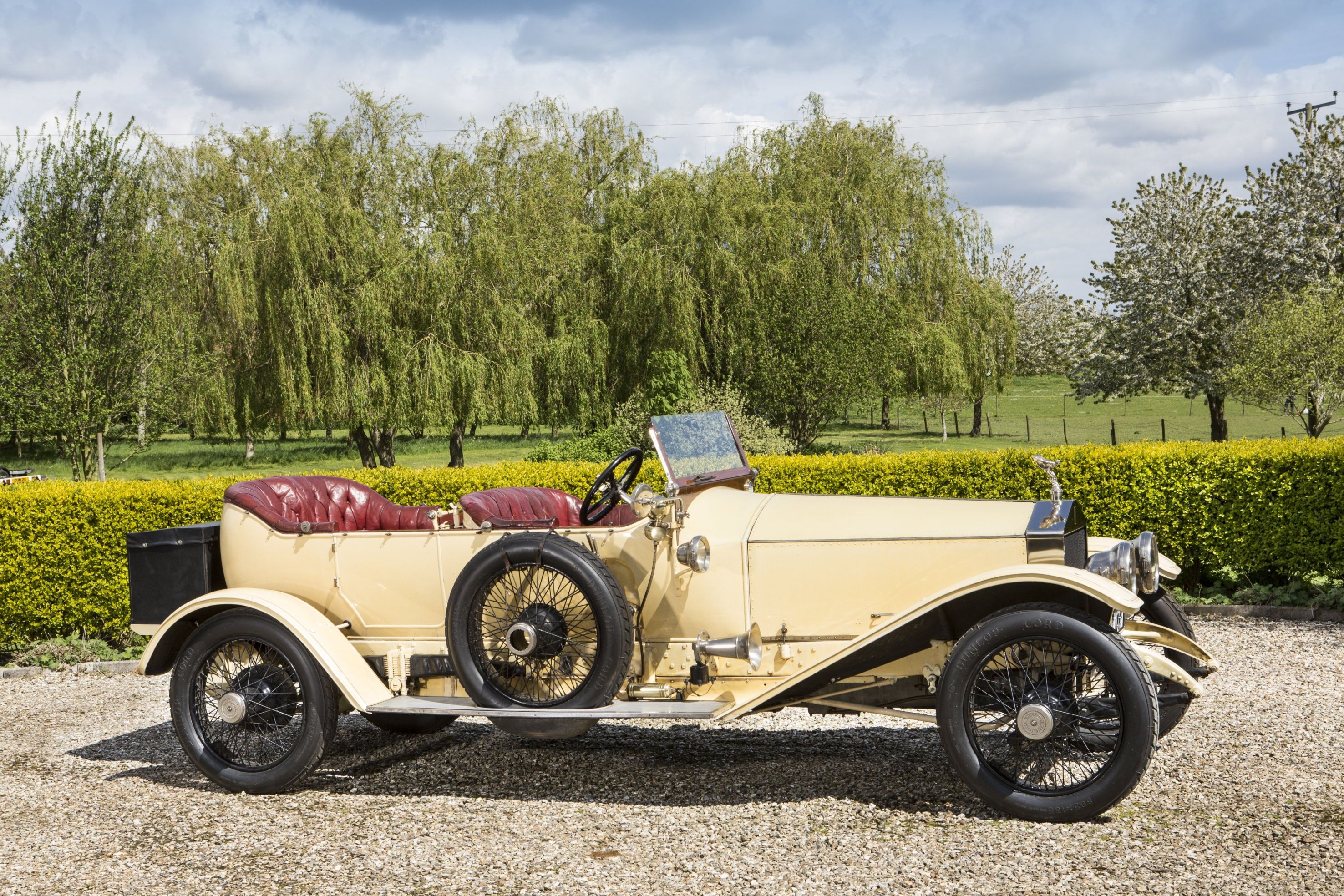
A 1913 Rolls-Royce Silver Ghost that was used as a mobile dental surgery during the World War I will join be on show at auction house BonhamsGoodwood Festival of Speed Sale on Friday 12 July.

The 1913 Rolls-Royce 45/50hp Silver Ghost London-to-Edinburgh Tourer (estimate £600,000 – £800,000) was bought by an Englishman for £1,016 (approximately £100,000 in today’s money) in September 1913, before passing to its second owner, Auguste Charles Valadier, in October 1915.

A wealthy French-American living in Paris, Valadier would become instrumental in pioneering the development of maxillofacial re-constructive surgery to treat service personnel injured during World War I.

On the outbreak of hostilities in 1914 Valadier had been keen to help the war effort in some way. He volunteered his services to the British Red Cross Society in Paris, who accepted him for duty in October that year.

By the end of 1916 he was stationed at Boulogne and the Rolls-Royce – then bodied in limousine style – had been modified to incorporate a dentist’s chair in the rear.

A colleague who worked alongside Valadier at the time wrote: ‘In Boulogne there was a great fat man with sandy hair and a florid face, who had equipped his Rolls-Royce with a dental chair, drills and the necessary heavy metals. The name of this man… was Charles Valadier.’

Valadier was awarded the Legion of Honour in 1919 and was knighted in 1921, having been granted British citizenship the previous year.


Posted in Events | Tagged , , , , , , , , , | Leave a comment

Anniversary of the death of Archduke Franz Ferdinand

Image

It was 99 years today that the Austrian Archduke Franz Ferdinand was assassinated, leading ultimately to the outbreak of World War I.

The Archduke was in Sarajevo to inspect Austro-Hungarian troops when he and his wife were shot dead by Serb nationalist Gavrilo Princip. 

Had his driver not got lost and taken a wrong turning there is every possibility Princip would not have had the opportunity to shoot and history could have been very different… although the Serbs had already tried to kill Franz Ferdinand earlier that day and would probably have tried again.

A month later, on July 28, the Austro-Hungarian empire declared war on Serbia. German statesman Otto von Bismarck had suggested decades earlier that Europe’s peace would be destroyed by some unpleasant incident in the Balkans and, as usual, he was correct. 


Posted in Events | Tagged , , , , , , , | 2 Comments

World War I model soldiers from Tommys War

img_5637

Tommys War is an, as yet small, range of model figures dedicated to World War I subjects.

What’s striking is the humanity of the poses, their level of detail and the linking of model figures to particular moments of World War I.

The range currently numbers 14 figures including an experienced-looking private of the 4th Battalion, Middlesex Regiment at Mons in August 1914; a sergeant of the 2nd Battalion Suffolk Regiment attempting to escape from his regiment’s encirclement at Le Cateau; and an elephant-gun carrying captain of the Royal Welch Fusiliers at Ploegsteert Wood in winter 1915.

The figures measure 54mm in height and are sculpted by Nino Pizzichemi.

For more on the range, click here.

Posted in News | Tagged , , , , , | Leave a comment

National Portrait Gallery to restore Naval Officers of World War I

Image

London’s National Portrait Gallery reports it has reached its £20,000 target to repair a large painting entitled Naval Officers of World War I.

The gallery plans to display the portrait next year to commemorate the 100th anniversary of the start of World War I.

The work has not been seen for several decades because of its poor condition.

Naval Officers of World War I is one of three large group portraits commissioned by the South African millionaire Sir Abe Bailey in the aftermath of World War I.

Bailey’s idea was that these works would be presented to the nation and would commemorate the role of the navy, the army and politicians during the recent global conflict.

Collectively, the group would depict the most distinguished naval commanders, military commanders and statesmen of that era. Stockdale Cope declined the invitation to paint the statesmen, opting instead for the naval commanders, a subject with which he felt greater affinity.

The statesmen were painted by Sir James Guthrie, with John Singer Sargent taking the military commanders. 

Posted in Events | Tagged , , , , | Leave a comment

Coventry memorial plaques removed as vandals strike

Image

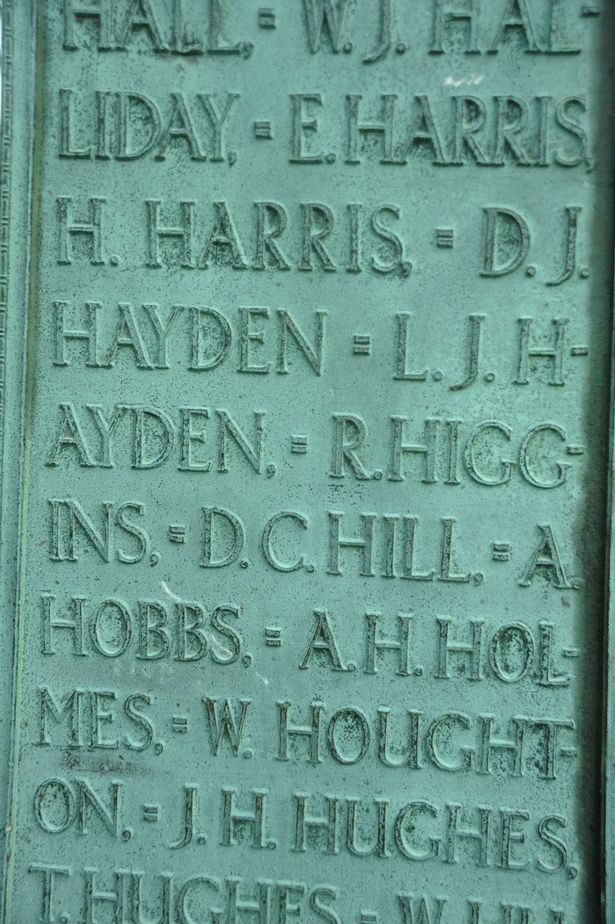
Church authorities in Coventry have had to remove two brass plaques from a war memorial to prevent them being stolen. Two other plaques on the memorial at St Nicholas Church, Radford, were stolen two years ago and the two survivors showed signs of attempted theft.

The Coventry Telegraph quotes councillor Ed Ruane, Coventry City Council’s cabinet member for housing and heritage, who says he supports a restoration appeal after the attempted theft.

The newspaper reports that the war memorial in Radford once bore the names of 80 local people.

A community effort has now been launched to return the memorial to its former glory in time for next year’s 100th anniversary of the start of the World War I.

The church is appealing for anyone who knows of the names on the stolen plaques, or wants to help raise restoration funds, to come forward.

For the original story, click here.


Posted in Events | Tagged , , , , , | Leave a comment

Salvation beckons for World War I Hull trawler

A Hull trawler could be returned to the city as part of commemorations to mark the centenary of World War I.

This is Hull and East Riding reports the Viola, which is currently rusting in South Georgia, is the last remaining boat of its kind to have been used in the war.

Dr Robb Robinson of Hull University said: ‘The Viola sailed from Hull barely a few weeks after the war started and, a century later, it has yet to return. The centenary commemorations are probably the last chance to bring it back.’

The Viola was one of hundreds of trawlers seized by the government at the outbreak of war in 1914 and turned into fighting boats. It served in the Shetlands and on the River Tyne.

The ship was used for minesweeping patrols and also to hunt U-boats.

After the war the boat was sold to new owners in Norway and used for whaling off the coast of Africa, before being sold again to an Argentinian firm, which used it for sealing and exploratory trips in the Falklands.

To read the original story, click here

Posted in Events | Tagged , , , , , | 2 Comments

‘Oldest’ UK war memorial set for restoration

images

A World War I memorial that is believed to be the oldest in Britain is set for renovation, 96 years after it was installed, reports Thisisgloucestershire.co.uk

The wooden cross and memorial at Inchbrook, Stroud, was dedicated in 1917 on land given by the Dominican monks of the friary nearby.

It bears the names of more than 140 people, which are to be re-etched in stone following a major fundraising effort planned by parishioners.

Names on the memorial include George Archer-Shee of the South Staffordshire Regiment, inspiration for the play The Winslow Boy, who was killed at Ypres on 31 October 1914. He is also commemorated on the Menin Gate.

Also listed is lieutenant Maurice Dease VC of the 4th Battalion, Royal Fusiliers, who was killed in action at Mons on 23 August 1918, and captain George Wyld of the 3rd Battalion the Wiltshire Regiment, who was killed on Christmas Eve 1914.

Captain Wyld was the son of the vicar of Melksham in Wiltshire and had previously served in the Boer War. He was 37 and is buried in Brown’s Road Cemetery, Festubert.

Posted in Events | Tagged , , , , , , | Leave a comment

Lieutenant colonel James Barry, Army Remount Service

Image

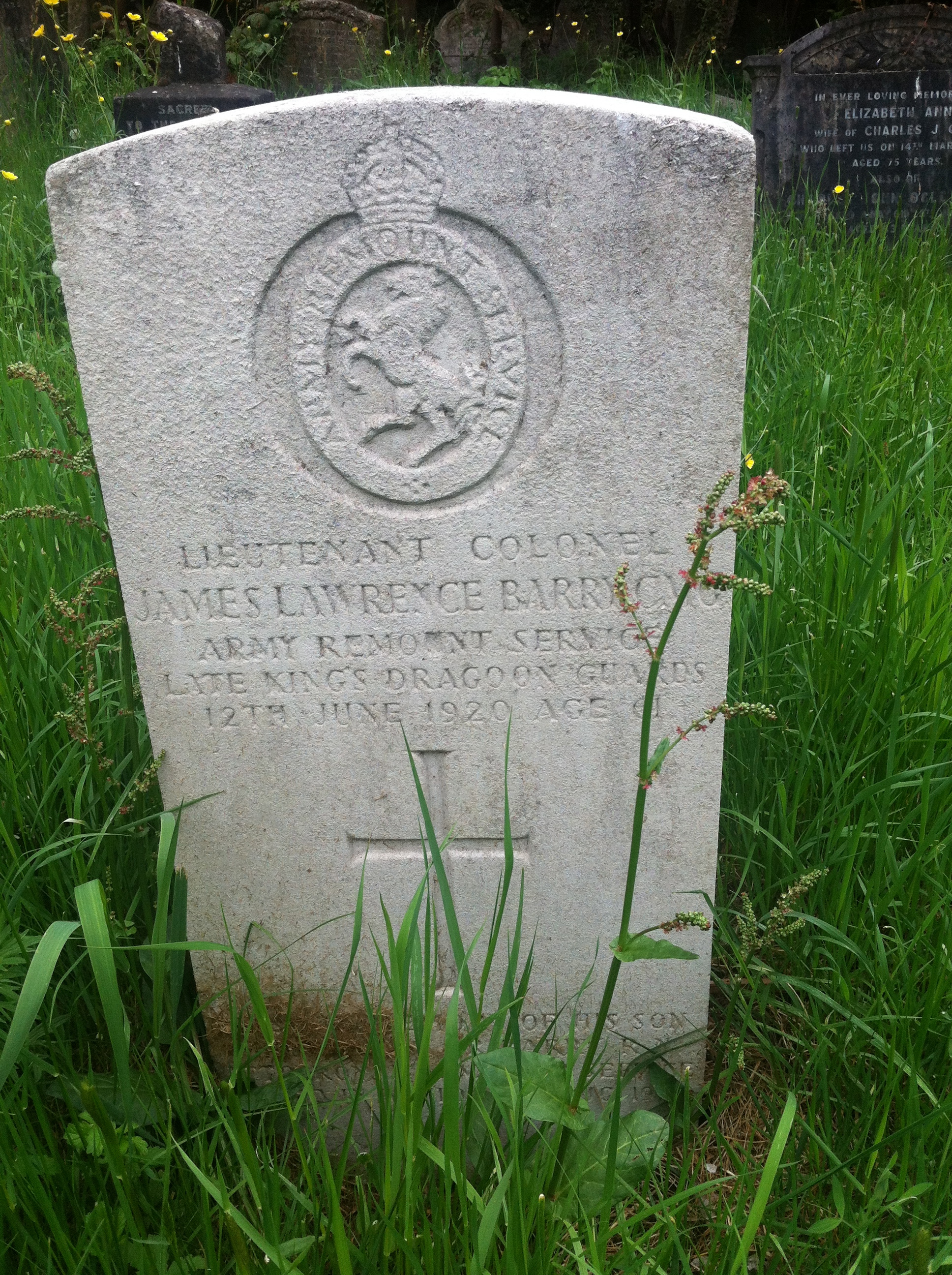
An unusual headstone commemorating 61-year-old lieutenant colonel James Barry of the Army Remount Service, formerly of the King’s Dragoon Guards.

Officers of the Army Remount Service were generally members of the landed gentry, experienced huntsmen and ageing cavalrymen. The equestrian painter Sir Alfred Munnings was among their number.


Posted in Events | Tagged , , , | 2 Comments

UK Government ‘trying too hard’ to avoid World War I triumphalism

The UK Government has been accused of trying too hard to avoid upsetting the Germans by making sure the centenary of World War I is not too triumphalist or patriotic, reports the Daily Telegraph.

The newspaper reports that Eric Pickles, the Communities Secretary, has defended the Government’s position, arguing it would be terrible if events were to cause tensions between European countries.

‘It would be a tremendous tragedy if this just became an anti-German, anti-Turkish festival,’ he said.

‘Equally, it would be a tragedy if we forgot what happened, if we forgot why we fought, if we forgot we won.’

Pickles’ comments came after Maria Miller, the Culture Secretary, said the Government will maintain a neutral stance about who was to blame for the conflict.

To read the original story, click here.

Posted in Events | Tagged , , , , , | 1 Comment

Overgrown CWGC memorials in Hampstead Cemetery

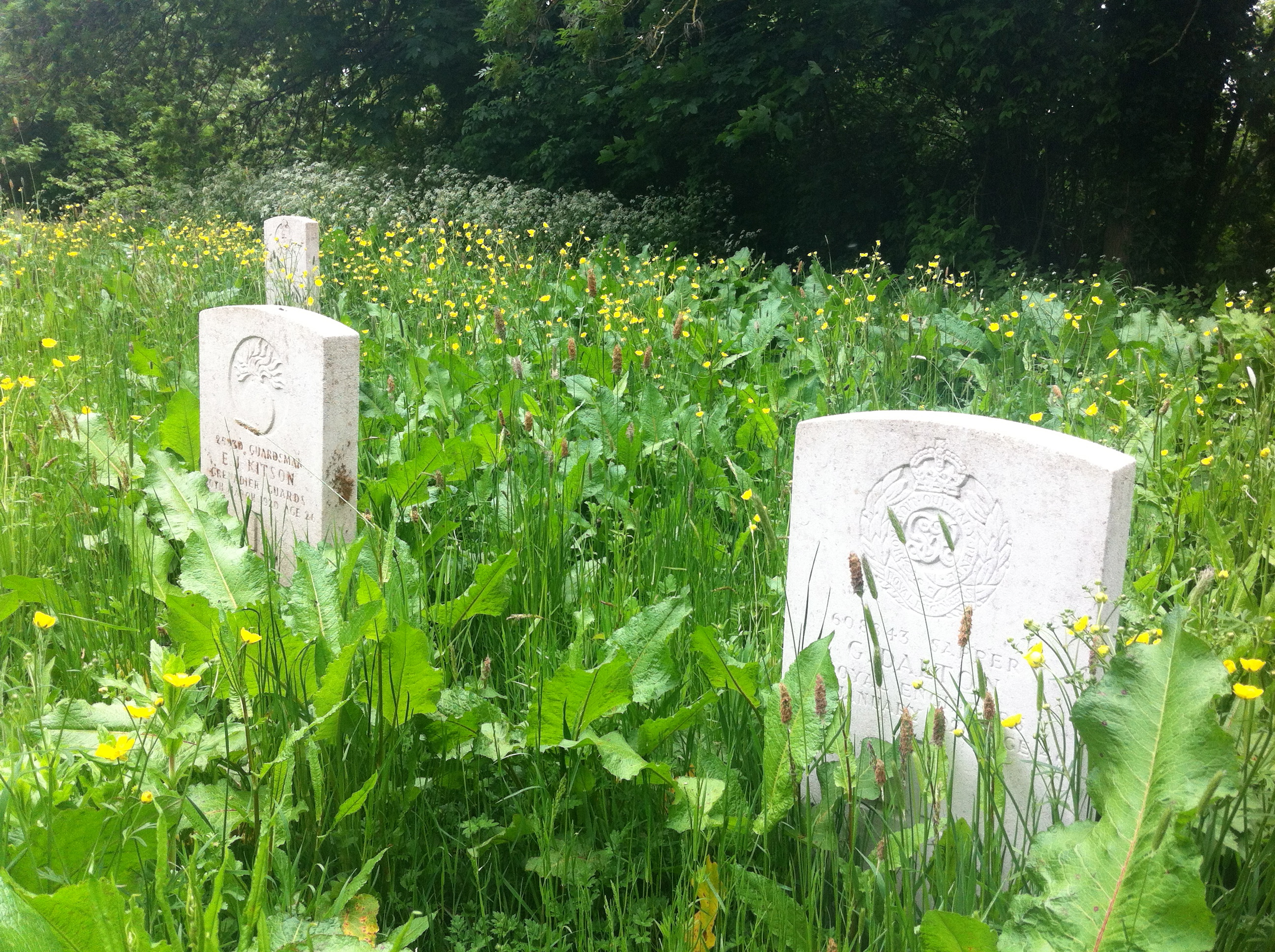
ImageA couple of examples of overgrown CWGC headstones in Hampstead Cemetery, London.

The two in the foreground commemorate Sapper George Dalton of the Royal Engineers and Guardsman Ernest Kitson of the Grenadier Guards.

According to CWGC, Sapper Dalton was 46 and belonged to 1st Base Park Company, RE.

Guardsman Kitson was 26 and was the husband of Alice Kitson, of 62 Gordon Rd, Lower Edmonton, London.

Compared to the beautifully kept cemeteries of France and Belgium, this corner of Hampstead cemetery is pretty neglected unfortunately.

Posted in Soldiers of the Great War | Tagged , , , | 1 Comment