Photos tell tragic tale of submarine battle

ub-106-rocks-falmouth.jpg

On 1 February 1917, Germany declared unrestricted submarine warfare; with its U-boats torpedoing ships without warning, allowing passengers and crew little or no chance of escape.

Nicknamed Der Magische Guertel, or the Magic Girdle, the operation aimed to starve Britain into submission.

All ships trading with Britain were seen as targets, including those from neutral countries such as Norway, Denmark and the United States. The targeting of American ships ultimately brought the United States into the war in April 1917.

Even hospital ships were targeted by German forces during unrestricted submarine warfare, provoking worldwide outrage. Ships like HMHS Rewa, torpedoed in January 1918, were unarmed and painted with the internationally recognised symbol of the Red Cross but were still sunk.

jack-casement.jpg

Wrecked on the coast

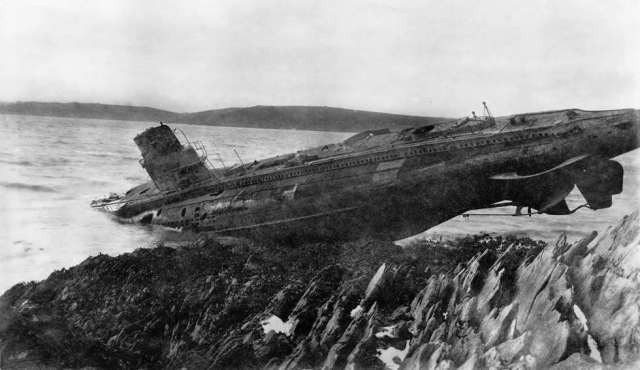
To mark the anniversary of this turning point in the war, Historic England has published a selection of images that depict U-boats that were wrecked on the Cornish coast following in the end of the First World War in 1918.

The submarines had been surrendered by Germany and were on their way to be used as gunnery targets by the British Royal Navy.

They had been stripped of their engines and, buoyant and hard to tow, some sank or were wrecked on the British coast.

The photographs were taken in 1921 by naval officer Jack Casement (pictured above).
submariners-memorial-temple-pier.jpg

Submariners’ memorial

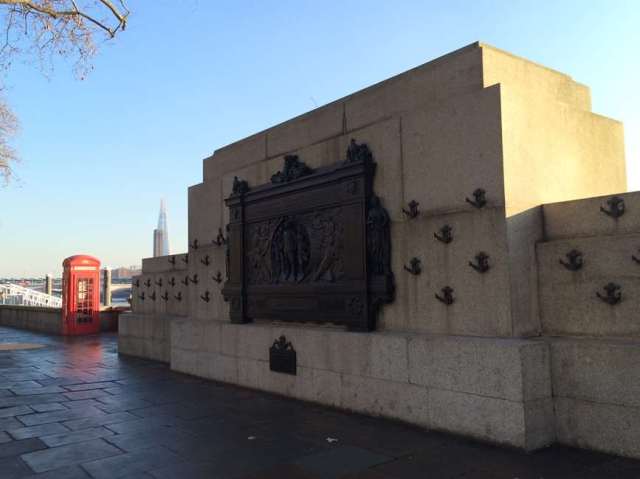
Also marking this year’s anniversary, the National Submariners’ memorial at Temple Pier on the Thames has also been upgraded to a Grade II* listing.

Unveiled in 1922, it commemorates the one third of the Submarine Service’s total personnel who lost their lives during the First World War – the highest proportion of any branch of the armed services.

Roger Bowdler, director of Listing at Historic England, said: ‘The declaration of unrestricted submarine warfare in February 1917 was a decisive moment in the First World War. Germany’s tactic led to devastating losses for many nations but it also horrified the world.

‘It was seen as uncivilised, ungentlemanly and ultimately brought the might of the United States into the war. By commemorating this day we can better understand its consequences and remember the many people who lost their lives in this way.’

naval-visitors-ub-112.jpg

Posted in News | Tagged , , , , , , , , , , , | Leave a comment

Royal Navy Museum marks centenary of WRNS

Wrens Group embarking sentry with Ross rifle.jpg

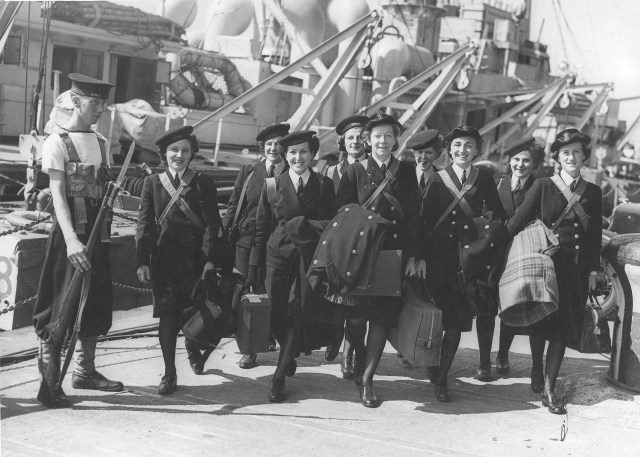
Second World War WRNS with their kit

The National Museum of the Royal Navy, Portsmouth, is marking the centenary of the formation of the Women’s Royal Naval Service (WRNS) with an exhibition entitled Pioneers to Professionals. Women and the Royal Navy.

On show within the Portsmouth Historic Dockyard, the display opens on 18 February and charts the history of women and the Royal Navy from the age of sail to the present.

Two Wrens cleaning depth charges, First World War.jpg

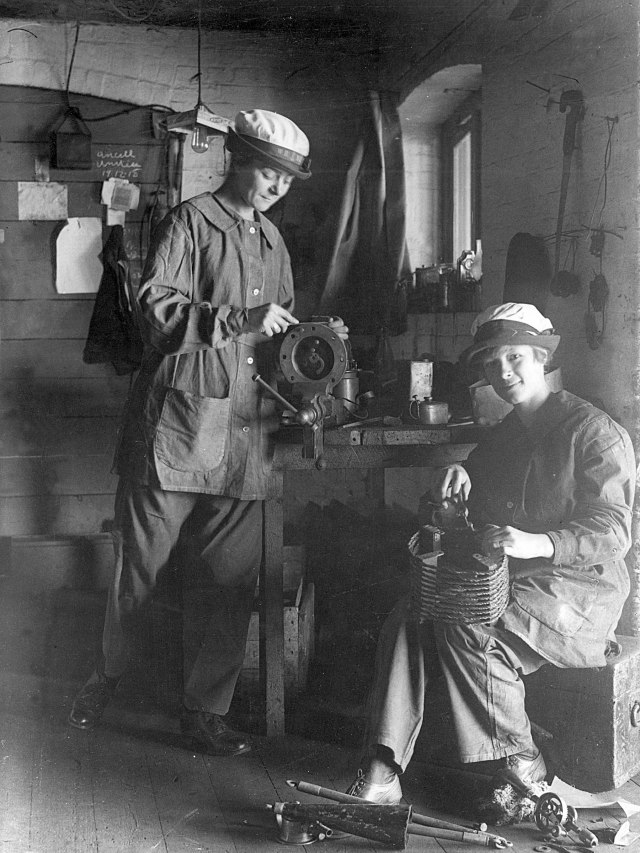
WRNS working on depth-charges during the First World War

Untold stories

Drawing on the collections of the National Museum of the Navy, in addition to loans from other museums and private individuals, the exhibition shines a light onto an area of naval history that has all too often been forgotten.

Among those whose story is told are Hannah Snell, who disguised herself as a man to serve in the Royal Marines, and Ann Hopping, who went to sea on Royal Navy ships in the 18th century.

The exhibition also explores the role of women during two world wars and considers the realities of everyday life in today’s Royal Navy.

For more about Pioneers to Professionals. Women and the Royal Navy, click here.

Posted in Events, News | Tagged , , , , , , , , | 3 Comments

Belgian memorial for Hertfordshire Regiment

large_000000-1.jpg

The Hertfordshire Regiment will soon gain its first memorial outside the UK. The new monument will be constructed at the site of the 1st Battalion’s attack near St Julien on 31 July 1917 – the first day of the Battle of Passchendaele.

About 620 soldiers went into action that morning, but within two hours all the officers and 75 per cent of the other ranks had been either killed, wounded or captured. The memorial is scheduled to be unveiled on 31 July this year.

large_000000-2.jpg

Poignant moment

Dan Hill from remembrance group Herts at War, which has been campaigning for the memorial, said: ‘We’re putting together an unveiling day with an interactive battlefield walk, to tour the field exactly 100 years to the day on from when it happened – very poignant.’

The £5,000 monument will be brick-built, bearing plaques in English and Dutch describing the battle and its importance to Hertfordshire as a whole.

Hill added: ‘The 31 July 1917 is quite simply the most important day in Hertfordshire’s military history, so to be able to commemorate it like this feels tremendous for all of us.

large_000000.jpg

‘We’ll have at least 30 descendants of people that fought there on the day, as well – it’ll probably be the most Hertfordshire people there since the day of the battle – and we’ll also have live streaming so people back home can watch the unveiling as it happens, which I think is important.

‘To turn the clock back 100 years and take descendants out 100 years on, that’s exactly what we’re all about, and a fitting act of remembrance for these soldiers who gave their lives for us.’

Herts at War is interested to hear from whose relative may have fought that day, or anyone who is interested in attending the unveiling. For more information click here.

Posted in Events, News | Tagged , , , , , , , , , , | Leave a comment

Huge scrap-metal soldier statue on show in Dorset

Metal.jpg

A huge statue of a First World War soldier has been created from scrap metal to commemorate the men who lost their lives in the conflict.

The Daily Mail reports that the figure, known as The Haunting, stands more than six metres high and comprises items such as brake discs, horse shoes and spanners.

The artwork has been created by blacksmith and artist Martin Galbavy, who spent three months working on it at Dorset Forge and Fabrication, near Sherborne.

The figure was commissioned for private clients who plan to display it in 2018 to mark the centenary of the end of the First World War.

Dramatic creation

Chris Hannam, owner of the forge, told the newspaper: ‘The head and the hands are purposely made from sheet metal but everything else is from scrap.

‘He has been in our yard and we are having a steady stream of people coming to have a look, and they are amazed.

‘It is causing a lot of interest. Within 12 months people should be able to see him in his new location.

‘Part of the story behind this figure is that it is a ghost of a soldier, and I think Martin has captured that look very well.’

Posted in News | Tagged , , , , , , , , , | 2 Comments

Battle of Passchendaele commemorations 2017

large_000000.jpg

The UK government has revealed its plans to commemorate the centenary of the Battle of Passchendaele (the Third Battle of Ypres).

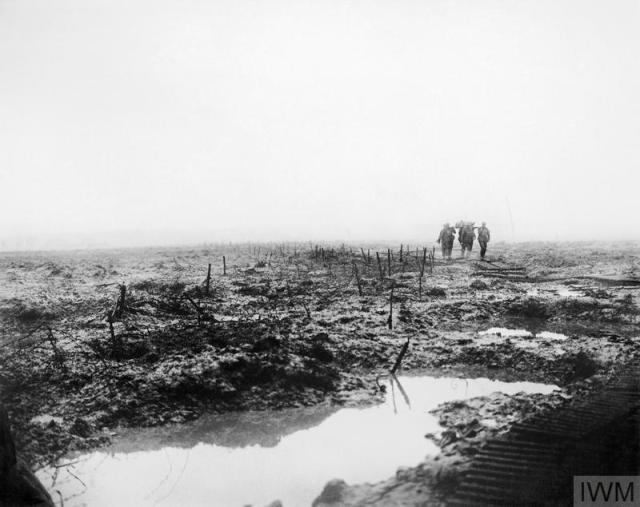
Passchendaele is perhaps associated with the most iconic and ghastly images of the First World War, with its drifting poison gas and morasses of mud making it arguably the most appalling of battlefields. Its ferocity and horror is encapsulated in Siegfried Sassoon’s famous line: ‘I died in hell – They called it Passchendaele.’

Official commemorations

The official commemorative event will begin with a Last Post Ceremony at the Menin Gate in Ypres on 30 July.

It will be followed by a series of live performances in Ypres’ Market Square that tell the story of the Battle. Images and film will also be projected onto the town’s Cloth Hall.

Descendants of those who fought in the battle will be invited to the Commonwealth War Graves Commission (CWGC) Tyne Cot Cemetery on 31 July – the day the battle began.

large_000000-1.jpg

Ballot for tickets

Opening the public ballot for tickets, Secretary of State for Culture, Media and Sport Karen Bradley said: ‘As we continue to commemorate the centenary of the First World War, it is important that we remember the horrors of the battlefields of Ypres and honour the many who lost their lives. Some of the First World War’s most defining images of futility, mud, gas attacks and trenches come from these very battlefields.’

Descendants can apply online at www.passchendaele100.org before 24 February 2017.

Those wishing to be at Market Square on Sunday 30 July 2017 can also register their interest in attending in order to receive regular updates and further information about attending the events.

The event will also be shown live on large screens in the Market Square at Ypres and at the Zonnebeke Chateau Grounds, so that those not able to secure a ticket will still be able to attend the public event on 30th July, and watch the Tyne Cot event on 31 July.


Posted in Events, News | Tagged , , , , , , , , | Leave a comment

England footballers join Living Memory project

england-visit-large.png

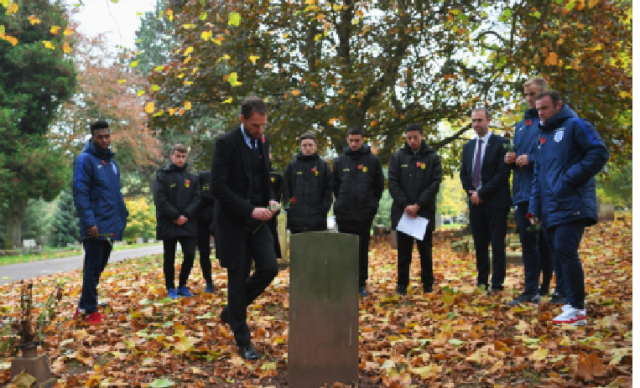
Interim England football manager Gareth Southgate and three senior members of his squad – Wayne Rooney, Joe Hart and Daniel Sturridge – have visited Stapenhill Cemetery in Burton-upon-Trent in support of the Commonwealth War Graves Commission’s (CWGC) Living Memory Project.

Local interest

The Living Memory Project is a nationwide initiative aimed at encouraging communities to discover, explore and remember the war graves in their local area. This November, The FA and CWGC are working together to mark the 100th anniversary of the Battle of the Somme.

Said Southgate: ‘I think it’s important for us to get a sense of perspective. We’re so held up in our own sport yet there are people that have given a lot more and they should be remembered for more significant acts than what we carry out on a football field.

‘We heard a remarkable story of somebody who came from Burton-upon-Trent and went to the Battle of the Somme as a stretcher-bearer and carried some of his colleagues back off the battle field.’

Football’s involvement

While the CWGC’s sites on the continent are well-known and visited, few people are aware that the commission cares for 300,000 graves and memorials throughout the UK in more than 12,000 locations.

The FA has encouraged football clubs at every level of the game to unite behind the Living Memory Project and remember all of those buried in CWGC graves in the UK.

Colin Kerr, Director of External Relations for the CWGC, said: ‘We’d urge visitors to lay flowers as a mark of remembrance but, most of all, we want people to share their experiences by tweeting photos using the handle @CWGC plus hashtag #LivingMemory. That way, we keep the spirit of these brave men and women alive and the war graves are never forgotten.’

Posted in News, Soldiers of the Great War | Tagged , | Leave a comment

Remembrance statue goes on show in Glasgow

A First World War themed sculpture has been unveiled in Glasgow to raise awareness of the Scottish Poppy Appeal.

The Every Man Remembered statue, which stands approximately 23ft high, stands on a block of limestone from the Somme area of France and is encased in a glass box among thousands of poppies that float in the air.

Designed by artist Mark Humphrey, the statue has been placed in Glasgow’s George Square. It had previously made appearances in London’s Trafalgar Square (pictured above) and in Cardiff in 2014 and 2015 respectively.

ramc.jpg

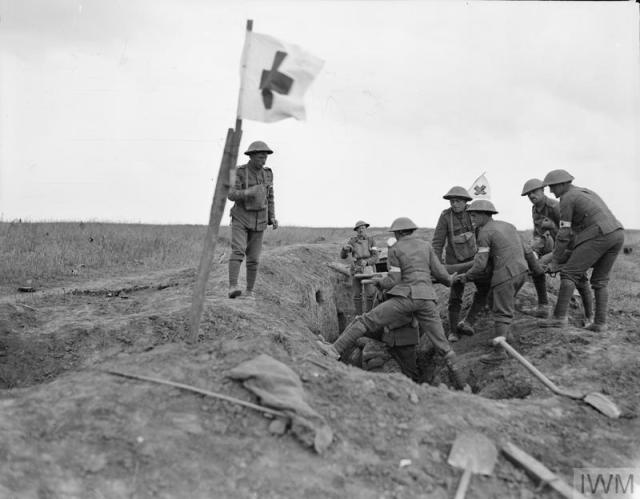
British stretcher bearers on the Western Front, 1918

Ongoing needs

Mark Bibbey, chief executive at Poppyscotland, said: ‘The poppy continues to be a symbol of remembrance for those who have fallen but it also serves as a reminder of the living who still need our support.

‘In fact, one in eight veterans have a fundamental unmet need for support and more than half suffer from a long-term illness or disability.

‘That’s why we need the Scottish public to make their donation and wear their poppies with pride, so that we can be there for our ex-servicemen and women when they call for back-up.’

For more about the Royal British Legion’s Every Man Remembered campaign, click here.

Posted in Events, News | Tagged , , , , | Leave a comment

Lost AA Milne WW1 poem rediscovered

crew-2.jpg

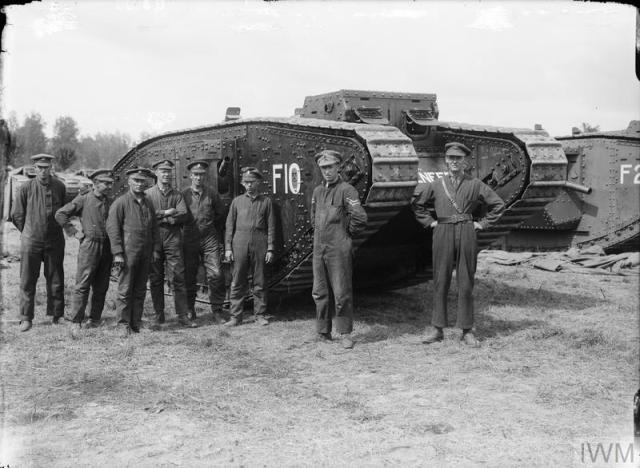
A tank crew in France, 1917

A previously unknown poem by Winnie the Pooh author AA Milne has been rediscovered in archives at the Tank Museum in Dorset.

This poem, which was used to raise awareness of Tank Corps soldiers who were prisoners of war, was found in the museum archive by research assistant Sheldon Rogers in a box of papers that once belonged Hugh Elles – the first commander of the Tank Corps.

tank_000000.jpg

Tank crew training, France 1918

Fundraising and propaganda

Rogers said: ‘We believe this poem was written specifically for a fundraising matinee which took place on 7 November 1918. The show was organised by Harry Tate, the popular music hall comedian.

‘It was in support of the Tank Corps Prisoner of War fund and the event was backed by the King and Queen, while the bands of the Welsh Guards and Scots Guards also took part.

‘Although the programme had been catalogued, the significance of its contents had been overlooked – and no one seemed to have any knowledge of this poem, which was written before Milne had achieved fame with Winnie the Pooh.

‘It is clearly a piece of propaganda and designed to celebrate the tank, which was a British invention and was of massive interest at the time.

‘But more importantly he celebrates the men who served in the tanks. He had been wounded himself and knew what conditions were like.’

pow.jpg

A staged propaganda photo from 1916 – showing a German surrendering German soldier

Secret service

During the First World War, Milne served as an officer in the Royal Warwickshire Regiment but was invalided in 1916 with trench fever.

Following this he was recruited by MI7b, a secret propaganda unit made up of authors from the time who wrote positive articles about the war for newspapers in Britain and overseas, as well as pamphlets and weekly updates to the soldiers themselves.

Written six years before Winnie’s debut in Punch, this example of Milne’s work shows his characteristic combination of humour and emotion:

So remember, whenever you talk of the Tanks,

The newest invention, the wonderful Tanks –

The older invention – the men in the ranks;

The wonderful men of all ranks.

For they’re just the same men, only more so, in Tanks.

You’ll remember them?

THANKS!

Posted in News, Soldiers of the Great War | Tagged , , , , , , , | Leave a comment

Exhibition focuses on WW1 in Italy

IWM_ART_002678.jpg

London’s Estorick Collection will reopen in January 2017, after a five-month refurbishment, with an exhibition entitled War in the Sunshine, revealing the little-known role of British forces in Italy during the First World War.

Among the items on show are paintings by official war artist Sydney Carline and some 50 images by war photographers William Brunell and Ernest Brooks.

Carline was remarkable among the artists of the First World War in that his first works were produced while he was serving as a fighter pilot flying a Sopwith Camel in northern Italy.

Q_026187.jpg

Insightful photography

Brooks had been an official photographer on the Western Front and had captured iconic images of British forces on the Somme and at Passchendaele.

He was assigned to Italy in 1917-1918 and showed a great ability to portray the plight of front-line combat troops and dispossessed Italian civilians scratching a living behind the Anglo-Italian lines.

Brunell’s works are distinguished by the photographer’s ability to capture the drama of northern Italy’s mountainous terrain and the frontline along the River Piave, north of Venice.

He also produced intimate and sympathetic images of many of the young Italian women who were employed by Britain’s Army Service Corps, unloading railway wagons, washing British army uniforms and preparing meals.

Q_026541.jpg

Forgotten campaign

The exhibition recalls a campaign that is often ignored. In October 1917 around 120,000 British troops were shipped to Italy to help stop advancing German and Austro-Hungarian forces.

British soldiers would also play a significant part in Italian victories in the Battle of the Solstice (June 1918) and on the Piave in the Vittorio Vento campaign of October-November 1918.

Five squadrons of the RAF and 40 batteries of artillery were also deployed in Italy.

The Estorick Collection of Modern Italian Art is renowned for its core of Futurist works. It comprises pieces by many of the most prominent Italian artists of the Modernist era.

War in the Sunshine runs from 13 January until 19 March 2017.

www.estorickcollection.com

Q_026555.jpg

Posted in Events, News | Tagged , , , , , , , , , , | Leave a comment

British soldiers recovered from Somme battlefield

396E719700000578-0-image-a-30_1476614627118.jpg

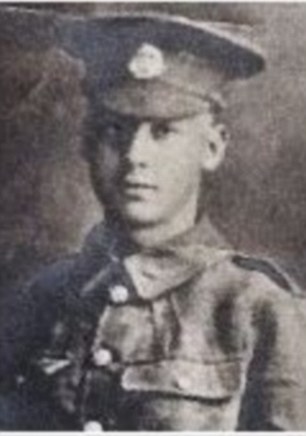
Private Harry Carter

Two British soldiers will be reburied at 11AM on 19 October at the Albert Communal Cemetery Extension in France.

The pair were part of a group of eight men from the 10th Battalion, Essex Regiment who were killed following the explosion of a massive German underground mine near the Somme village of La Boisselle on 22 November 1915.

First evidence

In 2010 the La Boisselle Study Group (LBSG) began an excavation in an area of land known during the First World War as ‘the Glory Hole’; supposedly because it was notoriously dangerous.

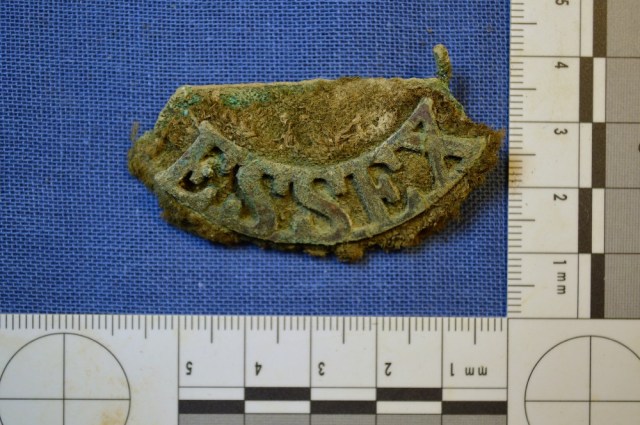
In summer 2013 the team discovered the first evidence of the Essex Regiment soldiers, including shoulder titles and buttons.

The eight men were recorded as having been ‘killed in action’, and had graves and headstones in a Commonwealth War Graves Commission (CWGC) cemetery in the nearby town of Albert. LBSG historians, however, could find no documented evidence of the recovery of their bodies and it transpired they still lay where they had fallen.

Essex-shoulder-title-associated-with-HR9-Private-Harry-Carter.jpg

An Essex Regiment shoulder title (courtesy LBSG)

Fixed bayonets

The LBSG team began by recovering the remains of two of the soldiers, who appeared to have been on sentry duty when the mine exploded.

They lay close to rifles with fixed bayonets and also had bags of grenades and flares. The search for their six comrades then continued, but the project became further complicated by the discovery of two French soldiers buried barely half a metre from the British remains.

These men were identified as privates Louis Heurt and Appolinaire Ruelland (of the 118th Infantry Regiment), who had been killed in early January 1915 and buried in the wall of what had been their trench.

Two metres further along the trench the archeologists discovered the timber remnants of the dugout in which the remaining six Essex soldiers were believed to have been sheltering when the mine exploded.

At the entrance were rifles, stacked helmets and boxes of hand grenades waiting to be picked up when the men went on duty.

Unfortunately, time on the dig ran out before the LBSG could agree terms with the landowner for a new contract to complete the recovery.

396E72AD00000578-0-image-m-29_1476614621233.jpg

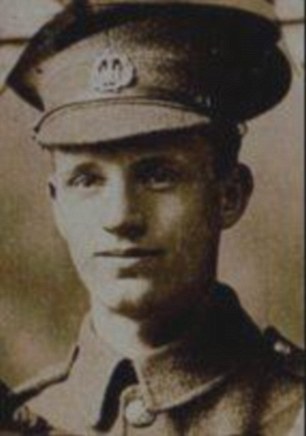
Private William Marmon

Identity confirmed

The two sentries had been wearing fibre identity discs, but these had long since decayed. However, the Ministry of Defence Joint Casualty and Compassionate Centre (JCCC) managed to locate descendants of all eight soldiers and to perform DNA testing.

This determined the two recovered bodies belonged to 21-year-old private William James Marmon (21) from St Pancras, London, and private Harry Carter (also 21) born in West Ham, Essex.

Marmon had been carrying three small ceramic figurines, usually found in cakes traditionally served in France at the festival of Epiphany, a French bullet head finely-carved with a heart symbol, a metal slot-machine token, some French coins and the remains of a pipe and lighter.

Carter was wearing a ‘trench-art’ ring on a finger of his right hand and was carrying a lighter, coins and writing paper.

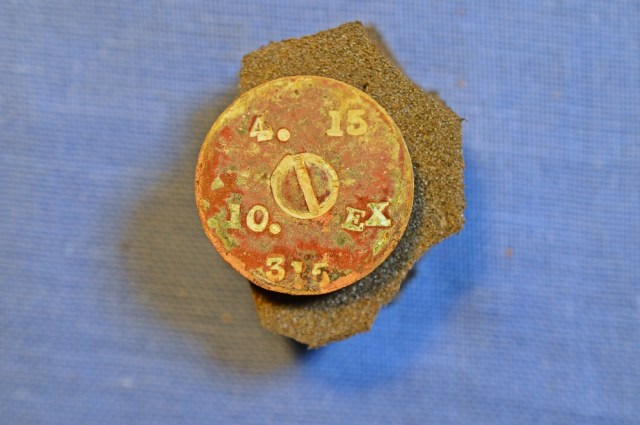
Butt-disc-from-SMLE-rifle-stamped-with-10th-Essex.jpg

A fragment from a rifle marked 10th Essex and dated 1915 (courtesy LBSG)

The eight La Boiselle soldiers

Private Harry Carter, b. 1894, West Ham, estate agent’s assistant

Private Harry Fensome, b. 1896, Luton, moulder

Lance corporal Albert Huzzey, b. 1897, West Ham, errand boy

Private William J. Marmon, b. 1894, St Pancras, London

Private George Pier, b. 1890, Dagenham, Essex

Private Charles Ruggles, b. 1892, Halstead, Essex, farm labourer

Private Edward Toomey, b. 1889, Walworth, Surrey, restaurant kitchen porter

Private Charles Aldridge, b. 1888, Caxton, Cambridgeshire, farmer

Posted in News, Soldiers of the Great War | Tagged , , , , , , | Leave a comment