Lawrence of Arabia map for sale at Sotheby’s

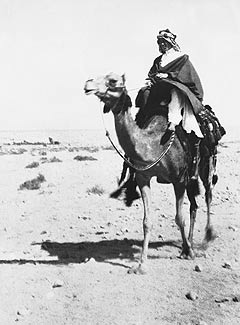
Lcamel

A map drawn by First World War desert commander TE Lawrence will go on sale at Sotheby’s in London on 4 November 2014.

The hand-drawn map shows an area of Saudi Arabia that Lawrence and his men crossed in May 1917 as they approached the Red Sea port of Aqaba.

Recently on show

The map was recently shown in major exhibitions at the Imperial War Museum in London and at the Australian War Memorial Canberra. It is estimated to reach £70,000-100,000 at Sotheby’s London auction of Travel, Atlases, Maps and Natural History.

On 9 May 1917, Lawrence and the Arab armies set out from the Red Sea port of al Wejh to capture Aqaba. They reached the Hejaz railway on 19 May and continued across the desert towards Wadi Sirhan – the route that’s recorded in this map. The journey was particularly gruelling and Lawrence recorded it in his notebooks, now in the collection of the British Library, and later in his book Seven Pillars of Wisdom.

‘Only drawn copy’

Lawrence was well aware that his travels towards Aqaba had cartographical significance. Having met the explorer and cartographer Douglas Carruthers in the latter stages of the war, Lawrence created this map for him sometime between 1918 and 1922.

Using his notebooks, he plotted the map on a single sheet of tracing paper, signing it and annotating it with the words: ‘This is the only drawn copy so please do not lose it prematurely.’

In 1962, Carruthers donated the map to the Royal Society of Asian Affairs, in whose collection it has remained until now.
Posted in News, Soldiers of the Great War | Tagged , , , , , , , , , | Leave a comment

Coldstream Guards VC winner remembered

zpage122

A soldier who won the Victoria Cross (VC) in the First World War has been remembered at a special service in his native Northumberland.

Guardsman Frederick William Dobson of the Coldstream Guards risked his own life in a bid to rescue two wounded comrades in France in 1914. This involved crossing a large expanse of open ground under fire and then returning with a stretcher and two other soldiers to help him carry it.

He was unable to save private Albert Haldeby, who had died of his wounds, but managed to bring in private Butler who had been wounded in three places.

A memorial stone was unveiled during the service at St Mary’s Church in Mr Dobson’s home village of Ovingham.

The 27-year-old soldier won his VC Chavonne in France on 28 September 1914. He was later promoted to lance-corporal and died in 1935.

His Victoria Cross is on show at the Colstream Guards HQ at Wellingon Barracks in London.

During the First World War, 628 Victoria Crosses were awarded – 454 to UK-born recipients and 173 to servicemen born overseas.

Posted in Events | Tagged , , , , , , , , , , , | Leave a comment

Missing First World War soldiers to be reburied in France

$_35

Some 15 British First World War casualties are to be reburied at the Y Farm Cemetery at a ceremony in France on 22 October, 100 years after they were killed during an offensive close to the border with Belgium.

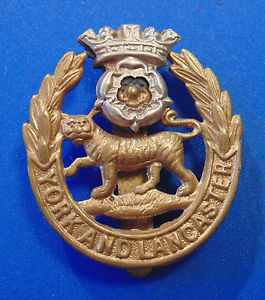
The soldiers were serving with the 2nd Battalion, York and Lancaster Regiment, when they were killed during an attack.

Some 835 men who died in the First World War are currently buried or commemorated at the Y Farm Cemetery, named after nearby Wye Farm in the village of Bois Grenier.

The 15 men have, up until now, been commemorated on the Ploegsteert Memorial near Ypres, Belgium. Now, with the use of DNA, 11 of the men have been identified by the UK’s Ministry of Defence.

The ceremony begins at 11.30am on 22 October and is open to the public.

Posted in Events | Tagged , , , , , , , , , | Leave a comment

Memorial to Royal Leicestershire Regiment at National Arboretum

Capbadge R Leics gold

A memorial to the Royal Leicestershire Regiment will be dedicated at the National Memorial Arboretum in Staffordshire on Saturday 27 September 2014 – the 326th anniversary of the founding of the Regiment.

India service

The Regiment was conferred with the title ‘Royal’ by King George VI in 1946 in recognition of its services during World War II, where it was represented by a battalion in every theatre: an almost unique distinction.

The regiment takes its nickname – ‘The Tigers’ – from its badge, which incorporates a Royal Tiger and the inscription ‘Hindoostan’. King George IV awarded the badge to the regiment in 1825 in recognition of its service in India.

The Royal Leicestershire Regiment was awarded 73 battle honours ranging from the battle of Namur in 1695 to the campaign in Korea in 1952.

VC winners

Four members of the regiment won the Victoria Cross. Among them was lieutenant-colonel Philip Bent of 9th Battalion, Leicestershire Regiment, who won the medal near Ypres on 1 October 1917.

His VC citation read: ‘For most conspicuous bravery, when during a heavy hostile attack, the right of his own command and the battalion on his right were forced back. The situation was critical owing to the confusion caused by the attack and the intense artillery fire.

‘Lieutenant-colonel Bent personally collected a platoon that was in reserve, and together with men from other companies and various regimental details, he organised and led forward to the counter attack, after issuing orders to other officers as to the further defence of the line.

‘The counter attack was successful and the enemy were checked. The coolness and magnificent example shown to all ranks by Lieutenant Colonel Bent resulted in the securing of a portion of the line which was of essential importance for subsequent operations. This very gallant officer was killed whilst leading a charge which he inspired with the call of “Come on the Tigers”.’

The memorial will comprise a large Irish blue limestone plinth topped by a tiger.

To find out more about the Leicestershire Regiment, click here.

Posted in Events | Tagged , , , , , , | Leave a comment

War Memorial at Lyddington, Rutland

IMG_2217

The war memorial at the Rutland village of Lyddington includes seven names from the First World War.

Among them are private Walter Hinch of 2nd Battalion, Leicestershire Regiment whose name appears on the Basra Memorial in Iraq.

There are also two brothers, 23-year-old major Malcolm Neilson of the 2nd Battalion, Canadian Infantry, who was killed near Arras in 1917 and 25-year-old captain Donald Neilson.

The Lyddington memorial states the latter was a member of 1st Battalion, Leicestershire Regiment, but the Commonwealth War Graves Commission lists him as serving with 3rd Battalion, Lincolnshire Regiment when he was killed in Flanders in 1918.

Among the Second World War names is that of 29-year-old John Leigh Caradog Jones, who died in India in May 1945. He was the son of Lyddington’s vicar.

Posted in Events | Tagged , , , , , , , , , | Leave a comment

Shot at dawn pamphlet published online

banner-shot-at-dawn-1

A campaigning contemporary pamphlet, designed to draw attention to the British army’s relatively common and often arbitrary use of the death penalty, has been made available online.

Entitled Shootings at Dawn and written by Ernest Thurtle MP, it uses extracts from eye-witnesses to emphasise the way in which circumstances were often ignored and men condemned to death despite extenuating circumstances.

Triple execution

One example concerns the account of an unnamed soldier who was present when a sergeant and two corporals of the Durham Light Infantry were executed in 1917.

The man recounts that the Durham NCOs were ordered to retreat by their captain following a German counter-attack. The officer was then killed and the men were arrested the next day and shot shortly afterwards.

The three were 24-year-old lance sergeant Joseph Stones, 28-year-old lance-corporal John McDonald and lance-corporal Peter Goggins, all of 19th Battalion, Durham Light Infantry.

Ordered to retreat

In his defence Stones said he was ordered to retreat by lieutenant James Mundy. His rifle was jammed so he used it to block the trench to slow the German advance.

Stones then came to a post manned by McDonald and Goggins and advised them to fall back because the enemy was close behind him. This they duly did, taking up positions in a reserve trench just 20 yards away.

Stones has seen action at the Somme and was known as a reliable, brave and capable soldier. Brigadier-general H O’Donnell doubted the evidence but upheld the death penalty to send a message to the remainder of the battalion and other regiments in the sector.

To read the pamphlet, click here.


Posted in News, Soldiers of the Great War | Tagged , , , , , , | Leave a comment

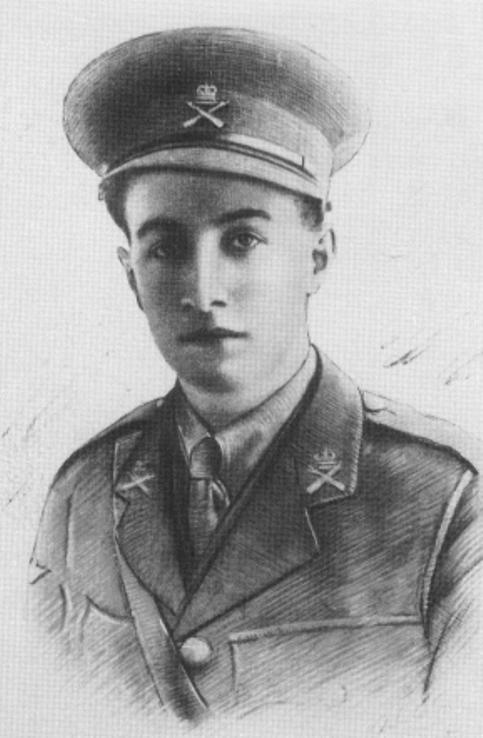
WW1 Tank Corps VC winner saved trapped crew

SewelL VC 1

In 1914 20-year-old Cecil Sewell was an articled clerk at his father’s law firm in Greenwich, London.

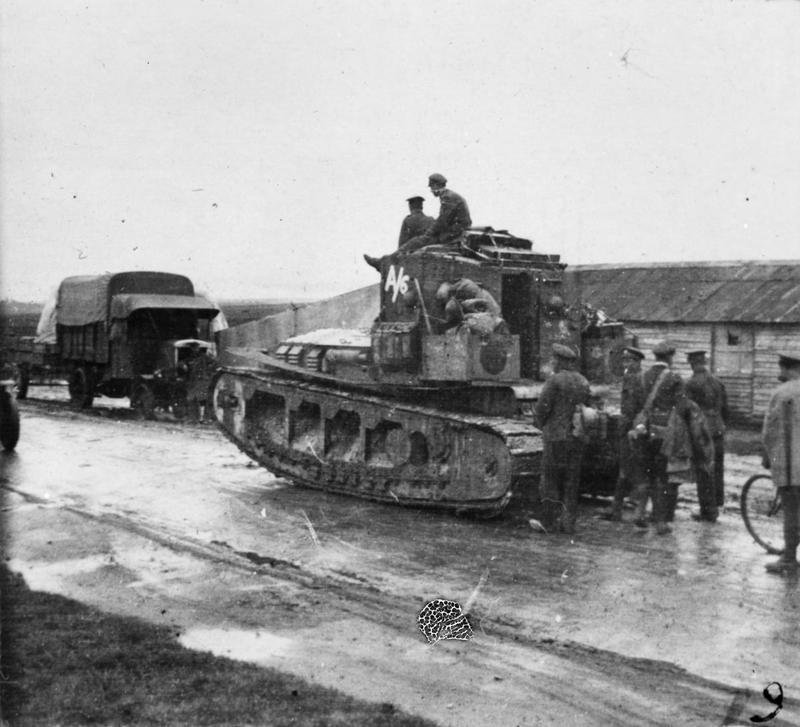
At the outbreak of war he joined the Royal West Kent Regiment. In 1916 he signed up with the newly established Tank Corps, where he became a commander of a troop of Whippet light tanks.

The Whippet was a comparatively agile machine. It had a crew of three: gunner, driver – and commander – whose duties included directing the tank and helping the gunner fire a total of four machine guns mounted in the turret.

large

Crew trapped

On 29 August 1918 Sewell was in charge of a section of tanks advancing towards German positions near Fremicourt. One of his machines steered into a shell hole, turned over and caught fire. Realising the crew was trapped, Sewell dismounted from his tank, sprinted across open ground under machine gun fire and proceeded to dig through the mud that was blocking the escape hatch and to free his soldiers.

The London Gazette takes up the story: ‘Having done this he saw one of his own crew lying wounded behind his own tank. He crossed the open ground to his assistance. Although hit while doing so he reached the tank. Only a few minutes later he was hit, fatally this time, while dressing his wounded driver.’

The full citation is quote on the CWGC website, here.

Lieutenant Sewell was 23 and is buried at Vaulx Hill Cemetery. His brothers Harry and Herbert also died during the First World War. 

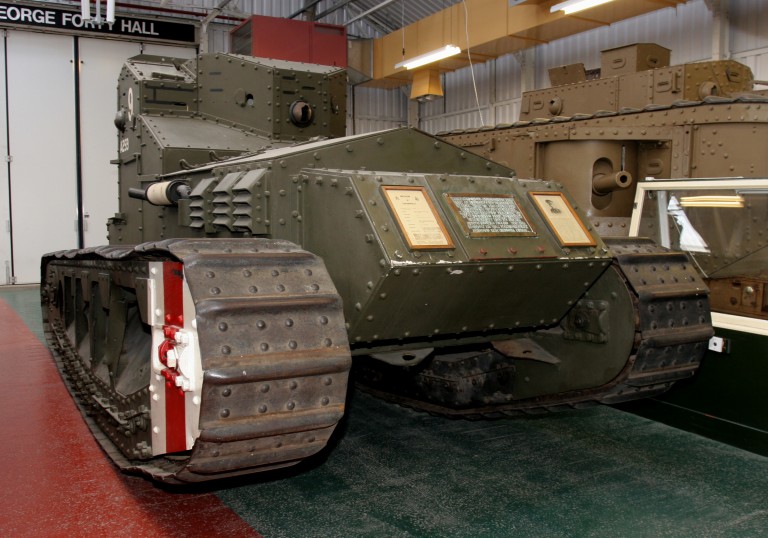
Sewell’s tank is now in the Tank Museum, Dorset, UK.

E1949.328_Medium Mark A Whippet___7047-065

Posted in News, Soldiers of the Great War | Leave a comment

The Royal Guernsey Light Infantry in WW1

The Royal Guernsey Light Infantry on parade at Montreuil-sur-mer, 1918

The Royal Guernsey Light Infantry on parade at Montreuil-sur-mer, 1918

The Royal Guernsey Light Infantry was one of the lesser known British units of the First World War.

It was established comparatively late in the conflict, in December 1916, with its recruits training initially on Guernsey and later in Kent.

Sailed for France

On 26 September 1917 the regiment’s 1st Battalion, comprising 44 officers and 964 other ranks, sailed for France. A few weeks later they were in action at the Battle of Passchendaele and, in November, they were involved in the Battle of Cambrai.

During that action the battalion was tasked with the defence of the village of Les Rues Vertes. Attacked by a large German force the unit lost 40 per cent of its strength in casualties.

Heavy casualties

For the next few months, the battalion was in quieter areas and many wounded men returned to the front line. Then, on 10 April 1918, the Guernseys were marched off to the Battle of the Lys. During a long-lasting retreat, the regiment suffered further heavy casualties.

Among them was Captain Harry Stranger MC, who died of wounds on 11 May 1918 and is now buried at Les Baraques Military Cemetery, Sangatte. A talented cricketer and footballer, who had played for Guernsey FC, he was awarded the Military Cross for his actions during the retreat.

His medal citation states: ‘For conspicuous gallantry and devotion to duty. He held an important bridgehead during a period of strenuous fighting at close quarters. He collected and organised men of several units, and held the bridge successfully against all the enemy’s efforts to break through. He set a splendid example of courage and determination.’

Rear echelons

For the remainder of the war, the remnants of the unit were withdrawn to rear areas and, among other tasks, took on guard duties at the General Headquarters at Montreuil-sur-mer. 

The Guernsey’s regimental motto was ‘Diex Aix’ – supposedly the rallying cry of the Norman cavalry at the Battle of Hastings in 1066. Some 2,280 members of the regiment saw action on the Western Front, with 327 killed and 667 wounded.

A guard detachment of the Royal Guernsey Light Infantry at Montreuil-sur-mer in 1918

A guard detachment of the Royal Guernsey Light Infantry at Montreuil-sur-mer in 1918

Posted in Soldiers of the Great War | Leave a comment

Recognition for Channel Islander killed during retreat from Mons

Captain Victor Briard, killed near Mons on 24 August 1914

A Jersey housing development is to be named after the first Channel Islander to be killed in the First World War.

Captain EFV (Victor) Briard was 25 when he was killed in action on 24 August 1914 during the retreat from Mons.

He was born in St Helier and educated at Felstead School and the Royal Military Academy, Sandhurst. He was captain of hockey while at Felstead and went on to represent the Army at the sport. He also played cricket for his regiment.

Royal Norfolk Regiment

He was serving with 1st Battalion, Royal Norfolk Regiment. His unit, along with 1st Battalion the Cheshire Regiment, was left exposed as other battalions retreated and left them to be outflanked and overrun by the advancing German forces.

Around 250 Norfolks became casualties, along with more than 700 from the Cheshire Regiment.

Mons retreat

British troops take up defensive positions during the retreat

Family tragedy

Briard’s widowed mother, Maud, was initially told he had been taken prisoner and his death was not confirmed until 1916.

Private Henry Grigglestone wrote to Mrs Briard describing the moment her son was killed: ‘I was in the same section as Lieutenant Briard was in charge of on the 24th August 1914. He was directing operations and I stayed next to him. I saw him killed about two minutes before I was captured.

‘I cannot tell you any more, but all I can say is, “he died a hero”.’

Captain Briard is buried at Elouges Communal Cemetery in Belgium along with 24 other members of the Norfolk Regiment.

Briard’s younger brother, John, died aged just 19 on 15 October 1919 of complications related to wounds received in May at a skirmish on the Khyber Pass. At the time he was serving with 35th Sikhs and had been on his way to a posting on the Afghan border.

He was buried at Peshawar and is now commemorated on the Delhi Memorial.


Posted in News, Soldiers of the Great War | Tagged , , | Leave a comment

Rare colour photographs show realities of WW1


fo_first_world_war_in_color_p356_1406171220_id_821016

A British tank waits in a street in Péronne

To mark the Centenary of the First World War, publisher Taschen has produced a fascinating volume dedicated to colour photographs from the conflict.

Entitled The First World War in Colour it brings together more than 320 images brought together from archives in Europe, the US and Australia.

fo_first_world_war_in_color_p093_1406171159_id_820953

German soldiers pose in a concrete-lined trench

Subject matter is wide and varied, covering the mobilisation of 1914, through soldiers in moment of relaxation, to developing military technology and victory celebrations in 1919.

These rare colour images were taken by a small group of photographers pioneering recently developed autochrome technology.

fo_first_world_war_in_color_p102_1406171204_id_820962

A French Caudron G-3 at an airfield in 1914

Since the autochrome process required a relatively long exposure time, almost all of the photos depict carefully composed scenes of rear areas, static machines and towns affected by war.

The First World War in Colour is published by Taschen, price $59.99. To find out more about the book, click here.

fo_first_world_war_in_color_p329_1406171213_id_820998

A British ambulance and RAMC crew, 1914

Verdun, wrecked by bombardment

Verdun, wrecked by bombardment

French anti-aircraft gunners at Verdun, 1916

French anti-aircraft gunners at Verdun, 1916


Posted in News, World War I memoirs | Leave a comment